What baccarat is and how a round is played
Baccarat, also known as punto banco, is one of the oldest and most popular games in casinos all over the world, and it is especially popular among high-rollers and Asian gamblers4. In essence it is a simple guessing game: two hands are dealt, one called the Player and one called the Banker, and you bet on which hand will end up closer to a total of 9 points1.
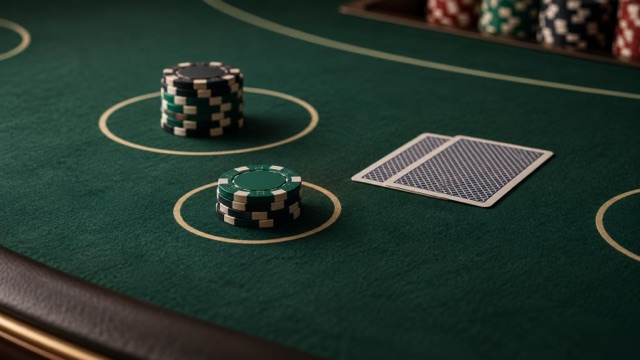
No matter how many players are seated, only those two hands are dealt. Tables have from seven to 14 seats for players depending on the version, plus a dealer's area5. Once the bets are placed, a total of four cards are dealt on the table: two for the Player box and two for the Banker box1. The hand closest to a total of 9 points wins5.
If either hand starts with a total of 8 or 9 on its first two cards, that is called a natural, and the round is over immediately: no more cards are dealt and all bets are paid1. If neither hand has a natural, the fixed third card rules decide whether one or both hands take another card. You make no decisions yourself, which is why baccarat is a game of pure chance rather than skill, unlike blackjack, where your choices matter.
In the big, full-size version of the game, up to 14 players sit at a large table, and the players with the largest Player and Banker bets get to look at the cards for that hand before they are announced by the dealer6. This is the "squeeze" ritual familiar from Macau and Manila VIP rooms. Mini-baccarat versions deal the cards face up at a smaller, faster table.
How the cards are counted
Card values in baccarat are simpler than in almost any other card game. Cards 2 through 9 count at face value, 10s and face cards count as 0, and aces count as 17. The highest possible point total for a hand is nine2.
The twist is what happens above nine: only the rightmost digit is used to determine a hand's value2. If the total value of the cards is higher than 9, for example 12 or 25, the first digit is dropped and the result is 2 or 5 respectively8. So a 7 and an 8, which would bust you in blackjack, make a 5 in baccarat. A 10 becomes 0, and a 15 becomes 5.
A natural is a hand made out of exactly two cards with a total value of 8 or 98. If either the Player or the Banker has a natural, both hands automatically stand, no exceptions, and the round ends9.
The third card rules for Player and Banker
If there is no natural, the hands play out under fixed rules that never change from table to table.
The Player hand goes first. The Player's hand always stands on point totals of 6 or 7. On any total from 0 to 5, the Player draws a third card, unless the Banker has 8 or 9, in which case the Banker has already won5.
The Banker's rules depend on the Banker's own total and, when the Player has drawn, on the value of the Player's third card1:
| Banker's first two cards | What the Banker does |
|---|---|
| 0, 1 or 2 | Draws, unless the Player shows a natural 8 or 9 |
| 3 | Draws unless the Player's third card is an 8 |
| 4 | Draws if the Player's third card is 2, 3, 4, 5, 6 or 7 |
| 5 | Draws if the Player's third card is 4, 5, 6 or 7 |
| 6 | Draws if the Player's third card is 6 or 7 |
| 7 | Stands |
| 8 or 9 | Natural; neither hand draws |
When the Player hand stands on 6 or 7, the Banker draws a third card if its own total is 0 to 5 and stands on 6 or 72. You do not need to memorize any of this to play: the dealer runs the hand, and the electronic scoreboard records the result.
The three main bets and what each pays
Before each round you have three betting options: Player, Banker or Tie10. The table has three betting spots marked for exactly these wagers9.
- Player pays 1 to 1. If you bet on the Player hand and it wins, you are paid out at even money with nothing deducted2.
- Banker also pays 1 to 1, but the house charges a 5% commission on any winning Banker bet6. Bet $10 on the Banker and win, and you are paid $10 minus the 5% commission, so $9.50 in profit1. The commission is collected automatically at payout9.
- Tie pays 8 to 1 when both hands finish on the same total7. If the round is a tie, Player and Banker bets are usually returned rather than lost.
You may only place a bet on either the Banker or the Player, but you may bet on a Tie outcome at any time, even if you already have a bet on one of the sides8. Some live tables allow up to three bets per player across the Player, Banker and Tie areas.
Which bets cost you the least
The house edge differs sharply between the three main bets, and this is the single most useful number on the page. On the Banker bet, even after the commission, the house edge is about 1.06 percent11. The Player bet is only slightly worse. The Tie bet, despite its attractive 8 to 1 payout, carries a house edge of about 14.36 percent, more than thirteen times the Banker edge11.
Put plainly: for every 100 units wagered, the Banker bet costs you about 1.06 units in the long run, while the Tie bet costs about 14.36 units. Higher payouts mean lower odds of winning, so placing Tie bets to win back losses is not a winning strategy2. The same logic underlies every betting system built on chasing streaks.
Side bets are worse still. A Banker Pair wager has a house edge of 10.36 percent12, and some exotic wagers run higher: the Big Tiger bet in Baccarat 27, which wins when the Banker wins on 6 points with three cards at 50 to 1, has a house edge of 15.25 percent13, and the Super Tie wager in the same game runs at 16.51 percent13.
Side bets: Pairs, Lucky 6 and Super Six
Beyond the three main bets, Asian tables offer a wide menu of side bets. Wizard of Odds lists Dragon Bonus, 4-5-6, Lucky Bonus, 3-Card Six, Dragon 7, Panda 8, Royal Match, Bellagio Match and Matching Dragon among the common ones4. The ones you will meet most often in Asia are these:
- Player Pair and Banker Pair win when the first two cards of that hand are a pair. The Banker Pair wager has a house edge of 10.36 percent12.
- Lucky 6 wins when the Banker hand wins on 6 points. It pays 12 to 1 if the Banker wins on 6 with two cards, and 20 to 1 if the Banker wins on 6 with three cards12. At Nustar's Lucky-6 Commission Baccarat the payouts are the same, 12:1 on two cards and 20:1 on three14. Some tables call the three-card version Big Tiger and pay 50 to 112.
- Super Six is the same idea in the no-commission game: bets on Super Six win 12:1 when the banker wins on 6 points14. In the Super Six Baccarat lineup you can choose among eight bet types: Player, Banker, Tie, Player Pair, Banker Pair, Super Six, Player Natural and Banker Natural15.
- Dragon and Tiger bonuses at some tables pay for big margins: a Big Dragon side bet pays 30 to 1 when the Player wins with a three-card 7, and a Big Tiger side bet pays 50 to 1 when the Banker wins with a three-card 616.
Regional variants add more. Lucky Three Card Baccarat at Hoiana lets you place an optional Big Lucky 6, Small Lucky 6, Lucky 6, Lucky Poker or Tie bet on each betting box17, and Okada Manila's Hi Tie Baccarat carries its own set of side bets18. We cover the full range in our baccarat side bets page.
Commission and no-commission tables
Standard baccarat tables take a 5% commission from wins that result from a bet on the Banker8. That commission is what keeps the Banker bet's house edge at 1.06 percent despite the Banker hand winning slightly more often than the Player hand.
No-commission variants drop the fee entirely. Non-commission versions of baccarat do not charge this fee at all6, and No Commission Baccarat takes no commission on wins on either Player or Banker, with one exception: if the Banker wins with a two-card total of 6, the payout is 0.5 to 1 instead of even money8. That single reduced payout replaces the commission.
Casinos offer these as clearly labeled variants. Paradise City in South Korea, for example, runs tables in various combinations of commission and no-commission, no-squeeze and all-card-squeeze, with different table limits, and provides a score card at the table19. Nustar in Cebu lists Commission Baccarat, where 5% is taken when Banker wins, alongside its no-commission Lucky-6 game14. If you are unsure which table you are at, ask before you bet: the difference only shows up when the Banker wins on 6.
Where baccarat dominates in Asia: Macau, Manila and VIP rooms
Baccarat is not just one game among many in Asia; in several markets it is the game. In Macau, baccarat is extremely dominant20, and it is typically the only game offered in VIP rooms, where it is the preferred game among Chinese players21. Whatever else a VIP room offers in the way of service, the tables themselves will be baccarat.

The pattern repeats across the region. Jeju's casinos run baccara-centered operations aimed at Chinese-speaking visitors, and major Philippine properties build whole families of baccarat variants around the core game: City of Dreams Manila alone spreads Traditional Baccarat, Baccarat 27 and their side-bet menus12, while Okada Manila runs Hi Tie Baccarat, Super Baccarat and 7 Bacc18. Even in South Korea's foreigner-only casinos, baccarat sits alongside blackjack and roulette as a staple19.
For a first-time visitor this is good news: baccarat tables are easy to find, the minimums at mass-market tables are usually modest, and the game requires no skill or strategy to play correctly. You can read more about the game's place in the wider casino in our casino table games overview.
Tournaments: baccarat as a competition
Because the game has no decisions, baccarat tournaments turn it into a pure race. The basics stay the same as at any table: 10, jack, queen and king count as 0, only the rightmost digit of a hand's total is used, and the highest possible point total is nine22. A winning Player bet pays 1 to 1, and the house edge on "banker" bets is about 1.06 percent, the lowest at the table22.
The format shows how a no-skill game becomes a contest: since every player faces the same hands, the competition is about bet sizing and position relative to your rivals, not about playing the cards. Tournaments like this are usually open to casino members who qualify through play, so ask at the membership desk if a property is running one during your visit.
Reading the scoreboard: bead plate, Big Road and the derived roads
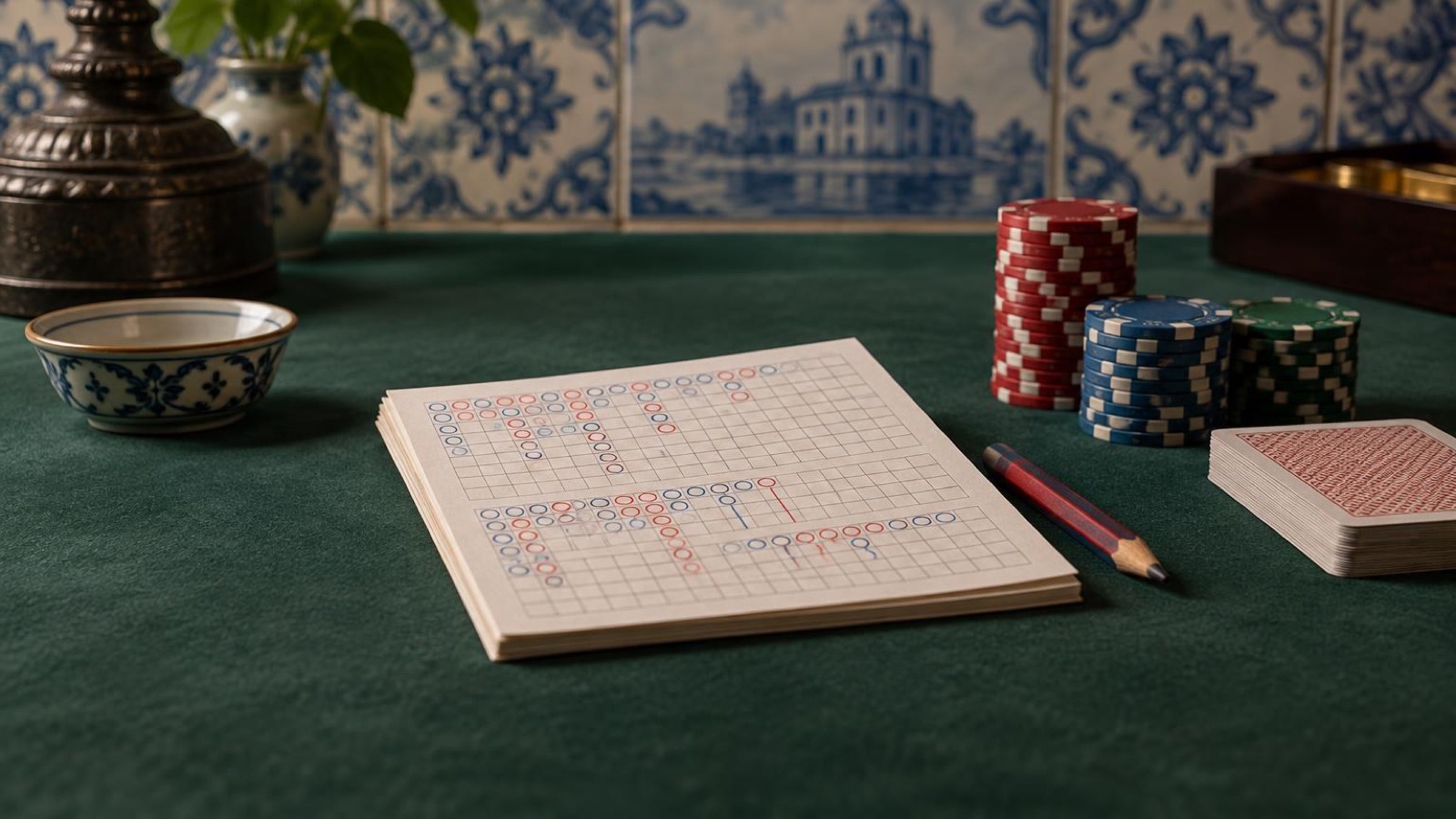
Walk past any baccarat table in Asia and you will see a large electronic display tracking the results of the current shoe. Online and live dealer versions, such as Baccarat Deluxe, show the same set of panels: the Bead Plate, the Big Road, Big Eye Boy, the Small Road and the Cockroach Pig, plus a predict system3.
The bead plate appears in the bottom-left section of the roadmap area3. It is the simplest record: a grid of small circles, one per hand, filled in as each result is decided, colored to show whether Player, Banker or Tie won. It is a straight chronological log of the shoe.
The Big Road is the heart of the display. Instead of one cell per hand in strict order, results are arranged in columns: a column of red rings for a run of Banker wins, then a new column when the Player wins, marked with blue rings. Ties are shown as a green line through the current column. Long columns mean streaks; alternating single columns mean "chop," the pattern players name out loud at the table. The Big Road's shape is what most players are looking at when they study the screen.
The derived roads are built from the Big Road rather than from the raw results. Big Eye Boy, the Small Road and the Cockroach Pig each compare the current pattern of streaks and breaks against the patterns earlier in the shoe, marking a hollow red or blue circle depending on whether the pattern is "consistent" or "inconsistent" with what came before. Each derived road starts from a different point in the shoe, so they disagree with each other, which is part of their appeal to players hunting for a trend.
The names and layout are standard enough that a scoreboard you learn in Manila reads the same in Macau or online. What the panels record is always the same three outcomes: Player, Banker and Tie, hand after hand.
What scoreboards like the Big Road cannot tell you
Here is the part every honest guide has to say plainly. Each hand of baccarat is an independent event: the cards have no memory, and the result of the last hand has no effect on the next. The Big Road is a record of the past, not a prediction of the future. A run of seven Banker wins does not make the eighth Banker win more likely, and it does not make it less likely either. The odds on the next hand are exactly what they always were: roughly even between Banker and Player, with the Banker slightly more frequent but taxed by the commission.
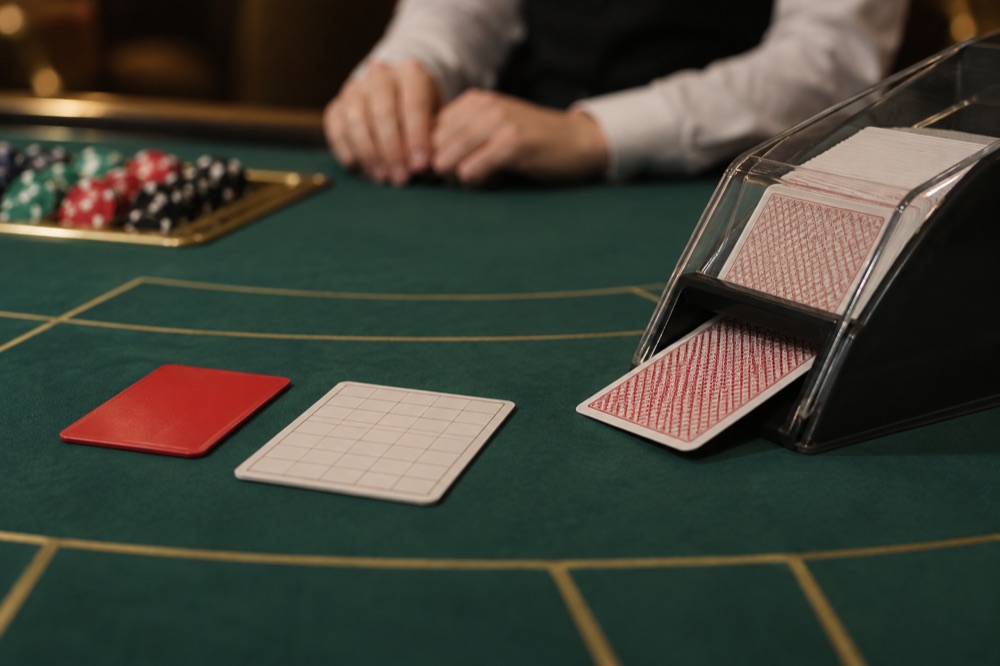
The scoreboard exists because players find patterns interesting, and because streaks and chops give the game a rhythm to talk about. There is nothing wrong with enjoying the display, or with following a trend for fun. The problem is believing the trend has predictive power. It does not. Systems built on the Big Road, like the Martingale and every other progression, cannot beat the house edge; they only change the shape of your wins and losses. The house edge on the Banker bet stays at about 1.06 percent no matter what the last twenty hands showed11.
One practical note on the shoe itself: if the system cannot read a card, the dealer rescans it, and if it still cannot be read, the current round is void and all bets are returned15. So a misread card costs you nothing.
A few practical points for your first table
- Buy in and sit anywhere. With seven to 14 seats and only two hands dealt, your seat does not affect the cards5. Wait for the current hand to finish before placing chips.
- Bet within the limits. Tables post minimum and maximum bets, and no-commission, squeeze and high-limit versions often sit side by side19. Check the sign before you sit.
- Decide your bet before the call. Once the dealer calls "no more bets," your chips stay where they are. Remember you can bet Player or Banker, plus Tie if you want it8.
- Do not expect to touch the cards at a mini-baccarat or live dealer table; cards are dealt face up. At big baccarat, only the players with the largest Player and Banker bets squeeze the cards6.
- Watch the commission. If you bet Banker at a commission table, your win is paid minus 5 percent6. At a no-commission table, watch for the Banker winning on a two-card 6, which pays half8.
- Enjoy the scoreboard for what it is. The bead plate and Big Road are a shared record of the shoe, a conversation piece and a rhythm for the table. Read them, follow them if you like, but treat them as history, not prophecy.
If you want the numbers behind these points in more detail, see our pages on baccarat odds and house edge and the Tie bet.
Common Questions
How much does the Banker bet pay after commission?
A winning Banker bet pays even money, 1 to 1, minus a 5 percent commission. A $10 winning bet returns $10 minus 50 cents of commission, so you receive $9.50 in profit. At no-commission tables the full 1 to 1 is paid unless the Banker wins with a two-card total of 6.
When does the Player hand take a third card?
The Player hand always stands on totals of 6 or 7, and on 8 or 9 it is a natural and the round ends. On any two-card total from 0 to 5 the Player draws a third card, unless the Banker has a natural 8 or 9, in which case the Banker wins immediately.
What is a natural in baccarat?
A natural is a hand of exactly two cards totaling 8 or 9. If either hand has a natural, both hands stand automatically, no third cards are dealt, and all bets are settled right away. A two-card 9 beats a two-card 8.
Why is the Tie bet considered a bad bet?
The Tie bet pays 8 to 1, but ties are rare, so the house edge is about 14.36 percent, compared with about 1.06 percent on Banker. The higher payout does not make up for the low chance of winning, which is why most players avoid it.
What is the Lucky 6 side bet and when does it win?
Lucky 6 wins when the Banker hand wins with a total of 6 points. It typically pays 12 to 1 if the Banker wins on 6 with two cards, and 20 to 1 if the Banker wins on 6 with three cards. Some tables pay 50 to 1 on the three-card version.
How many decks are used in baccarat?
Most tables, especially live dealer and Asian casino tables, use eight standard 52-card decks with no jokers, shuffled into a shoe. Some games use six decks or a single deck, and the number of decks slightly changes the odds of individual outcomes.
Sources22 sources
- How to play baccarat, PlaySmart, 2026-09-25
- Baccarat, GameSense, 2025
- Baccarat Deluxe, CasinoPlus, 2026-09-26
- Baccarat, Wizard of Odds, 2026-09-27
- How to play baccarat, PlaySmart, 2026-09-25
- How to play baccarat details, PlaySmart, 2026-09-25
- Baccarat, CoinPoker, 2026-05-25
- Baccarat, Natural8, 2026-09-26
- House rules, GGPoker, 2026-03-27
- Baccarat, Stake, 2026-09-26
- Traditional Baccarat, City of Dreams Manila, 2026
- Traditional Baccarat, City of Dreams Manila, 2026-09-26
- Baccarat 27, City of Dreams Manila, 2026-09-26
- Baccarat, Nustar Resort and Casino, 2026-06-25
- Rules Live, FB88, 2026-09-26
- Dragon Tiger Baccarat, Hoiana, 2026
- Lucky Three Card Baccarat, Hoiana, 2026
- Hi Tie Baccarat, Okada Manila, 2025-09-12
- Casino game guide, Paradise City, 2026-09-26
- Baccarat basics, Wizard of Odds, 2017-02-23
- The Transformation of Macao's Gaming Industry, University of Macau, 2026-02
- Baccarat Wild Card Tournament 2025, CasinoPlus, 2026-09-26