
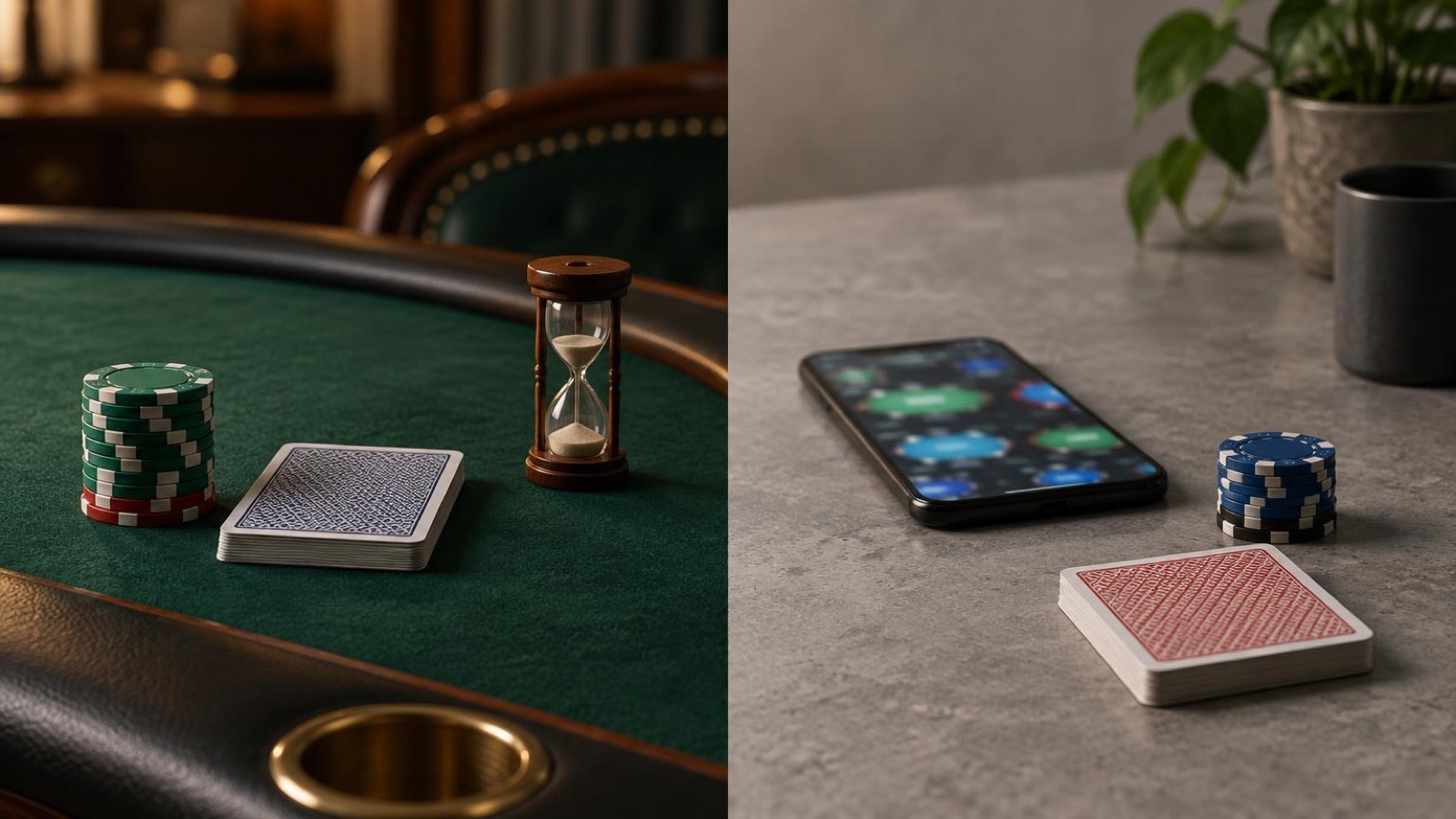
Licenses and bans: no operator or venue on this page has been closed or banned
Nothing here has been shut down or blacklisted. The live rooms, festivals and online sites named on this page are operating as of late September 2026, and the country rules described are the current position rather than the aftermath of a crackdown.
That matters because poker coverage online is full of stale warnings about rooms that closed years ago. The practical question is not whether poker is under threat somewhere, it is whether the specific room or site you are looking at is open, licensed and accepting players from where you live. For live play, that means a physical card room with a published schedule. For online play, it means a site that appears on a regulator's register or is openly serving your country.
One live dealer product, Casino Hold'em, appears on the Philippines regulator's license register under the identifier chel - 24.7.0.23, which is the kind of detail you can check when you want to confirm a game is genuinely licensed rather than copied7. GGPoker's online poker offering appears on the same register under Good Games Solutions Pilipinas Inc.8.
Live poker vs online poker: the core differences
The single biggest difference is speed. A live table deals roughly 30 hands per hour, and you play one table at a time1. Online you can play several tables at once, so the number of decisions per hour multiplies. If you are learning, that speed cuts both ways: more hands means faster experience, and faster losses when you are making mistakes.
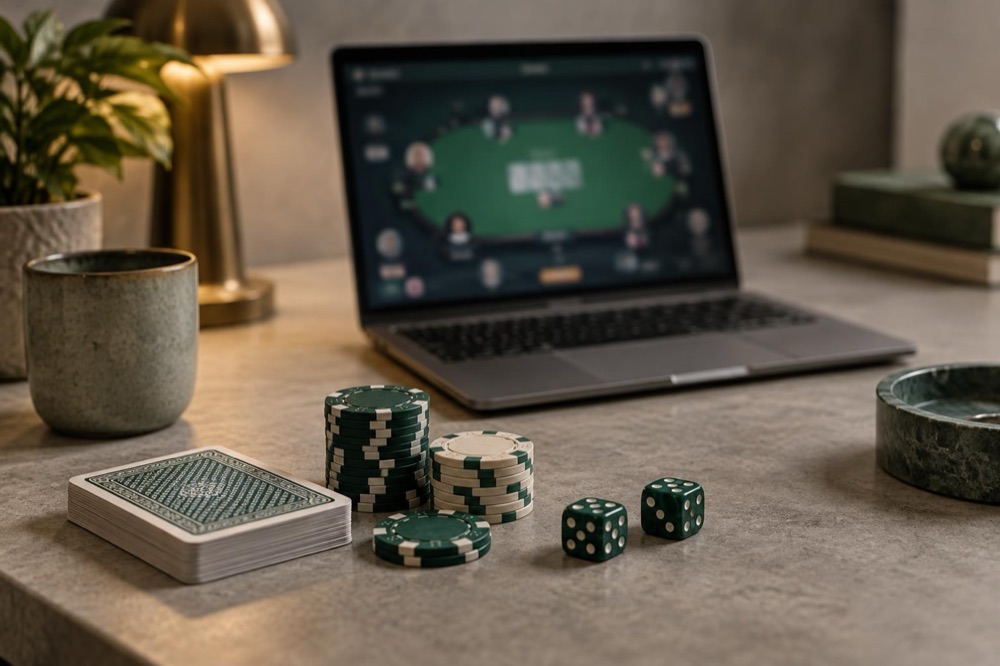
The second difference is who you are sitting with. Live poker games are softer and offer a less competitive atmosphere with a weaker player pool1. That is the main reason serious players still grind live: the opposition makes bigger errors, and those errors are worth more.
The third is how play differs. In real-world poker, exploitative play is preferred, because live players make bigger mistakes and do not track your hand ranges closely1. Online, opponents see far more of your hands and use tracking tools, so a balanced approach matters more.
| Feature | Live poker | Online poker |
|---|---|---|
| Hands per hour | About 301 | Much faster, multi-tabled |
| Tables at once | One1 | Several |
| Player pool | Weaker, softer1 | Tougher, more balanced |
| Variance | Low1 | Higher per session |
| Rake | Higher1 | Lower |
| Tells | Physical, verbal, sizing, timing1 | Timing and bet sizing only |
Pace and psychological pressure: case chips versus a screen
Live poker gives you time. Thirty hands an hour means roughly two minutes per hand, which is enough to watch how someone stacks chips, how long they pause and whether they talk when they are strong. Those physical, verbal, sizing and timing tells are a live-only information source1. You also get the social side: table talk, a read on mood, and the ability to slow down when a decision is close.
Online, the pressure comes from volume. Rapid play means potential losses can add up quickly, which is why setting a play budget and sticking to it matters9. That warning was written about video poker, but it applies just as well to fast-fold online poker formats where you are dealt a new hand seconds after folding.
There is also a difference in who you are facing. In casino poker variants you play against the dealer or a pay table, not the other players at the table10. In video poker, the house banks each game and your only opponent is yourself9. In peer-to-peer poker, whether live or online, the other players are the whole game.
If you are moving between the two, the adjustment is mostly about patience. Live rewards waiting for the right spot and reading people. Online rewards volume, discipline and a tighter preflop range.
Costs compared: rake, house edge and payouts
Live poker charges more to play. Rake is higher live than online1, and that single line explains a lot about why online win rates look better on paper. You are paying for the dealer, the room, the chips and the chair.
Peer-to-peer poker does not have a house edge in the way a slot machine does. The room takes rake or a time fee, and the rest is between you and the other players. Casino poker variants are different: most casino versions pay even money if you win, so a $10 bet returns $102.
The house edge on those variants varies widely:
| Game | House edge |
|---|---|
| Caribbean Stud Poker | 5.2%3 |
| Caribbean stud (Japanese source) | 5%4 |
| Video poker | 0% or above, depending on machine and payouts4 |
| Blackjack | About -1% to 3%, roughly 1% with basic strategy4 |
| Live dealer blackjack (Ezugi Unlimited) | 0.35%4 |
| Live dealer blackjack (Usoft Gaming Blackjack Unlimited) | 0.43%4 |
| Live dealer blackjack (Gameplay Interactive) | 0.46%4 |
The pattern is clear: if you want a low house edge, video poker can reach 0% or better on the right machine, which undercuts blackjack's roughly 1% edge with basic strategy. That depends entirely on the payout table you are actually sitting at4.
Rules and odds: starting hands, draws and tie outcomes
The odds you are working with are the same in both formats, because the deck does not care where you are sitting. The chance that a personal card makes a pair on the flop is 32.43%11.
Live poker hands go multi-way more often than you would expect1, which changes the math. With four or five players seeing a flop, top pair is worth less and draws are worth more. Online, tighter preflop ranges mean you see more heads-up pots and fewer family pots.
Tie outcomes differ by game, and this is where casual players lose money through confusion:
- In Ultimate Texas Hold'em, if your hand ties the dealer's, all your bets push, with no win and no loss12.
- In Caribbean Stud Poker, if the dealer qualifies with a lower hand than yours, you win even money on the Ante and get a pay table payout on your raise bets3.
- In Three Card Poker, if you have the higher hand, both your Ante and Play bets pay even money, so a winning $1 bet returns $213.
- In Texas Hold'em Bonus Poker, hands that beat the dealer's are paid even money on the flop, turn and river wagers14.
Macau's Linked Jackpot Poker rules show how tightly some of these games are written. A raise must be exactly double the original bet, no more and no less, and if you do not raise, the position loses and the dealer takes the cards and your original bet15. On jackpots, two or more royal flushes split the jackpot or the fixed prize, whichever is higher, and two or more straight flushes each take 10% of the jackpot or the fixed prize, whichever is higher15.
Legal status by country: Singapore, Thailand, South Korea, Vietnam and India
This is where live and online diverge most sharply, and where the answer depends on who you are.
Singapore. Social gambling is not permitted on online platforms in Singapore5. That covers casual games as well as real-money poker, and it applies to residents and visitors alike. There is no legal route to online poker from Singapore.
Thailand. The country's ever-evolving gaming landscape remains in a gray zone for both land-based and online gambling16. In practice that means enforcement is uneven rather than settled, and the position can shift.
South Korea. The same rules apply to both land-based and online gaming17. Internet gambling, hwatu, poker and adult game rooms are all listed among illegal gambling activities18. Poker does appear on the official list of games of chance and skill alongside horse racing, cycling, boat racing and blackjack19, which is why the legal treatment is not as simple as a blanket ban on the word poker.
Vietnam. Online gambling is not regulated, and locals are still not allowed to gamble online in the country20. Visitors and foreign residents face a different practical position from Vietnamese citizens.
India. No person shall offer, aid, abet, induce or otherwise indulge or engage in the offering of an online money game or online money gaming service, whether the game is based on skill, chance or both6. That is the offering side. On the playing side, online poker remains in a gray legal area, but it is legal for Indian citizens to play on 4rabet because most states consider poker a skill game21.
China. Relatives playing mahjong or poker with money stakes and no profit motive are not punishable, and non-relatives playing with small money stakes are also not punishable22. That is a narrow carve-out for casual home games, not a green light for organized poker.
Where you can play live: the festival calendar and where to read more
Live poker in Asia runs on a festival calendar, and the last quarter of 2026 is busy.
For a wider view of what is running across the region, the Asian poker tours page compares the major series, and playing poker as a visitor or expat in Asia covers entry, ID and currency practicalities. If you are new to live rooms, how to get a seat in a casino poker room walks through the process, and card room rules and etiquette covers tipping and acting in turn.
Online events and sites: offshore sites, freerolls and licensing
Online poker in Asia is mostly a story about offshore sites and country-specific access.
Tournament freerolls are usually found at online gaming sites powered by Wager Gaming23. GGPoker's online poker offering is licensed through Good Games Solutions Pilipinas Inc.8, and Casino Hold'em appears on the same regulator's live dealer register7.
If you are comparing formats rather than sites, fast-fold poker explains how pool games work, online poker features covers run it twice, all-in insurance and multi-tabling, and poker rake explained breaks down what rooms and sites actually charge. For the peer-to-peer rules themselves, start with Texas Hold'em rules and poker hand rankings.
One more distinction worth keeping straight: casino poker games against the house, such as Three Card Poker and Caribbean Stud, are a different animal from peer-to-peer poker. The house-banked poker games page covers that family in full.
Common Questions
Is poker a game of skill or chance?
It depends on the format. Peer-to-peer poker such as Texas Hold'em rewards skill in betting, reading opponents and managing odds, which is why several Asian jurisdictions treat it as a skill game. Casino poker played against the dealer, such as Caribbean Stud or Mississippi Stud, is officially classed as a game of chance based on the random deal.
What is the house edge in poker?
Peer-to-peer poker has no house edge built into the deal; the room earns from rake or time fees instead. Casino poker variants do carry one. Caribbean Stud Poker runs about 5.2%, while video poker can sit at 0% or above depending on the machine and its payout table.
Is online poker legal in India?
It sits in a gray area. Most states treat poker as a skill game, so Indian citizens can generally play, but the national rules prohibit offering online money games, including skill-based ones. Check your own state before depositing, and expect the position to keep shifting.
Can you play poker online in Singapore?
No. Official guidance states that social gambling is not permitted on online platforms in Singapore. That covers casual games as well as real-money poker, so there is no legal route to playing online poker from Singapore, whether you are a resident or a visitor.
What are the odds of flopping two pair?
The chance that one of your personal cards pairs on the flop is 32.43%. That figure covers making a pair with a hole card, not the narrower case of flopping two pair outright, which is rarer. Treat it as the baseline for how often the flop connects with your hand.
Do you play against the dealer or other players in casino poker?
In casino poker variants you play against the dealer or a pay table, not the other players at the table. Caribbean Stud, Ultimate Texas Hold'em and Three Card Poker all work this way. Only peer-to-peer games such as Texas Hold'em and Omaha put you against the other players.
What poker variations are offered in Japanese casinos?
Japan's live dealer offerings lean toward blackjack, baccarat, roulette, Dragon Tiger, Sic Bo and game shows rather than poker. Offshore sites serving Japanese players list the same mix, with Japanese among their supported languages. Peer-to-peer poker is not a standard part of that lineup.
Sources23 sources
- Live vs Online Poker, CoinPoker, August 7, 2025
- Poker Essentials, GameSense, 2020
- Caribbean Stud Poker, PlaySmart, September 25, 2026
- 控除率, Wikipedia, 2026
- Is social gambling on online platforms permitted in Singapore?, Ask.gov.sg, September 25, 2026
- Online Gaming Rules, MeitY, August 22, 2025
- Playtech Live, PAGCOR, July 16, 2026
- List of Service Providers and Registered Domains, PAGCOR, March 18, 2025
- How to Play Video Poker, PlaySmart, September 25, 2026
- Ultimate Texas Hold'em, PlaySmart, September 25, 2026
- Texas Hold'em Community, PlaySmart, September 25, 2026
- How to Play Ultimate Texas Hold'em Poker, GameSense, 2021
- Three Card Poker, PlaySmart, September 25, 2026
- How to Play Texas Hold'em Bonus Poker, GameSense, 2020
- Linked Jackpot Poker Rules, Macau Official Gazette, September 1, 2003
- Best Online Casinos for Players from Thailand, Wizard of Odds, August 27, 2026
- Best Online Casinos for Players from South Korea, Wizard of Odds, May 6, 2026
- Illegal Gambling FAQ, K-Cycle, September 25, 2026
- Games of Chance and Skill FAQ, KBoat, September 26, 2026
- Best Online Casinos for Players from Vietnam, Wizard of Odds, May 5, 2026
- 4rabet Poker, 4rabet, April 29, 2026
- Notice on Applying the Law in Gambling Violation Cases, Shantou Chenghai Justice Bureau, February 16, 2024
- No Deposit Codes Thailand, Wizard of Odds, September 26, 2026















