What there is
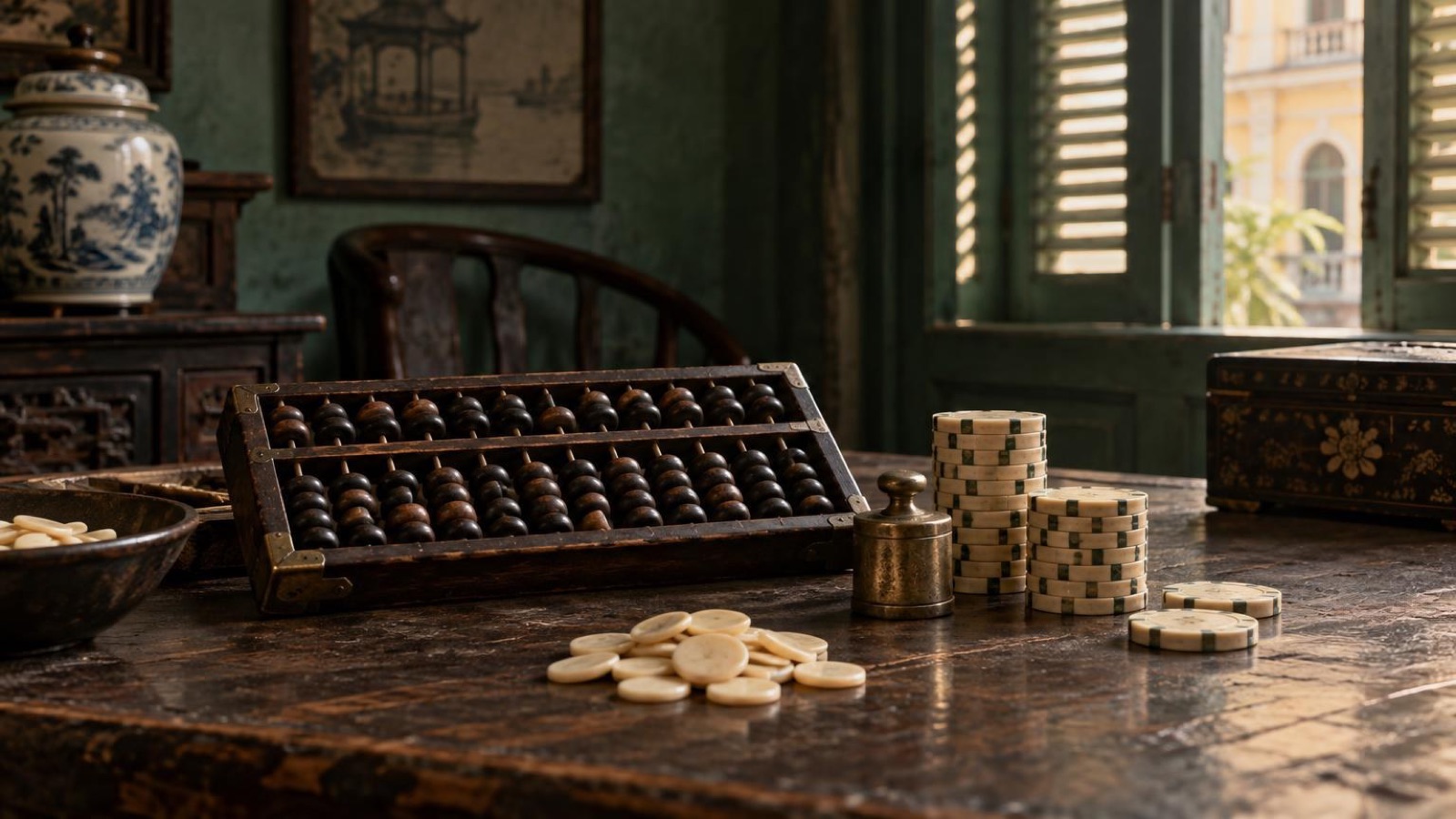
Gambling in Macau is not a recent invention. The Portuguese-Macao government took steps to legalize casino gaming between 1847 and 1927, a period when gambling was still banned in Portugal itself, and it did so for a simple reason: the small colony needed income, and licensing games of chance was a reliable way to get it1. Another account puts the founding date at 1847 flat, when the Macao government legalized gambling "as a means to generate income"2.
From those early licensed houses grew the modern city. Today Macau's gaming industry spans casino table games, slot machines, horse racing, the Chinese numbers game Pacapio, and sports betting, and the scale is hard to overstate. One industry comparison notes that the gambling business in Macau is so big that its daily revenue amounts to the same figures as a monthly take in Las Vegas7. Casino gaming revenues grew by 34 percent between 2003 and 2004 alone, in the first flush of the opened market8.
The story falls into four broad periods, and this page walks through each:
- 1847 to 1961: licensed gambling under successive monopoly holders, with fan tan as the dominant game
- 1962 to 2001: the STDM monopoly under Stanley Ho, four decades of one-company rule
- 2002 to 2019: liberalization, foreign operators, and the rise of the world's largest gaming market
- 2020 onward: the pandemic closure and the concession renewals that reshaped the industry again
If you want the practical side of gambling in Macau today rather than the history, see gambling in Macau and casinos in Macau.
Stanley Ho and the STDM monopoly
The modern history of Macau gambling is mostly the history of one man. Stanley Ho Hung Sun was born in Hong Kong on November 25, 1921, into the prominent Ho Tung family: his grandfather was Ho Fook, comprador of Jardine's, and his great uncle was Sir Robert Ho Tung9. His childhood took a turn when his father went bankrupt and fled to Vietnam during his secondary school years, and after winning a scholarship to study at the University of Hong Kong, he fled to Macau in 1941 at the outbreak of the Pacific War with his entire savings of HKD 1010.
In Macau he went to work for Lien Chang, a grain and oil trading company owned one third each by Chinese, Portuguese and Japanese shareholders, doing ship escort work through wartime waters. The work was dangerous, and in 1943 he was paid a bonus of HKD 1,000,000 for repeatedly risking his life, his first million11. By the end of the war his wealth had reached HKD 2,000,000, and after developing real estate in Hong Kong from 1957, it had surged to HKD 10,000,000 by 195911.
The turning point came in 1961, when he met Ytdelly (葉德利) and other partners and resolved to jointly build the Macau gambling business10. Since Legislative Regulation 1496 of July 4, 1961, games of fortune in Macau had been granted under a monopoly system, and a bidding war that year culminated in a consortium led by Stanley Ho acquiring the gaming monopoly12. The new concessionaire was registered as Sociedade de Turismo e Diversões de Macau (STDM) in 1962, and from then on STDM dominated the gaming market for over 40 years4.
Under STDM, gambling in Macau was a single-company business. When the existing monopoly concession contract expired on December 31, 2001, the government declined to simply renew it, and on March 31, 2002, a total of 11 casinos comprising 330 gaming tables and about 7,000 employees, previously under STDM's ownership, were legally transferred to the newly established SJM, the company that succeeded STDM and later became SJM Holdings12.
Stanley Ho himself became known as the "casino king" who built the gambling hub of Macau13. At his peak he operated or owned 20 casinos and related businesses and employed a quarter of Macau's labor force, with a family fortune that Bloomberg estimated at more than $12 billion in 201714. His interests stretched well beyond the casinos: STDM took over the Macau Jockey Club in 1990, bought the Macau Trotting Club business for 1 billion, and even bought Macau's Mandarin Oriental Hotel, renaming it Grand Lapa4. He was awarded the Grand Bauhinia Medal in 201016. After a fall in 2009, three brain surgeries and a hospital stay of nearly eight months, he died in Hong Kong on May 26, 2020, at the age of 9817.
Where to play
The map of gambling Macau has changed enormously across the decades. Under the late STDM era, the 1997 concession contract named just nine casinos18.
| Casino |
|---|
| Casino Lisboa |
| Macau Palace Casino |
| Jai Alai Casino |
| Kam Pek Casino |
| Oriental Casino |
| Golden Dragon Casino |
| Hyatt Casino |
| Triumph Casino |
| Holiday Inn Casino |
Casino Lisboa, the flagship opened by Ho's company, was for decades the image of Macau gambling worldwide.
After liberalization, the center of gravity shifted from the downtown peninsula to Cotai, the reclaimed strip between Taipa and Coloane where the largest resorts now stand. The Venetian Macao, City of Dreams, Galaxy Macau, the Parisian Macao and the Londoner Macao all carry the modern casino experience, and the scale is a different world from the old monopoly days: the Parisian Macao alone has 365 gaming tables19. You can read about the individual resorts on pages like The Venetian Macao, Galaxy Macau and The Parisian Macao, and about the smaller satellite casinos in Macau that grew out of the old STDM network.
Whatever the era, one thing has not changed: casinos in Macau are open 24 hours a day6. For getting between venues, see getting to and around Macau's casinos.
How it works
For most of its history, Macau gambling worked through a government-granted monopoly: one company paid the government for the exclusive right to run games of fortune. That system was formally set in 1961 and lasted until the Gambling Ordinance passed on August 30, 2001, which put an end to the monopoly system that had lasted for decades5.
What replaced it was a concession system. The government ran a public bidding process, and the winners signed concession contracts to operate casinos. The system later grew a second layer, subconcessions, which let other companies operate casinos under the umbrella of a main concessionaire; the evolution of this system of concessions and subconcessions, and the complex VIP segment that grew alongside it, is the defining feature of the post-2002 industry21. The Macau government later prohibited additional concessions and subconcessions, though it does not place a limit on the number of casinos or gaming areas, and additional casinos require government approval22.
The concession model still governs today. The current contracts, signed in 2022, exclude pari-mutuel betting, games offered to the public outside casinos, interactive gaming, and gaming on vessels or aircraft, keeping the licensed product firmly inside physical casinos23. Oversight sits with the DICJ, Macau's gaming regulator, which you can read about separately24.
Games and products
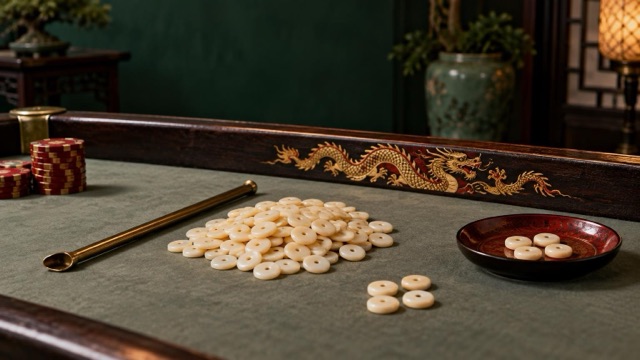
The games themselves tell the history of the city. Fan tan, the Chinese counting game, was the first game of chance in Macau and for more than 100 years the main game of chance in the city3. It held that position through the entire monopoly era's early decades, until in the late 1970s, in the second decade of STDM's monopoly, baccarat became the main game of chance in Macau3. Baccarat has kept the crown ever since, and it remains the game that drives the majority of Macau's table revenue; see baccarat in Macau for how it plays today.
The current gaming law lists 24 permitted games of fortune in casinos, a list that reads like a history of the city's Chinese and Portuguese influences side by side: baccarat, railway baccarat, blackjack, craps, sic bo, fan tan, fish-prawn-crab sic bo, thirteen-card poker, mahjong, mahjong pai gow, pai gow, roulette, five-card poker and more12. Poker arrived late and by specific government order: a 2008 directive permitted Texas Hold'em as a game of luck operated by casino concessionaires, and a 2010 directive added Omaha Poker25. STDM also introduced pachinko in 1998, a Japanese import that never caught on the way baccarat did4.
Beyond the casino floor, Macau's gaming industry has long included horse racing, Pacapio and slot machines alongside the internationally renowned table games of its large casinos5. Horse racing dates back generations, with STDM taking over the Macau Jockey Club in 19904. Dog racing had an even longer run: the Yat Yuen Canidrome opened in 1931, stopped after five years due to business difficulties, resumed in the early 1960s after the franchise changed hands several times, and declined from the 1980s onward27. In its final years it held more than 90 races a month and was the last legal greyhound racing venue in Asia, until the government reclaimed the land and racing ended on July 20, 2018, leaving more than 600 retired greyhounds needing new homes27.
Costs, prizes and payouts
Macau has always been a city of two markets: the mass floor and the VIP room, and the money in each is on a different scale. The VIP segment was built around junket operators, companies that brought high rollers to Macau, lent them playing credit and ran private rooms inside the casinos. One such operator, the David Group, began operations in 2004 and grew into one of the top-10 junket operators in the Macau gaming market judged by volume of VIP chip roll, with between 3 and 5 percent of the market28. At its height it ran seven VIP rooms in Macau with a total of 58 gaming tables, spread across Wynn Macau, MGM Macau, Galaxy Macau, the casino at Four Seasons and L'Arc28.
The entry price for that world was steep: opening an account at David Group's VIP rooms previously required at least HKD 100,000, though by the time the operator wound down its rooms in phases in 2015, no minimum fund was required28. The junket era itself has been fading, with operators closing rooms and shifting services to high rollers in places like the Philippines, Laos and Cambodia29. For how the VIP system works and what replaced it, see junkets and VIP rooms in Macau.
On the mass side, the numbers are simpler but no less striking. The sheer volume of play means Macau's daily revenue rivals Las Vegas's monthly figures7, and the growth after liberalization was explosive, with casino gaming revenues increasing by 34 percent between 2003 and 20048. Winnings are paid out at the table or machine, and Macau does not tax individual players on what they take home; the tax burden sits on the concessionaires. For the details, see tax on gambling winnings in Macau and money and payments at Macau casinos.
Who can take part
The rules on who may play have tightened over the years. Under the original gaming law the minimum age for entering gaming areas was 18; the current law raised it, and people aged below 21 are now prohibited from entering casinos, while the age for legal participation in betting on horse racing, football, basketball and similar sports remains 1830. The same 21-year minimum applies to working inside casinos32.
Certain groups are barred from playing even though they may enter. Judges, prosecutors, anti-corruption officials, audit officials, regulator staff, security forces and customs officers may enter casinos in the exercise of their functions but may not play any game of fortune33. The Chief Executive, principal officials, Executive Council members and directors of the concessionaires themselves may enter freely but may not gamble, directly or through anyone else34. Gaming areas are also off limits to people who are intoxicated or under the influence of drugs, and to anyone carrying weapons, explosives or recording devices35. These rules apply to everyone in Macau, residents and visitors alike; if you are visiting, the practical point is simple: bring ID, be over 21, and you will have no problem at the door. See casino entry rules in Macau and gambling in Macau as a visitor for the details.
Common Questions
When did gambling become legal in Macau?
The Portuguese-Macao government legalized casino gaming between 1847 and 1927, even while gambling stayed banned in Portugal itself. The government saw licensing as a way to raise revenue for the small colony.
Who was Stanley Ho?
A Hong Kong-born businessman who arrived in Macau with HKD 10 during the war and built a gaming empire. His company STDM held the casino monopoly from 1962 to 2002, and at his peak he operated 20 casinos and employed a quarter of Macau's workforce.
What was the STDM monopoly?
From 1962, STDM (Sociedade de Turismo e Diversões de Macau), controlled by Stanley Ho, was the only company allowed to run casino games in Macau. The monopoly lasted 40 years and ended when the government opened the market to foreign investors in 2002.
Why did Macau open its casino market in 2002?
The government passed a new gaming law on August 30, 2001, ending the decades-old monopoly when STDM's concession expired on December 31, 2001. Bidding followed, and foreign operators entered in 2002, transforming Macau into the world's biggest gaming city.
What was the first casino game in Macau?
Fan tan, a Chinese counting game, was the first game of chance in Macau and stayed the city's main game for more than 100 years. Baccarat overtook it in the late 1970s and remains the dominant game today.
Did Macau ever have dog racing?
Yes. The Yat Yuen Canidrome opened in 1931 and was the last legal greyhound racing track in Asia. It held more than 90 races a month before the government reclaimed the land and racing ended on July 20, 2018.
Sources35 sources
- The Transformation of Macao's Gaming Industry, University of Macau Repository
- Gambling in China: Socio-Historical Evolution and Current Challenges, Docksci
- Fan Tan to Baccarat: A New Book on Macau Gaming Law, GGRAsia, September 26, 2026
- History of Gaming in Macau, DICJ
- Macao Gaming Industry Overview, Macao Government Tourism Office, October 27, 2021
- Gaming (Chinese-language page), Macao Government Tourism Office, October 27, 2021
- Best Online Casinos for Players from China, Wizard of Odds
- Gambling in Japan, Oxford Brookes University
- Citation for Stanley Ho, Doctor of Social Sciences honoris causa, University of Hong Kong
- Stanley Ho obituary coverage, Oriental Press Group, May 26, 2020
- Stanley Ho profile, Kaifong and community history, China Review
- Law 16/2001 extracts and commentary, Macau Printing Bureau
- Stanley Ho authority record, HKCAN
- Stanley Ho, Who Built Macau Gambling Empire, Dies at 98, The New York Times, May 26, 2020
- Stanley Ho profile, Forbes
- Stanley Ho death coverage, Sina Entertainment, May 26, 2020
- Stanley Ho health history, Oriental Daily, May 26, 2020
- 1997 gaming concession contract extracts, Macau Official Gazette
- The Parisian Macao gaming table data, DICJ (archived)
- HKPU Final Report on Macau gaming, Home and Youth Affairs Bureau, Hong Kong
- Casino Gaming in Macau: Evolution, Regulation and Challenges, UNLV Gaming Law Journal
- MGM Resorts 10-K filing, U.S. Securities and Exchange Commission (archived)
- SJM gaming concession contract 2022, DICJ
- The DICJ, Macau's Gaming Regulator, ExpatBets
- Texas Hold'em Poker approval, Despacho No. 11/2008, DICJ
- Omaha Poker approval, Directive No. 97/2010, DICJ
- Yat Yuen Canidrome photo essay, Initium Media (archived)
- Junket Operator David Group Winding Down Operations: Nomura, GGRAsia
- Junkets on Borrowed Time, Macau Business
- Macao gambling ages clarification, Hong Kong Information Services Department, May 9, 2018
- Macao gambling ages (Chinese), Hong Kong Information Services Department, May 9, 2018
- Law No. 10/2012 on entry to casinos, Macau Printing Bureau
- Law No. 10/2012, Article 5(1), Macau Printing Bureau
- Law 10/2012 entry and play restrictions, Macau Printing Bureau
- Law 16/2001 Article 24, Macau Printing Bureau