What ban'ei racing is
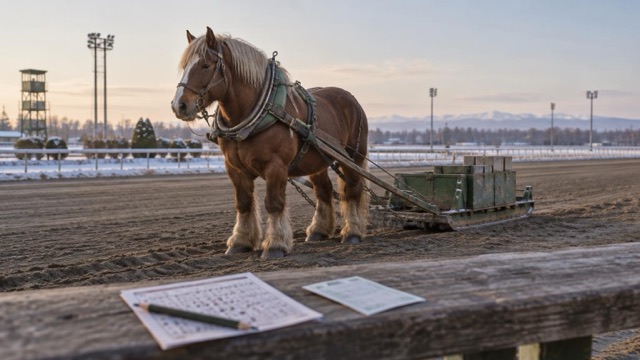
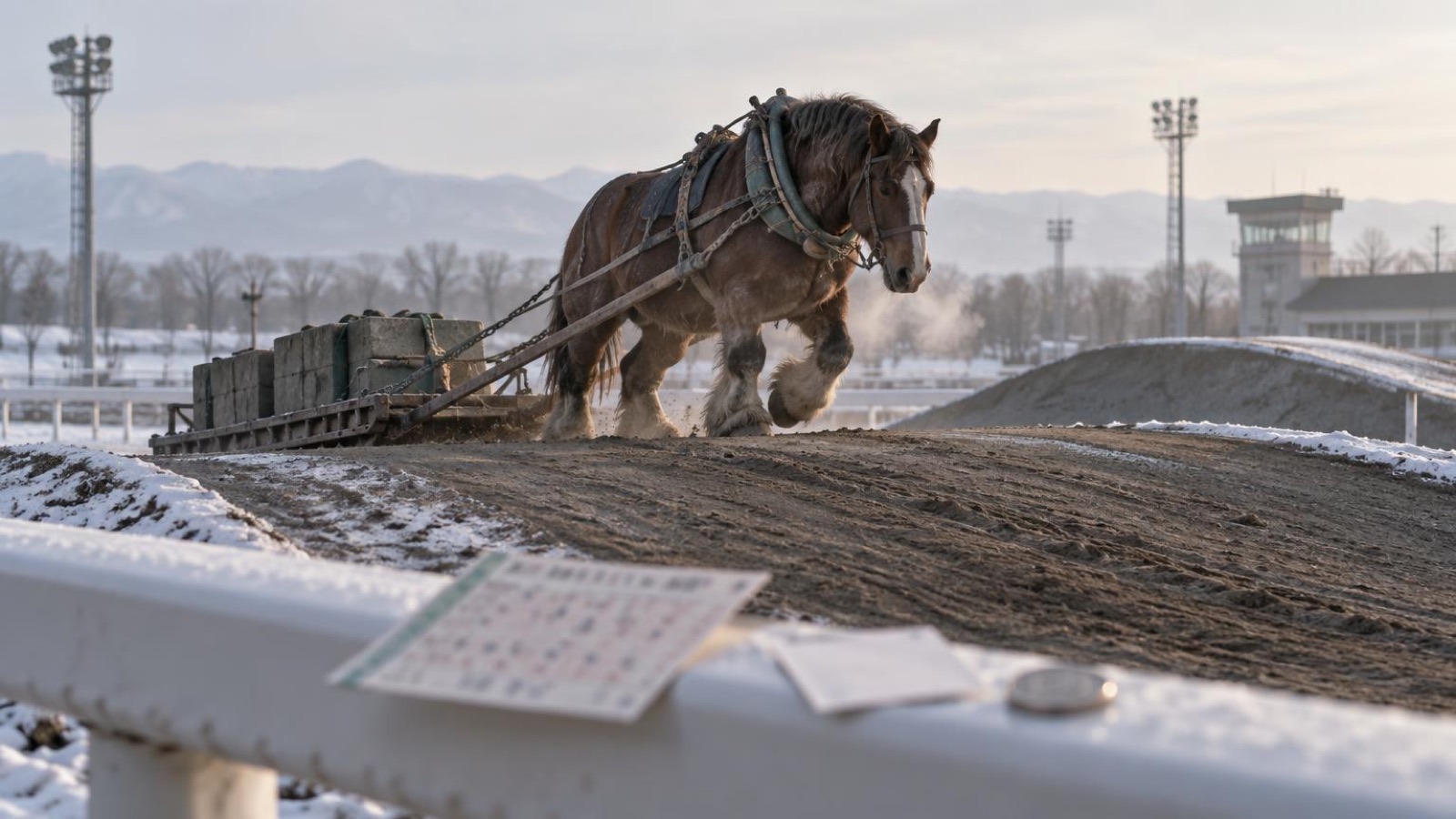
Ban'ei racing (ban'ei keiba) is horse racing turned upside down. Instead of thoroughbreds sprinting around a flat oval, draft horses weighing from 800 to 1,200 kg compete by pulling a sled carrying a jockey and a prescribed heavy load over a 200-meter dirt track with two humps. It is held only in Hokkaido, Japan's northernmost island, and it is the only sport of its kind anywhere in the world1.
The horses are descendants of the Percheron, Breton and Belgian draft breeds once used to farm the Tokachi Plain. When tractors replaced them in the fields, the races kept the tradition alive, and today Obihiro Racecourse is the last place on earth where you can watch, and bet on, these animals at work. A race is not a flat-out sprint. It is a test of raw strength and will: the horse has to haul its load up and over two steep humps, and a horse that stops partway can still win if it restarts and finishes, while a horse that falls or drops its driver is out.
Races are graded like other Japanese racing, with BG1 the top class, and the calendar includes long-running named races. The 35th Heroines Cup, a BG1 race over 200 m for fillies and mares aged four and up, was run at Obihiro on January 26, 2025, which gives you a sense of both the grading system and the age of the tradition5. Ban'ei is part of local horse racing (chiho keiba), the network of racecourses run by local governments, distinct from the Japan Racing Association's ten national racecourses1. If you want the wider picture of the sport in Japan, see our pages on horse racing in Japan and local horse racing.
The track: 200 m and two hills
The ban'ei track is 200 meters of straight dirt, and what makes it unique is the pair of humps built into it. The first hill is the steeper of the two, and the second tests whatever the horse has left. A typical race comes down to how the horse handles the first hump: some charge it, some grind over it, and some stall. Because the load is heavy and the hills are steep, races are slow by horse racing standards, often taking a minute or more, and the drama is in the struggle rather than the speed.
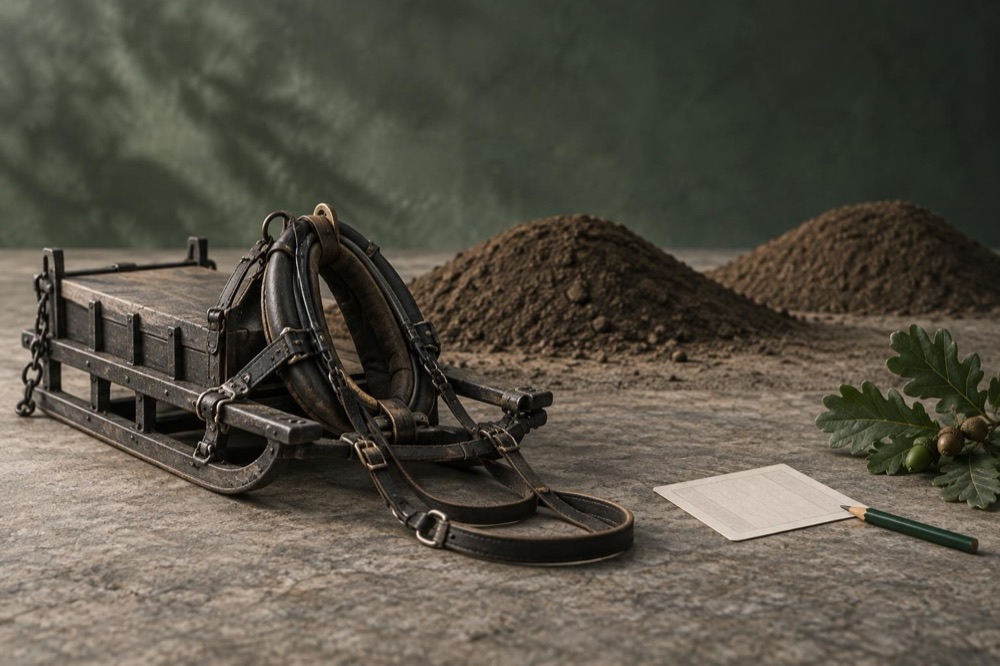
All local-government (NAR) racecourses in Japan run on dirt, with only Morioka also having a turf track, so the dirt surface at Obihiro fits the national pattern, but no other course anywhere has hills like these1. The starting load is set by the race conditions, with better-class horses carrying more weight, which is how the handicapper keeps fields competitive. The jockey rides on the sled itself, steering and balancing rather than posting, and a fall from the sled means the run is over.
Obihiro Racecourse
Obihiro Racecourse is the only venue in the world where ban'ei racing is held, and it is the home of the sport year round. The course sits at 9-1 Minami, Nishi-13-jo, Obihiro-shi, Hokkaido 080-0023, in the center of the Tokachi Plain, near Midorigaoka Park and a short drive from the city's urban district2. Obihiro is the main city of the Tokachi region, roughly in the middle of Hokkaido, and the racecourse is close enough to the center that you do not need a car to visit.
The racecourse is operated as part of the Hokkaido local racing circuit, alongside thoroughbred venues such as Mombetsu Racecourse, and it is the only one of them that stages ban'ei. Race days are spread through the year, with the biggest events, the BG1 races, drawing the strongest horses and the biggest crowds. The 35th running of the Heroines Cup in January 2025 shows a race with real history behind it5.
The venue works like a normal Japanese racecourse: grandstands, an infield, betting windows and automated machines, food stalls and seating areas. Because the races are slow and the track is short, sightlines are good from almost anywhere, and you can watch a whole race from start to finish without binoculars.
Getting there
From JR Obihiro Station, the racecourse is close and simple to reach2:
- Bus: about 10 minutes on the Tokachi Bus toward the Eigyosho (the Tokachi Bus Business Office), getting off at the Keibajo Mae stop, which is in front of the racecourse2
- Taxi: about 8 minutes from JR Obihiro Station2
- On foot: about 20 minutes from JR Obihiro Station, practical if the weather is good2
- By car: the course is a short drive from the city's urban district, and there is parking on site2
Obihiro Station is on the JR Nemuro Main Line, and the city has an airport (Obihiro Airport) with domestic flights, so a visit from Sapporo or Tokyo is feasible as a day trip or an overnight stay. If you are combining ban'ei with other racing in Hokkaido, the same operator runs Mombetsu Racecourse, which is about 1 hour 50 minutes from Sapporo by route bus7.
Admission and what it costs
Entry to Obihiro Racecourse costs 100 yen, which is the standard gate price at local racecourses across Japan2. That is one of the cheapest days out in Japanese gambling: for a little more than the price of a coffee you get a full race day of the most unusual horse racing on the planet.
Inside, seating costs extra on race days at the home track.
The private rooms are the comfortable option for a group, and the reserved seats guarantee you a spot on the busier BG1 race days. Food and drink are available from stalls in the concourse, and prices are what you would expect at a Japanese sporting venue rather than inflated stadium rates.
For comparison, JRA's big-city racecourses charge 200 yen at the gate, so Obihiro is at the cheaper end even within Japan1. There is no dress code; racegoers come in everything from winter gear, which you will want from November through March, to casual summer clothes.
Betting on ban'ei
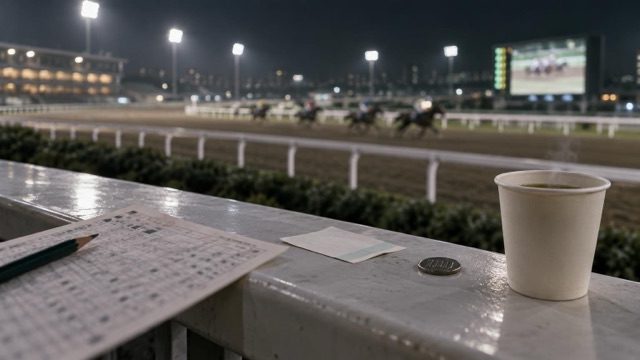
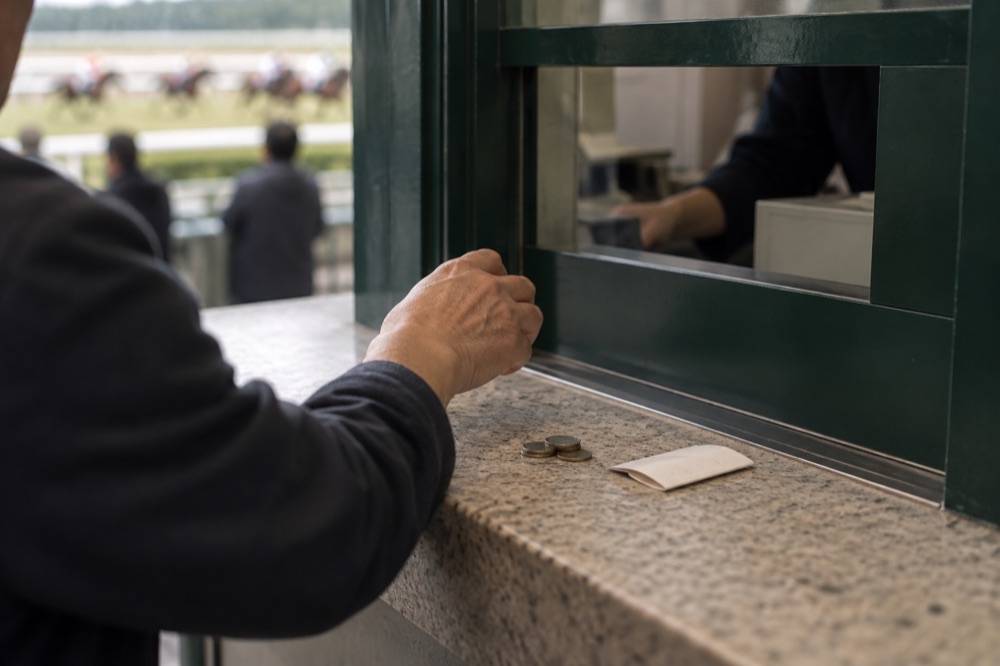
Betting on ban'ei works through the same local racing (chiho keiba) system as other NAR courses, with bets placed in 100 yen units, the standard minimum across Japanese racing4. You can bet at the windows or the automated machines in the grandstand using a mark card, where you darken the horse numbers and bet type you want, then hand it in with your cash.
The bet types are the familiar Japanese racing set: win (which horse finishes first), place (a horse finishing in the top positions), and the combination bets such as exacta and quinella that pay more for harder picks. Our page on Japanese horse racing bet types explains each one in detail, and the same logic applies here, just with slower horses and heavier stakes of a different kind.
Because ban'ei fields are small and the sport is specialized, form study is its own world. Regulars follow individual horses closely, since a horse's ability to restart after stalling on a hump matters as much as its raw strength. Payouts follow the pari-mutuel model: the pool is divided among winning tickets, so a popular horse pays little and an overlooked one can pay well.
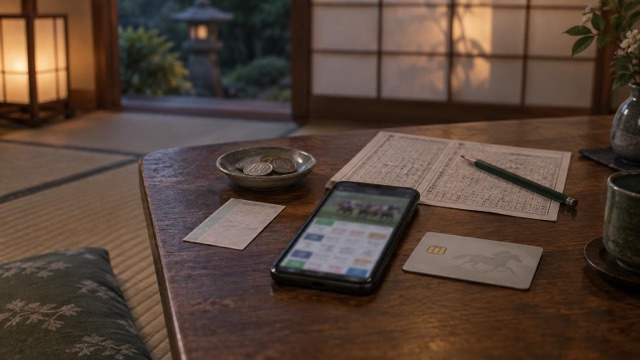
If you cannot get to Obihiro, you can bet remotely. Odds Park is the online service for local horse racing, where you can buy horse racing tickets and watch the races, including ban'ei, from anywhere in Japan4. Hokkaido Keiba also runs a telephone and internet betting service covering all Hokkaido racetracks, so ban'ei betting is available across the country without setting foot in Hokkaido9. For the broader online picture, see betting on Japanese horse racing online.
Off-course, ban'ei and other Hokkaido racing are sold at betting venues around the prefecture, and JRA's network of 10 racecourses and 38 WINS off-course betting facilities nationwide also functions as off-course outlets on days when they are not hosting races1. So even outside Hokkaido, race days at other courses often carry Hokkaido races on their screens and machines.
Who can bet
Anyone aged 20 or over can buy betting tickets at Obihiro Racecourse, whether you are a Japanese citizen, a foreign resident or a visitor on a tourist visa. This is the standard rule for all public gambling in Japan, and it applies equally at the track, at off-course venues and through the online services. The practical point for visitors is simple: bring cash, since betting windows and machines take yen, and the 100 yen gate fee is paid in coins or notes at the entrance. There is no residency check for a day at the races.
A first visit, step by step
Here is how a first day at ban'ei racing typically goes:
- Arrive at JR Obihiro Station and take the Tokachi Bus toward the Eigyosho, a 10-minute ride, or a taxi for 8 minutes2
- Pay 100 yen at the gate and walk in; pick up a race program, which lists the day's races, horses, loads and grades2
- Watch a race or two before betting. The humps make the sport readable even for beginners: you will quickly see how horses attack the first hill and what happens when one stalls
- Buy your tickets at a window or machine, starting at 100 yen per bet; mark cards are in Japanese, but the numbers are straightforward, and staff help newcomers4
- Find a seat: general viewing is included in admission, a reserved seat is 500 yen, and private rooms run from 3,000 to 7,000 yen on race days3
- Collect winnings at the payout window after each race, keeping your tickets until results are confirmed
A few practical notes for the day. Winter race days in Obihiro are genuinely cold, with the Tokachi Plain wide open to the wind, so dress for it; the grandstand offers shelter but the best views of the humps may be from more exposed spots. Race days run through the afternoon and into the evening, with the ban'ei schedule at Obihiro running roughly 13:45 to 21:00, so an afternoon arrival gives you several hours of racing. Smoking is not allowed inside the stands at Japanese racecourses, with designated outdoor areas provided, so plan accordingly.
The atmosphere is local and friendly. Ban'ei crowds are smaller than JRA crowds and skew toward regulars who know the horses by name, and the sport's survival at a single track gives race days a festival feeling, especially at the BG1 events. If you enjoy it and want more of Japan's public gambling, the same pari-mutuel world includes boat racing, keirin and auto racing, all bettable in the same 100 yen units.
Common Questions
Where is Obihiro Racecourse located?
It sits at 9-1 Minami, Nishi-13-jo, Obihiro-shi, Hokkaido 080-0023, in the center of the Tokachi Plain, near Midorigaoka Park and a short drive from the city's urban district. It is the only place in the world where ban'ei sled racing is held.
How do I get to Obihiro Racecourse from JR Obihiro Station?
Take the Tokachi Bus toward the Eigyosho (Tokachi Bus Business Office) and get off at the Keibajo Mae stop in front of the racecourse, about 10 minutes. A taxi takes about 8 minutes, and the walk takes about 20 minutes.
What is the phone number of Obihiro Racecourse?
The official sources we checked do not list a direct phone number for the racecourse. For race schedules, admission and betting questions, contact Hokkaido Keiba, the operator, through its website or its telephone betting service.
Is there parking at Obihiro Racecourse?
Yes, the racecourse has parking for visitors arriving by car, and it is a short drive from central Obihiro. Parking arrangements at Japanese local racecourses are generally free or low cost on race days, but confirm current conditions with the operator before a big race day.
Can I smoke at Obihiro Racecourse?
Japanese racecourses almost universally ban smoking inside the stands, including e-cigarettes, and ask visitors to use designated outdoor smoking areas. Obihiro follows this pattern, so plan to smoke only in the marked areas.
What is the Odds Park LOTO format at Obihiro?
Odds Park is the online service for local horse racing (chiho keiba), including ban'ei at Obihiro. Through it you can buy horse racing tickets and watch races remotely, so you can bet on ban'ei from anywhere in Japan without traveling to Hokkaido.
What is the statue in front of the main gate?
The official sources we checked do not describe the statue at the main gate. Ban'ei racing celebrates the heavy draft horses of the Tokachi region, and monuments at the course honor that tradition, but ask staff at the gate for the details.
Sources9 sources
- HRIJ Guidebook 2026, Japan Racing Association, 2026
- Obihiro Racecourse, Japan Racing Association, 2026
- Guide, keiba.go.jp, 2026
- Odds Park, Nagoya Keiba, 2026
- Heavy prize schedule, January 2025, keiba.go.jp, 2025
- Local OTBs, Japan Racing Association, 2026
- Access by bus, Hokkaido Keiba, 2026
- Access, Hokkaido Keiba, 2026
- Racecourse services, Hokkaido Keiba, 2026