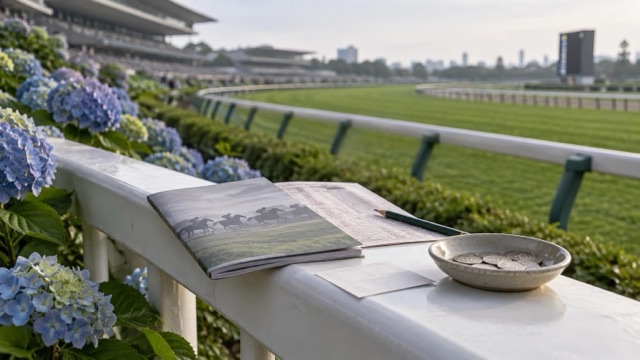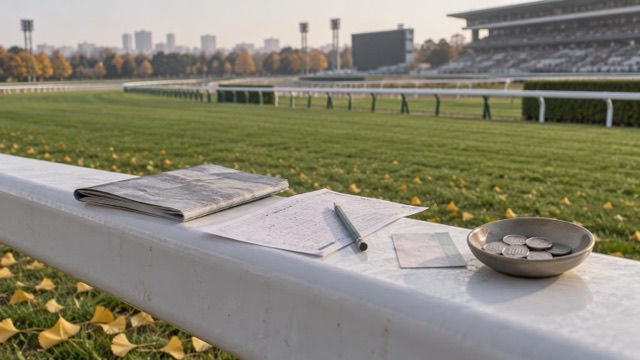
Local horse racing in Japan, called chiho keiba (or NAR racing, after the National Association of Racing that administers it), is the regional half of Japanese horse racing. While the Japan Racing Association (JRA) runs the big-name central meetings, local racing happens at tracks owned and operated by prefectural and municipal governments, and it has a character all its own: smaller fields, cheaper days out, and, at Tokyo City Keiba, the floodlit night meetings that made it famous. If you want the full picture of both halves, see horse racing in Japan; this page focuses on the local side.
Tokyo City Keiba: Japan's first night racing venue
Tokyo City Keiba (TCK) is the racing brand of Oi Racecourse, a racetrack located in the heart of Tokyo in the Shinagawa waterfront area. It holds a particular place in Japanese racing history: TCK is the very first racetrack in Japan to host night racing and events, which is what turned a modest local track into one of the most visited racing venues in the country1.
Getting there is easy, which is part of the appeal. If you are coming on the Tokyo Monorail, get off at Oi Keibajo Mae station and it is a 2 minute walk to the track. On the Keihin express line, get off at Tachiaigawa station and it is a 12 minute walk. If you are flying in or staying near the airport, it is a 10 minute drive from Haneda Airport, which makes a race evening a realistic plan even on a layover day2.
Admission is 100 yen for visitors aged 16 and older, and free for those 15 and under, so it is one of the cheapest evenings out in Tokyo1. Free Wi-Fi is available throughout the venue under the SSID "TCK Free Wi-Fi" with the password 5501, and no registration is required to connect1.
Racing at TCK runs in scheduled meetings, typically several consecutive days at a time. The next race week often starts on a Sunday, for example October 4, with gates opening at 13:00 and the first race at 16:25 on day one6. A meeting day usually features around 10 races, numbered Race 1 through Race 10, with the card published in advance in a program8.
Twinkle Races: night racing under the lights
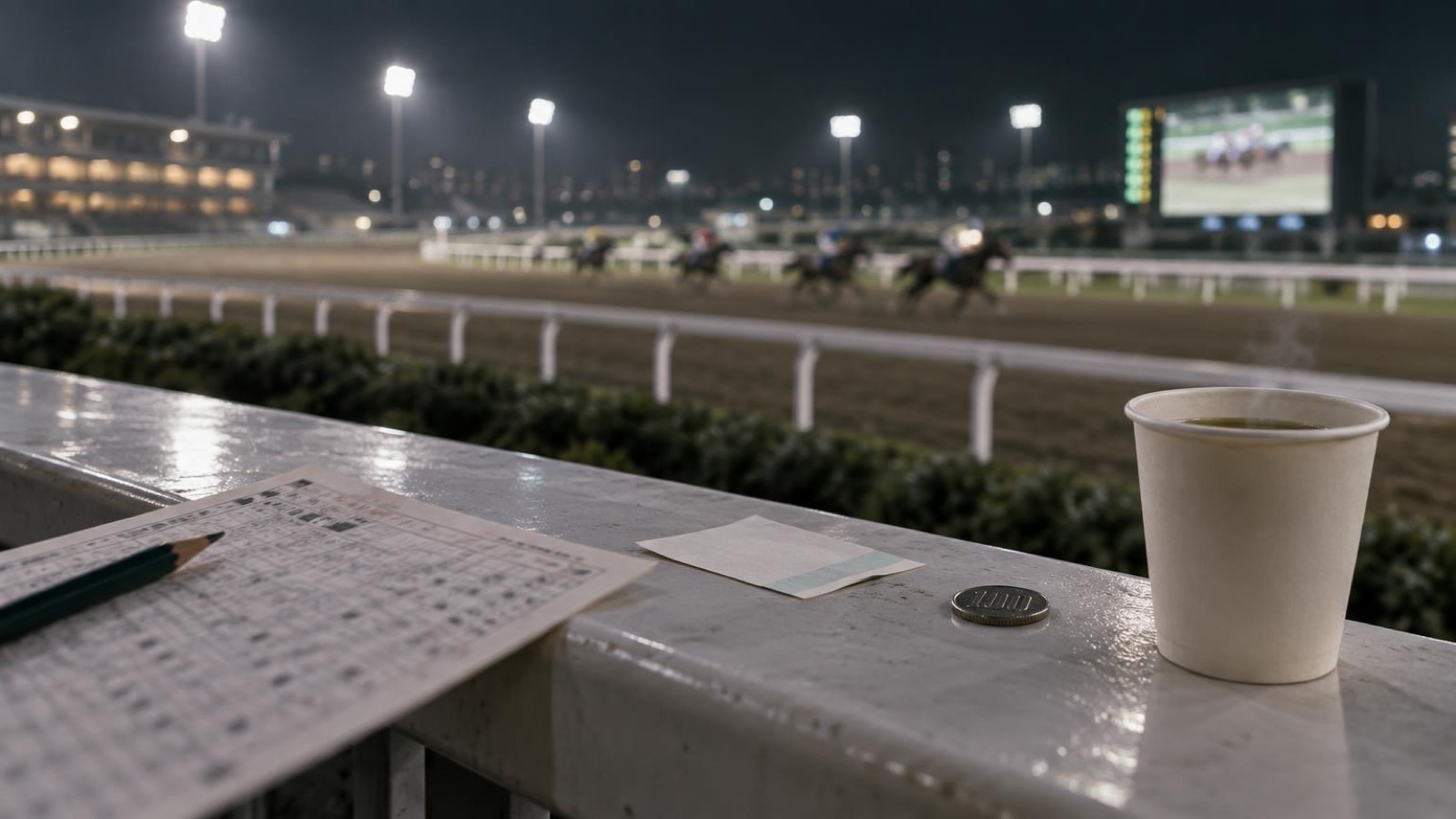
The beloved night races held at Tokyo City Keiba are nicknamed "Twinkle Races," and they are the track's signature product9. The format is simple and appealing: racing starts in the mid or late afternoon and the later races are run under floodlights after dark, so the meeting ends with the main event under the lights.
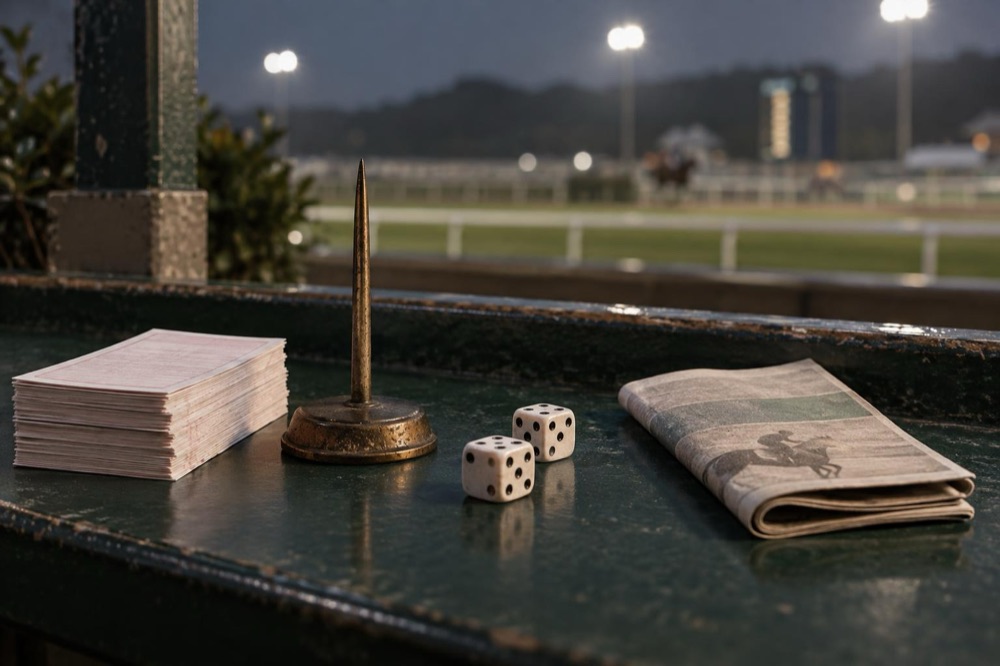
A typical Twinkle Race day looks like this: gates open in the early afternoon, often between 13:00 and 15:00 depending on the day, the first race goes off somewhere between 14:00 and 16:25, the main race is run around 20:05 or 20:10, and the last race is around 20:506. On one October meeting, for instance, the two days looked like this:
Not every part of the year is night racing. TCK racing in January through March is held during the day, so if you specifically want the floodlit experience, plan around the April to December meetings1. Some special days shift the pattern: the Tokyo Daishoten meeting on December 29 runs on a daytime card, with gates opening at 10:10 and the main race at 17:457.
Tokyo City Keiba as Tokyo's new night spot
TCK markets itself as "Tokyo's New Night Spot" and describes itself as the "Nighttime playground of Tokyo," and the branding is not just talk9. The evening meetings, the lit-up track and the food and seating options make it a genuine after-dark destination in a city where most entertainment of this kind happens in pachinko parlors or izakayas.
Food is a big part of the experience. Inside the Miyabi area you will find Takebue, a restaurant serving fresh tuna dishes in a retro Japanese setting10. In the L-WING stand, the 1F restaurant row includes Yakisoba Shop Ichiboshi by STAR LIGHT, serving yakisoba, the classic racecourse comfort food11. Between the tuna and the noodles, you can eat well without leaving the stands.
Two service points are worth knowing. The general service counter is located on the 1st floor of G-Front, and the beginners' counter is located on the 1st floor of the L-WING, so if it is your first time and you need help placing a bet, head to the L-WING counter1. Note that the stands are entirely non-smoking, and smokers must use the designated smoking areas3.
What you can see and do at a meeting
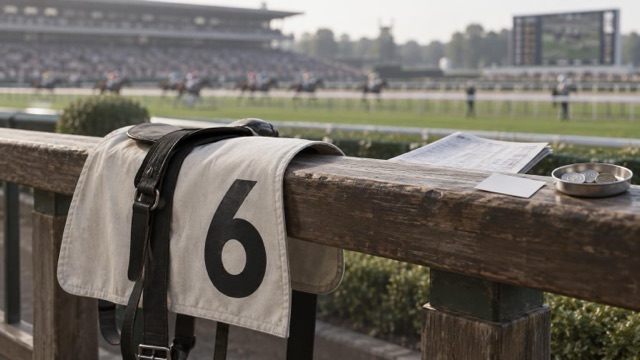
A chiho keiba meeting day is built around a card of roughly 10 to 12 races, run at intervals of about 30 to 40 minutes from the first post to the last. At Tokyo City Keiba, a December 29 meeting card listed 10 races, Race 1 through Race 10, with the post time for the first race at 4:25 p.m.8. Between races you watch the horses in the parade ring, study the form, place your bets, eat, and watch the big screens.
The race program is published in advance, and it is worth checking it before the barrier draw changes things: horse scratches and jockey changes after the barrier draw are not reflected in the program, so check the day-of changes boards at the track8.
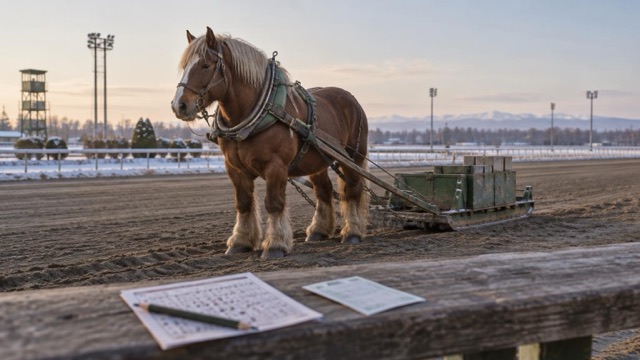
Local racing elsewhere in Japan adds its own flavor. Kochi Racecourse in Shikoku runs its own night meeting series called the Yosakoi Nighter, named after the famous Kochi festival dance4. Hokkaido's racing body has historically run fan events at its main venue such as an Opening Thanks Day, Spring Keiba Festival, Summer Keiba Festival and Autumn Gourmet Festival, though these have been suspended in some seasons12. Prize money at the local level is modest compared with JRA racing: in one Hokkaido season, added prize money for a 2-year-old race was JPY 800,000 for the winner down to JPY 56,000 for fifth, about JPY 1,360,000 per race13.
Where local racing takes place across Japan
Local racing is genuinely nationwide. It helps to understand the split: central horse racing under the JRA takes place at 10 racecourses in Japan, from Hokkaido in the north to Kyushu in the south, namely Sapporo, Hakodate, Fukushima, Niigata, Tokyo, Nakayama, Chukyo, Kyoto, Hanshin and Kokura14. Everything else, the tracks run by local governments, is chiho keiba.
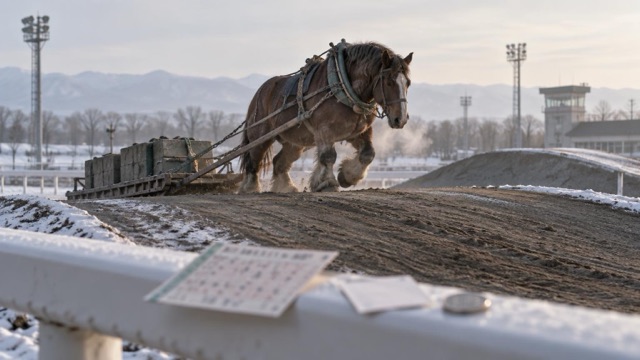
The biggest local racing region is Hokkaido, where Hokkaido Keiba runs meetings at Mombetsu Racecourse and sells tickets through a network of 16 off-course sales offices called "Aiba" across the island, including Aiba Sapporo Chuo, Aiba Otaru, Aiba Chitose, Aiba Shizunai, Aiba Nakashibetsu and Aiba Hakodate-minato-cho16. At Mombetsu and the Aiba offices you can buy tickets not only for Hokkaido Keiba but also for JRA races and for the southern Kanto local venues, so one window covers most of Japanese racing16. Note that at Aiba Sapporo Chuo, JRA bets are sold for main races only16.
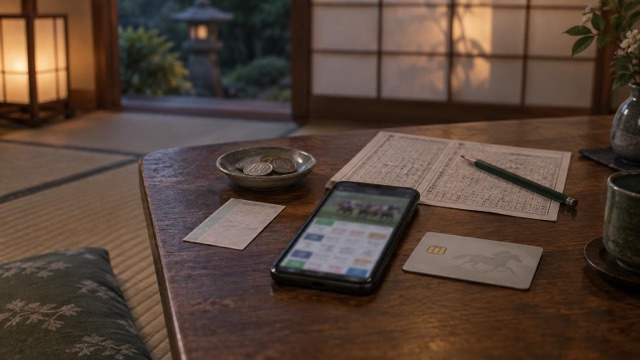
Other local venues around the country include Kasamatsu in Gifu, Kanazawa, Nagoya and Kochi, each with its own racecourse and meeting calendar. If you cannot get to a racecourse, off-track betting offices such as J-Place venues sell tickets and show the races, and online services cover the whole local calendar: Odds Park offers betting and race viewing for local racing, and Rakuten Keiba provides voting, race video and information for all local racing venues, covering every race held at every NAR racecourse5.
How betting at the track works
Betting at a chiho keiba track works the same way as at a JRA track, using the standard Japanese bet types. The basic bets are:
- Win (tansho): pick the horse that finishes 1st4.
- Place (fukusho): pick a horse that finishes in the top 3, or the top 2 when there are 7 or fewer runners4.
- Quinella (umaren) and exacta (umatan): pick the first two finishers, in either order or the exact order.
- Wide: pick two horses that both finish in the top 3.
- Trifecta (3-rentan) and trio (3-renfuku): pick the first three finishers, in exact order or any order.
Which bet types are on offer depends on the number of starters. At Kanazawa, for example, races with 8 starters sell the win, place, quinella and exacta, trifecta and trio, and wide, with the place bet paying to 3rd, while races with 5 to 7 starters sell the same set but with the place bet paying only to 2nd18. The types are decided by the number of starters at the start of sales and offered in all races18.
Ticket sales close 2 minutes before each race starts, so do not leave your bet to the last moment19. Payouts are pari-mutuel: the pool is divided among winners, and the payout rate can vary. In one notable case, Kochi Keiba changed the payout rate of the trifecta in the final race to 77 percent, an unusually generous rate for that bet type4.
One thing that surprises many visitors: at Tokyo City Keiba you can also bet on JRA central racing. Since March 29, 2014, all JRA bet types have been sold at TCK, using the NAR totalizator system built jointly by NAR and local governments, which replaced the old off-course sales system entirely20. Similar arrangements exist elsewhere, such as J-Place venues selling all Banei race meetings21. So a single evening at Oi can cover both local and central racing.
Anyone can take part, including foreign visitors: there is no residency or citizenship requirement to buy betting tickets at the track, and you pay and collect in cash at the windows.
Tips for a first visit
A few practical points will make your first chiho keiba day go smoothly.
Arrive early enough for the first races. Gates at Tokyo City Keiba open between 13:00 and 15:00 on most night meeting days, and earlier on special daytime cards7. Arriving an hour before the first race gives you time to find the beginners' counter on the 1st floor of the L-WING, pick up a program, and get oriented1.
Sort out your seats. General admission is the JPY 100 entry described above. If you want a reserved seat, note that same-day and advance reserved seat tickets are sold on race days, but purchasing reserved seats requires membership registration, so register in advance online if you want a specific seat for a big night3.
Bring cash. Betting windows take cash, and while the venue has free Wi-Fi, the betting itself is done at windows or terminals with yen in hand1.
Getting to other local tracks is usually easy by train. Kasamatsu in Gifu is a good example: it is about 4 minutes from Meitetsu Gifu Station to Meitetsu Kasamatsu Station, then 3 minutes on foot from the station to the track. Take a rapid limited express, rapid express, express or semi-express on the Meitetsu Nagoya Main Line toward Ichinomiya, Nagoya or Chubu Centrair International Airport, noting that the Muse Sky and some limited express trains do not stop at Kasamatsu Station. By car from Nagoya, head toward Gifu on National Route 22 (Meihi Bypass), take the side road just after crossing the Shin-Kiso River Bridge and go west for about 5 minutes22.
In Hokkaido, use the shuttle buses. Hokkaido Keiba runs shuttle buses such as the Grand Shario Nighter shuttle on every day of its race meetings, connecting transport hubs with the venue16.
Check the schedule before you travel. Local meetings run in blocks of days, not year-round at any one track. Tokyo City Keiba publishes its meeting calendar with gate times, first race times and main race times for each day, so a quick look at the schedule tells you whether you will get a Twinkle night or a daytime card7.
For the wider context of what else you can gamble on in Japan, from pachinko to boat racing and keirin, see our gambling in Japan overview. If you want to go deeper on the betting side, our pages on Japanese horse racing bet types and betting on Japanese horse racing online cover the details.
Common Questions
Where is Tokyo City Keiba held?
Tokyo City Keiba is held at Oi Racecourse in Shinagawa, in the heart of Tokyo. It is a 2 minute walk from Oi Keibajo Mae station on the Tokyo Monorail, or a 12 minute walk from Tachiaigawa station on the Keihin express line.
What are Twinkle Races?
Twinkle Races is the nickname for the night races held at Tokyo City Keiba. Races run from late afternoon into the evening under floodlights, with the main race usually around 8:05 or 8:10 p.m. and the last race around 8:50 p.m.
Is Tokyo City Keiba the only track with night racing in Japan?
No. Tokyo City Keiba was the first racetrack in Japan to host night racing, but other local tracks also run evening meetings, including Kochi Racecourse with its Yosakoi Nighter series. Night racing is a signature of local racing rather than central JRA racing.
Do I need to buy tickets in advance for Tokyo City Keiba?
General admission does not need to be booked. Reserved seats are sold both on the day and in advance, but buying reserved seats requires free membership registration. General admission is JPY 100 for ages 16 and up, free for 15 and under.
Can tourists bet at chiho keiba races?
Yes. There is no restriction on foreign visitors buying betting tickets at local racecourses or off-track betting offices. You pay cash at the windows, and winnings are paid out the same way.
Is chiho keiba different from central horse racing in Japan?
Yes. Chiho keiba is run by local governments and regional bodies at their own racecourses, while central racing is run by the Japan Racing Association at its 10 racecourses. The bet types are similar, and some venues sell both.
Sources22 sources
- Tokyo City Keiba About, Tokyo City Keiba, 2026
- Tokyo City Keiba Access, Tokyo City Keiba, 2026
- Tokyo City Keiba Reserved Seat Buying Guide, Tokyo City Keiba, 2026
- Kochi Keiba News, Local Racing Association, 2014
- Nagoya Keiba Odds Park, Nagoya Keiba, 2026
- Tokyo City Keiba Race Schedule, Tokyo City Keiba, 2026
- Tokyo City Keiba Schedule, Tokyo City Keiba, 2026
- Tokyo City Keiba Program, December 29, 2024, Tokyo City Keiba, 2024
- Tokyo City Keiba, Tokyo City Keiba, 2026
- Boat Race Edogawa Venue Guide, Boat Race, 2026
- Tokyo City Keiba L-WING Facilities, Tokyo City Keiba, 2026
- Hokkaido Keiba FY2020 Business Report, Hokkaido Racing, 2020
- Hokkaido Keiba 2023 Business Report, Hokkaido Racing, 2023
- Go Racing Guide, Japan Racing Association, 2026
- Racing Enforcement Order, e-Gov, 2026
- Hokkaido Keiba Sapporo Bus Guide, Hokkaido Racing, 2019
- JRA Local OTB Guide, Japan Racing Association, 2026
- Kanazawa Keiba Betting Ticket Guide, Kanazawa Keiba, 2026
- Hokkaido Keiba Sales Guide, Hokkaido Racing, 2026
- JRA Press Release, February 24, 2014, Japan Racing Association, 2014
- JRA Press Release, March 16, 2015, Japan Racing Association, 2015
- Kasamatsu Keiba Access, Kasamatsu Keiba, 2026