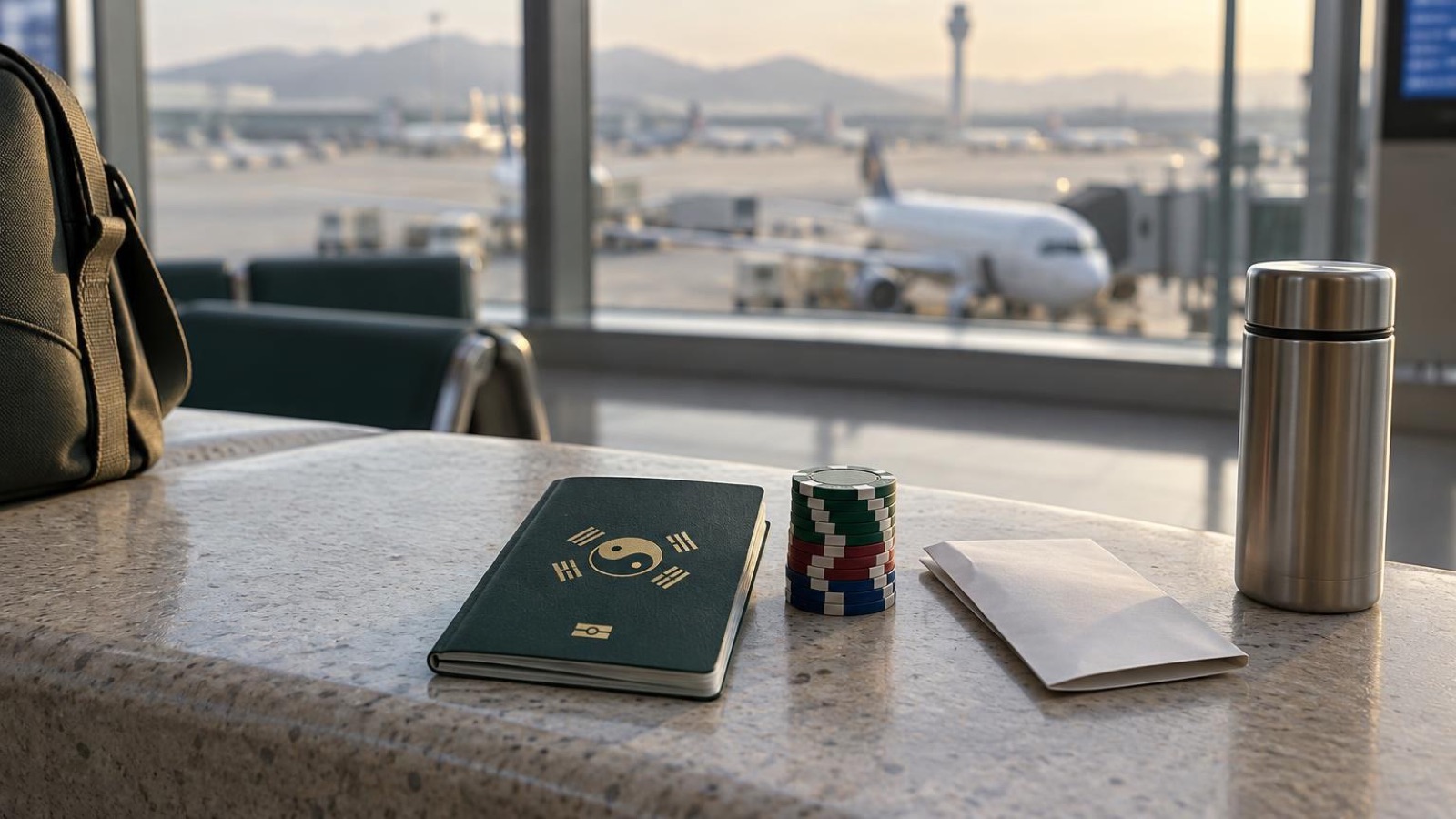
The rule that follows you abroad: Korean law on gambling overseas
South Korea's Criminal Act does not stop at the border. The prohibition on gambling applies to Koreans abroad, so a citizen who plays baccarat in a licensed Macau casino is, in the eyes of Korean law, still committing an offense8. This is not a technicality that courts have quietly set aside. In a Supreme Court ruling, the judges held that the mere fact a foreign casino does not criminalize gambling does not strip the act of its illegality for a Korean national9.
The Ministry of Foreign Affairs puts it in plain language for travelers: Korean law prohibits gambling by its nationals, and a Korean who takes part in gambling online or offline in a country where gambling is legal can still be punished under domestic law10. That covers the two situations most people ask about: walking into a casino on a trip, and logging into a foreign site from a hotel room or from home.
Sports betting gets its own treatment. A 2022 Supreme Court ruling under the National Sports Promotion Act held that betting from within South Korea on an overseas sports gambling site, even one operated abroad by foreigners, falls under the same punishment provision11. So the location of the server and the operator does not matter; what matters is that a Korean national placed the bet.
For foreign visitors and foreign residents of South Korea, the picture is different. The Criminal Act's gambling prohibition is aimed at Korean citizens, and foreign nationals are free to use the 16 foreigner-only casinos inside Korea, from Paradise Casino Incheon near the airport to Paradise Walkerhill in Seoul2. If you hold a foreign passport, this page is mostly travel information; if you hold a Korean passport, the sections below tell you what each destination offers and what the law says about going.
When Koreans are punished and when they are not
Under the Criminal Act, a single act of gambling carries a fine of up to KRW 10 million, while habitual gambling can bring up to three years in prison or a fine of up to KRW 20 million8. The court ruling above confirms that a foreign casino trip does not create an exception9.
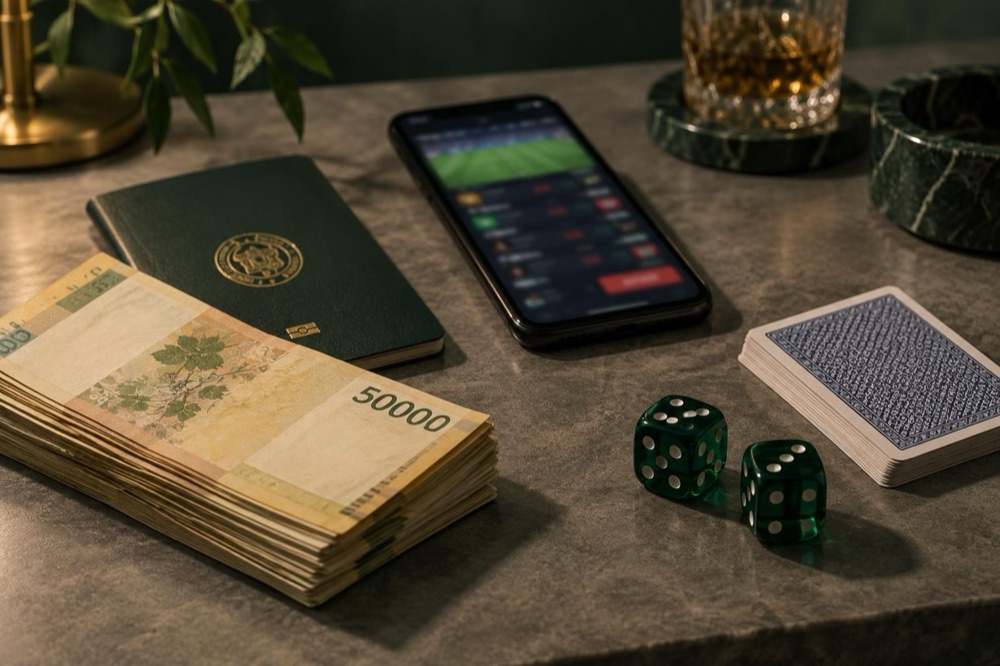
In practice, what has drawn prosecution is large-scale and habitual gambling: high rollers who moved serious money through foreign casinos, and people who bet regularly on overseas sites. A single modest session on a weekend trip is not what the cases are about, but the law draws no bright line, and the risk sits with the individual. The Ministry of Foreign Affairs guidance is the same whether the gambling happens in a legal venue abroad or online: punishment at home is possible10.
One point worth knowing: Korean law recognizes only a short list of legal gambling at home, namely casinos (for most people, Kangwon Land only), horse racing, cycle racing, boat racing, lotteries, sports promotion voting tickets and bullfighting13. Winnings are still taxed, though: the Income Tax Act counts gains from speculative acts as other income whether the act was legal or not1. There is no "overseas casino winnings" category that legitimizes the activity.
Macau: casino resorts on Cotai
Macau is the classic gambling trip from Korea: a short flight, dozens of casinos, and the biggest concentration of resort gaming in Asia. The center of gravity is Cotai, the reclaimed strip between Coloane and Taipa, where Studio City opened in 2015 as a large-scale, cinematically themed integrated entertainment, retail and gaming resort1.
Casinos are not the whole of Macau's public gambling offering. Horse racing was abolished in April 2024, but the territory still runs a Mark Six numbers lottery, football and basketball betting, and traditional Chinese games such as fan tan and pai gow15. If a tour package promises racing, it is out of date.
On age: the Macau government announced its intention to raise the minimum age for casino entry from 18 to 2117. Check the current rule before you travel with anyone in their late teens.
For Korean citizens, the section above applies: Macau's casinos are fully licensed and open to foreigners, but the Criminal Act follows you there8. For foreign residents of Korea and visitors, Macau is simply a normal legal destination.
The Philippines: Clark and beyond
The Philippines takes a relaxed approach compared with its neighbors. Both domestic citizens and international visitors may play with relatively easy conditions18. That makes it one of the few nearby countries where nationality does not decide whether you can walk in.
A few practical points:
- Age. Anyone under 21 is barred from buying betting tickets in the Philippines15. For casino floors, the legal gambling age framework treats the Philippines as stricter than most of Asia.
- Payments. Transactions with digital currencies are completely legal in the Philippines, and there is a large offshore online market: 646 casinos were found accepting players from the Philippines offering Bitcoin19.
- Online play. Philippine residents cannot join local online casino sites but are allowed to frequent offshore-based casinos, and players are not fined for joining offshore operators19.
For Korean citizens, the same Criminal Act rule applies to any gambling in the Philippines, in person or online8.
Singapore: free for visitors, a levy for locals
Singapore legalized casino gambling in 2005, and its two integrated resorts run a two-tier entry system20.
- Foreign visitors enter free of charge, with just a passport18.
- Singapore citizens and permanent residents pay an entry levy: SGD 100 for a 24-hour pass, or SGD 2,000 for a yearly pass2.
Online gambling is a different matter: all forms have been forbidden since 2014, and players caught gambling online face a fine of up to $5,000 or a six-month prison sentence21. Singapore's horse racing also ended, with the racecourse abolished in October 202415.
For a Korean traveler, Singapore's casinos are easy to enter as a foreign passport holder would, but as a Korean citizen the Criminal Act still covers the session8. For foreign visitors and residents of Korea, Singapore is straightforward: passport in hand, no levy, no entry fee.
Vietnam: foreigner-only casinos and a legal pachinko shop in Da Nang
Vietnam legalized brick-and-mortar casinos in the pursuit of economic stabilization, and after more than a decade in which locals were banned from land-based casinos, Vietnamese citizens are now allowed in under conditions, with authorities seeking higher entry fees for locals to simplify verifying financial eligibility4. The legal casino gambling age is 18, and locals are still not allowed to gamble online in the country4. Vietnam's only racecourse closed back in 2011, so racing is off the menu15.
The unusual attraction for Korean travelers is in Da Nang, a resort area one hour by plane from Hanoi and Ho Chi Minh City: Million God Gaming, a fully legal pachinko and pachislo shop run by a Japanese owner, operating with formal permission5. It is the only legal pachinko shop in the country. There are reportedly a dozen or so unpublicized pachinko shops in Hanoi and Ho Chi Minh City, and all of them are illegal5.
What it costs and what it is like:
- Pachinko balls rent for about 500 dong per ball, roughly 3 yen5.
- Pachislo medals rent at 5,000 dong per medal, about 30 yen, with higher rates on request, for example 300 yen or 3,000 yen per medal5.
- The prize exchange works the same way as in Japan: prizes can be exchanged for general goods, and the three-shop system is supported5.
- The customer base is 90% Korean, of whom about 30% are tourists and the rest are Koreans living locally; Japanese visitors are under 10%5.
So if you are a Korean speaker in Da Nang, you will hear Korean on the floor. The shop planned a machine renewal in October after opening, adding popular fifth-generation titles such as Basilisk and Hades5.
For Korean citizens, the Criminal Act applies to pachinko play in Da Nang just as it does to a casino table in Macau8. The shop itself is legal under Vietnamese law; the Korean side of the question is unchanged.
Japan and Thailand: what is still illegal today
Japan has no legal casino. Proposals for introducing casinos have been hotly debated since 2001, when Tokyo Governor Shintaro Ishihara led the push, but no casino has been established6. What Japan does have is public gambling: pachinko, horse racing, boat racing and similar. Anyone under 20 is barred from buying betting tickets, though minors may enter a racecourse with a parent or guardian15.

Japanese law also has a rule that travelers should understand, because it mirrors the Korean one in reverse. Gambling at a casino abroad is not punishable under Japanese law, since the acts occur entirely abroad and no Japanese legal interest is harmed22. But connecting from Japan to an online casino is a crime even if the operator is legally run overseas, and Japanese police state they enforce this strictly12. There are no licensed and regulated online casinos inside Japan7.
Thailand remains the most restrictive destination on the list. Its land-based and online gambling landscape is described as being in a gray zone, with no online casinos approved or regulated by the Thai government, though offshore sites are accessible in practice7. Research going back years classifies online gambling in Thailand as an illegal category of gambling23. The legal casino gambling age is set at 18, but with no licensed casinos, that figure is theoretical for now7. Thailand also has no domestic responsible-gambling system, no legal self-exclusion register and no national helpline for online gambling problems24.
For Korean citizens, neither country currently offers a legal casino to visit, so the question of Korean law mostly does not arise; the online options that do exist are illegal in both the host country and, for Koreans betting from Korea, at home10.
Practical checklist before you book
Before you plan any gambling trip from South Korea, run through this list.
Know your passport situation. The Criminal Act's gambling prohibition applies to Korean citizens abroad: a single act of gambling can draw a fine of up to KRW 10 million, and habitual gambling up to three years in prison or a KRW 20 million fine8. A foreign casino being licensed does not change that for a Korean national9. Foreign passport holders are not the target of this rule.
Check the entry age at your destination.
| Destination | Entry age rule |
|---|---|
| Vietnam | Legal casino gambling age of 184 |
| Thailand | Legal casino gambling age of 18, but no licensed casinos7 |
| Philippines | Anyone under 21 is barred from buying betting tickets15 |
| Macau | Announced intention to raise the casino entry age from 18 to 2117 |
Bring the right documents. If you are a Korean national with overseas permanent residency hoping to use a foreigner-only casino inside Korea, Paradise's venues ask for your passport, your permanent resident card in any form, and a resident register abstract showing your overseas migration report25. Foreigners entering Korean casinos need one or more of: a passport, travel certificate, diplomat ID, US military ID card, seaman's book, alien registration card, overseas Korean domestic residence report card, or permanent resident card26. Paradise City sets its casino entry age at 1925.
Remember the one casino at home. If you want a legal casino session without leaving the country, Kangwon Land is the only casino in South Korea where Korean nationals and foreigners may both enter13. Everything else, from internet gambling to hwatu and poker rooms, sits on the illegal list13.
Do not assume online is safer than in person. Betting from within Korea on an overseas sports gambling site is punishable even when the site is run abroad by foreigners11, and the Ministry of Foreign Affairs warns that gambling online or offline in countries where it is legal can still lead to punishment at home10.
Keep the illegal-gambling warning in mind. Korea's own guidance on illegal gambling is blunt: it carries a high risk of addiction and is punishable under relevant laws if caught13. That warning is aimed at domestic illegal sites, but the addiction risk travels with you.
Common Questions
Can Korean citizens gamble in casinos abroad legally?
No. South Korea's Criminal Act follows citizens overseas, so gambling in a foreign casino remains an offense even where the casino itself is fully licensed. In practice prosecutions tend to focus on large or habitual cases, but the law does not carve out an exception for trips abroad.
What is the entry levy for Singapore casinos and who pays it?
Singapore citizens and permanent residents pay a levy of SGD 100 for a 24-hour pass or SGD 2,000 for an annual pass. Foreign visitors pay nothing and enter free with a passport.
How old do you have to be to enter a casino in the Philippines or Macau?
Vietnam and Thailand set the legal casino gambling age at 18. In the Philippines, anyone under 21 is barred from buying betting tickets. Macau has announced its intention to raise the casino entry age from 18 to 21.
Is online gambling illegal for Koreans even on foreign sites?
Yes. Korean authorities state plainly that citizens face punishment at home even when they gamble online or offline in countries where it is legal. Betting from within Korea on overseas sports gambling sites is likewise punishable.
Where is Million God Gaming and what does pachinko cost there?
It is in Da Nang, Vietnam, about one hour by plane from Hanoi and Ho Chi Minh City. Pachinko balls rent for about 500 dong (around 3 yen) per ball, and pachislo medals for 5,000 dong (around 30 yen) each.
Are winnings from overseas gambling taxed or seized in South Korea?
Korean law recognizes only a short list of legal gambling at home, such as Kangwon Land, horse racing, cycle racing, boat racing, lotteries and sports promotion tickets. Winnings still count as taxable income: the Income Tax Act treats gains from speculative acts as other income whether the gambling was legal or not.
Can foreigners enter Singapore casinos for free?
Yes. International visitors enter Singapore casinos free of charge with just a passport. Only Singapore citizens and permanent residents pay the entry levy.
Is there any legal casino in Japan right now?
No. Casino proposals have been debated in Japan since 2001, but no casino has been established. Japanese law has long treated gambling at licensed casinos abroad as not punishable, but there are no licensed casinos inside Japan.
Sources26 sources
- Lawrence Ho Yau Lung profile, Melco Resorts, 2026-09-27
- Singapore casino entry levy, Osaka Prefecture, 2025
- Singapore casino entry for foreigners, Truth-light, 2012-11-15
- Online casinos for players from Vietnam, Wizard of Odds, 2026-05-05
- Million God Gaming, Da Nang, Pidea, 2022-10-13
- Gambling in Japan, Oxford Brookes, 2001
- Online casinos for players from Thailand, Wizard of Odds, 2026-08-27
- Betting on the Future: Prediction Markets, Cryptocurrency, and South Korean Law, KEIA, 2026-07-27
- Supreme Court Precedent 2004Do1749, law.go.kr, 2004-04-23
- Guidance on gambling by Korean nationals, Ministry of Foreign Affairs of the Republic of Korea, 2026-01-12
- Supreme Court Precedent 2022Do57689, law.go.kr, 2022-11-30
- Online casino warnings, National Police Agency of Japan, 2026-09-25
- Korea Center for Gambling Prevention: legal and illegal gambling, KCGP, 2026-09-25
- Studio City, Melco Group, 2026-09-27
- 競馬 (Horse racing), Wikipedia, 2026
- ドッグレース (Dog racing), Wikipedia, 2026
- Melco Resorts SEC filing, SEC, 2008-04-09
- Quốc gia nào cho phép chơi casino?, Casino Corona, 2026-09-11
- Bitcoin gambling in the Philippines, Wizard of Odds, 2026-09-26
- Gambling report 2011, Home Affairs Bureau, 2005
- Visa debit gambling in Singapore, Wizard of Odds, 2026-09-26
- Gambling policy lecture, National Police Agency of Japan, 2026
- Online gambling research, Gambling Study Thailand, 2011-08
- Ufabet responsible gambling notice, UFABET, 2026-06-16
- Paradise City notice on eligibility, Paradise City, 2026-09-26
- Casino operator entry verification rules, law.go.kr, 2020-05-20