
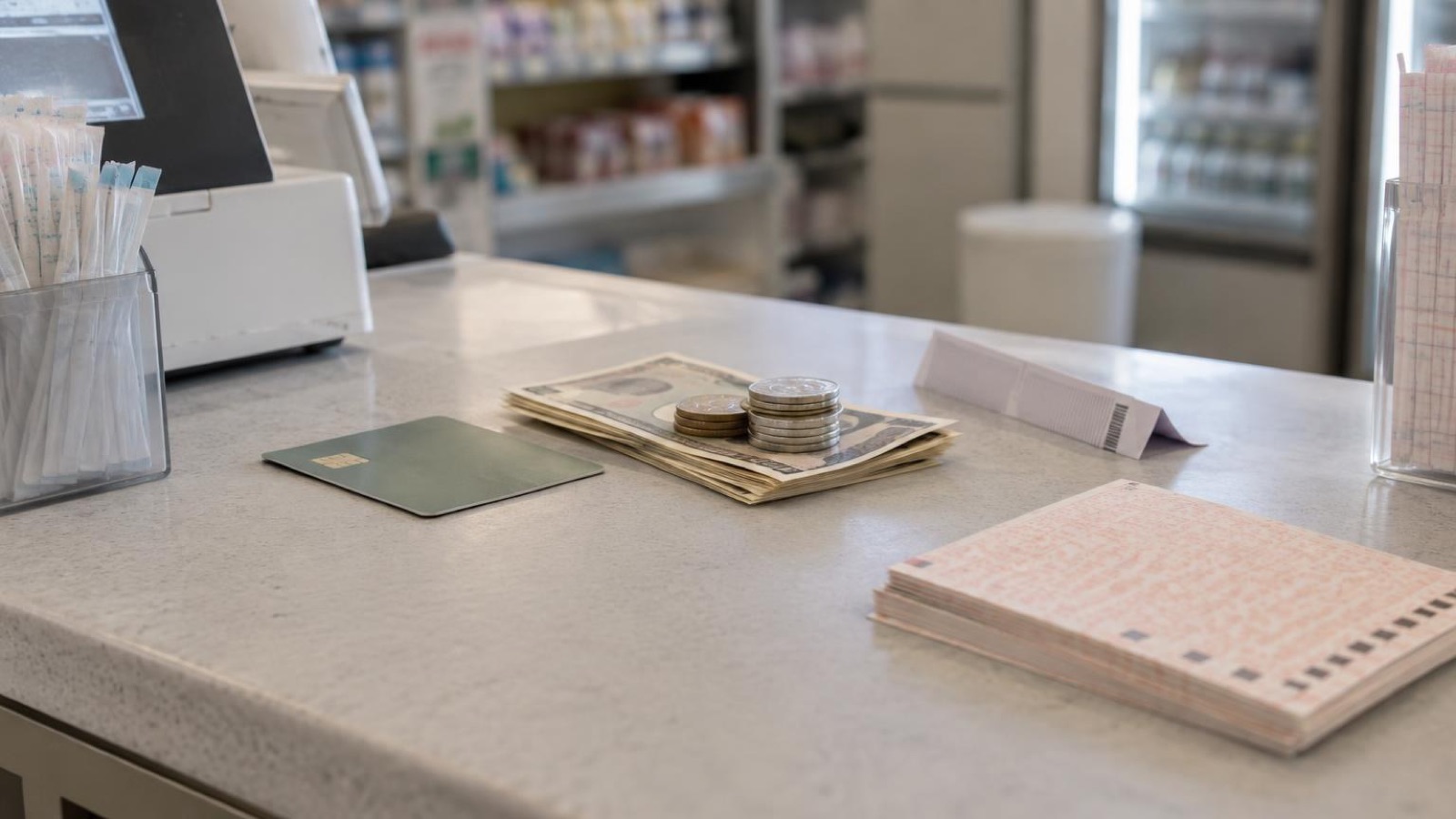
What prepaid vouchers and cash top-ups are used for
Cash top-ups for betting accounts in Asia come in a few groups, and they behave very differently from each other. The first group is the official top-up channel for a state or quasi-state betting account, such as Pay-easy in Japan, which lets you add funds to a JRA PAT or A-PAT account on a race sale day. The second group is the convenience store payment slip, where you accept a payment on a betting site, get a QR code or barcode, and pay in cash at a store. The third group is the prepaid voucher or cash voucher, bought from an operator and spent with the same operator. The fourth group, prepaid cards and mobile carrier billing, is marketed heavily by offshore casinos but is not a general-purpose way to move money into a licensed betting account. One thing ties all of these together: cash in, not cash out. A cash-funded balance is normally spent on bets, and winnings come back through a registered bank account rather than as cash at the same counter.
The first group is the official top-up channel for a state or quasi-state betting account. In Japan, that means Pay-easy, a service that lets you add funds to a JRA PAT or A-PAT account on a race sale day, charged directly from a financial institution you register separately from the one tied to your account number1. It is a charge service for the betting ticket balance, and it is the main cash route into Japanese horse racing accounts.
The second group is the convenience store payment slip. Here you accept a payment on a betting site, the site issues a QR code or barcode, and you take it to a store to pay in cash. This is how WINNER, one of the Japanese sports lottery products, handles convenience store payment3.
The third group is the prepaid voucher or cash voucher. In Hong Kong, a bettor can buy a cash voucher from the Club and use it to pay bet amounts for any bet or to pay lottery stakes, and the operator can issue one to pay a dividend, refund, rebate or bonus instead of cash or a deposit into a betting account6. That is a closed loop: the voucher is bought from the operator and spent with the operator.
The fourth group, prepaid cards and mobile carrier billing, is where expectations usually outrun reality. These are marketed heavily by offshore casinos, but they are not a general-purpose way to move money into a licensed betting account, and the practical limits below explain why.
One thing ties all of these together: cash in, not cash out. A cash-funded balance is normally spent on bets, and winnings come back through a registered bank account rather than as cash at the same counter.
Pay-easy Service: what it covers and who can use it
Pay-easy is the deposit service for JRA PAT and A-PAT accounts. It lets you add purchase funds on a race sale day, and it is charged from a financial institution registered separately from the institution tied to your PAT or A-PAT registration number1.
The access path differs slightly by product. From IPAT, you find the Pay-easy deposit option in the withdrawal menu. From A-PAT, it sits in the top menu1. Once you have made a reservation, you complete the payment either through the internet banking of the bank you registered or at an ATM.
Who can use it: anyone with a PAT or A-PAT account and a Japanese bank account in their own name. The name match matters. The internet banking login ID and password must belong to a financial institution registered under the same name format as the one you registered with IPAT or A-PAT1. If the names do not line up, the deposit will not go through.
There is a separate, newer route for Instant PAT, which uses PayPay money. That is a different setup: you need a new PAT registration to use PayPay with Instant PAT, and an existing PAT account cannot be charged through PayPay7. Charging from PayPay Later is not possible, and Instant PAT deposits through PayPay do not earn PayPay points7.
For A-PAT specifically, the Pay-easy deposit service is what lets you add funds on a race sale day, and your purchase limit is basically your deposit balance plus the Pay-easy top-up amount, with winnings added to the limit once the race is settled2.
Service hours: weekdays, Saturdays and race days
Pay-easy hours are not a single window. They change with the racing calendar, and getting this wrong is the most common reason a deposit fails.
On weekdays, the service runs from the start of service until 17:301. On Saturdays, it runs from 19:30 until 30 minutes before the post time of the latest race among that day's JRA, local and overseas races1. On holidays and special days with local racing and JBC races, it runs from the start of service until 30 minutes before the final race1.
The same pattern shows up across the Japanese public betting products. Deposits are accepted from 7:00 to 17:00, extended to 21:00 on night race days, to 23:50 on midnight race days, and to 23:50 plus 0:10 to 7:00 the next morning on advance sales days8. That schedule appears in the KEIRIN terms as well as the JRA ones, so if you bet on both, the same window applies.
For advance sales days and midnight race days, there is a settlement deadline of 22:5013. If you are topping up late in the evening for a midnight meeting, that is the number to remember.
A-PAT sale start times follow the same logic. Sunday graded races open at 7:00, Saturday races open at 7:00 for previous-day sale, and for WIN5, Saturday races open at 7:00 while Sunday races open at 19:30 on Saturday2.
Limits per transaction: JPY 49,500 at ATMs, JPY 10,000,000 online
The two deposit channels have very different ceilings, and this is the single most useful thing to know before you queue at a machine.
At an ATM, you can deposit from JPY 100 to JPY 49,500, entered in units of JPY 1001. That is a hard cap per transaction, so a large top-up means several trips or a switch to internet banking.
Through internet banking, the range is JPY 100 to JPY 10,000,000, again in units of JPY 1001. That is the channel to use if you are funding a serious betting day.
Separately, the betting limits themselves are worth knowing because they cap what the money can do. The maximum is JPY 99,900 per single bet, and the daily purchase limit is JPY 9,990,0008. For A-PAT, a single communication can carry up to JPY 1,000,000 in purchases, and anything above that has to be split into several applications2.
A-PAT also caps how many bets you can place at once. On a PC or smartphone, you can place up to 255 bets per purchase for bet types other than WIN5 and quinella exacta. On a feature phone, it is up to 5 bets per purchase for bet types other than WIN5, and up to 10 bets per set for WIN514. The daily ceiling is 9,000 items, with no limit on the number of bets2.
| Channel | Minimum | Maximum per transaction | Unit |
|---|---|---|---|
| ATM deposit | JPY 100 | JPY 49,500 | JPY 100 |
| Internet banking deposit | JPY 100 | JPY 10,000,000 | JPY 100 |
| Single bet | - | JPY 99,900 | - |
| Daily purchase limit | - | JPY 9,990,000 | - |
Fees: JPY 110 per transfer, JPY 64 at Japan Post Bank
The Pay-easy fee is normally JPY 110 including tax, and JPY 64 including tax at Japan Post Bank1. It is not included in the deposit amount, so a JPY 10,000 top-up costs you JPY 10,110 at most banks.
At an ATM, out-of-hours ATM fees and similar charges may apply on top of the Pay-easy fee1. That is the bank's charge, not the betting operator's, and it depends on when you go and which machine you use.
The net bank services that fund KEIRIN accounts work differently. Transfers from your ordinary account to the operator's account are free for the first two transfers each day, and from the third transfer of the day a fee of JPY 75 per transfer applies15. That fee applies even if you do not vote, or if voting cannot be accepted because of a disaster or a communication failure16.
Withdrawals have their own fee structure. When winnings over JPY 500,000 are transferred out, banks other than Japan Post Bank charge JPY 154 including tax, deducted from the winnings, while Japan Post Bank charges JPY 50 including tax19. If you designate Japan Post Bank, you need your passbook's 5-digit symbol and 8-digit number ready in advance19.
For Instant PAT funded through PayPay, the first and second charge each month are free, and from the third charge onward it is JPY 15 per charge7.
How to make a deposit from IPAT and A-PAT
The steps are short, but the order matters.
- Log in to your PAT or A-PAT account. For the smartphone net betting site, that means your subscriber number, your PIN and your P-ARS number2.
- Open the Pay-easy deposit option. On IPAT it is in the withdrawal menu; on A-PAT it is in the top menu1.
- Make a reservation for the amount you want to deposit. You get five reservations per account per day, counted whether or not you actually carry out the transfer1.
- Complete the payment. Either log in to the internet banking of the bank you registered, or go to an ATM of the same bank as your cash card and enter the payment there1.
- At the ATM, enter the receiving institution code 57019 for JRA and your customer number, which is the same eight-digit number as your PAT or A-PAT registration number1.
- Enter the amount, from JPY 100 to JPY 49,500 in units of JPY 100, and confirm1.
If you are using Instant PAT with PayPay instead, the deposit unit is JPY 100,000, where a unit means 100,000 yen for win/place and quinella/bracket bets7. Your charge history appears in the PayPay app notification screen, and the JRA homepage shows betting and refund history for the past 60 days7.
ATM restrictions: which machines work and which do not
This is where most failed deposits happen. Pay-easy input is not possible at bank ATMs generally, and it is not possible at convenience store ATMs. You can only enter the payment at an ATM belonging to the same bank as the cash card you hold1.
For A-PAT, the restriction is tighter still: Pay-easy input for A-PAT betting purchases is not possible at an ATM at all1. And the cash card for the A-PAT designated account cannot be used for Pay-easy ATM payments2. If you are an A-PAT user, plan on internet banking.
Cash deposits are possible at some financial institutions' ATMs, so the machine you are standing at may or may not support the transaction22. Check before you travel to one.
There is also a one-way rule on some deposit machines. Once you deposit, the deposited amount cannot be withdrawn at the deposit machine. Withdrawals are possible at the deposit and withdrawal machine, using smartphone login or palm vein authentication, and there is no PIN-only withdrawal5. So a cash top-up is not reversible at the same counter.
Reservations, cancellations and when the fee is charged
The fee timing is the part people get wrong. The Pay-easy fee is not charged at the reservation stage. It is charged when the transfer is actually carried out1. If you make a reservation and never pay it, you owe nothing.
Unpaid reservations do not sit around forever. A deposit reservation whose payment is not completed is canceled after the period ends, usually the weekend2. Reservations that are not executed are automatically canceled at the end of the day1.
The daily reservation count still applies to reservations you never use. You get five per account per day, counted whether or not the transfer is executed1. So if you make five reservations on Monday morning and pay none of them, you have used your Monday allowance.
Cancellation fees do exist elsewhere in the system, and they are worth knowing about. For the JRA admission ticket and reserved seat net reservation service, a cancellation fee of 20 percent of the amount is charged for purchases canceled after the designated time23. That is a seat reservation, not a betting deposit, but the same account can be used for both, so do not assume every cancellation is free.
Prepaid vouchers at VipHive Casino: fixed values
Prepaid vouchers and prepaid cards are marketed to casino players as a way to deposit without a bank link. In practice, the amounts involved are small and the terms are restrictive.
Where prepaid-style funding does appear at offshore casinos, the minimum deposits are modest. VegasHero lists a minimum deposit of €20, and Casinova lists 20 EUR/USD24. Those are the entry points, not the limits.
The bigger issue is what happens after you deposit. Bonus terms at these operators vary wildly. Everygame Classic Casino requires you to wager the bonus and deposit 20 times on poker to cash out, but 300 times on Classic Blackjack, Blackjack, Video Poker and American Roulette24. GameSpot Casino requires 29 times the bonus and deposit on slots, and SlotRush requires 40 times the deposit on slots24. Casino Orca sets no wagering requirement on bonuses but states that all deposits must be wagered at least 5 times before withdrawal24.
That last point is the practical trap with any cash-funded casino balance. A deposit made in cash, by voucher or by carrier billing is usually locked into a turnover requirement before it can come back out. If you want to understand how those requirements work before you deposit, the guide to wagering your deposit before withdrawal explains the mechanics.
For the wider picture of which payment methods actually work at licensed operators, and which are closed loops that only pay back the way you paid in, see gambling payments in Asia and closed-loop payments.
Common Questions
What is the bank code for Pay-easy ATM deposits to JRA?
The receiving institution code for JRA is 57019. You enter it at the ATM along with your customer number, which is the same eight-digit number as your PAT or A-PAT registration number. The ATM then shows the deposit amount you confirmed when you made the reservation.
What details do I need for a Pay-easy ATM deposit?
You need the receiving bank code 57019 and your customer number, which matches your PAT or A-PAT registration number. You also need the amount you reserved. Deposits run from JPY 100 to JPY 49,500 in units of JPY 100, and the ATM must belong to the same bank as your cash card.
How many Pay-easy reservations can I make per day?
Five reservations per account per day. The count applies whether or not you actually carry out the transfer, so unused reservations still use up your daily allowance. Reservations that are not paid are canceled automatically at the end of the day.
Can I use a convenience store ATM for Pay-easy deposits?
No. Pay-easy input is not possible at convenience store ATMs or at other banks' ATMs. You can only enter the payment at an ATM belonging to the same bank as the cash card you hold, or through that bank's internet banking.
Why does my internet banking deposit need a name match?
The internet banking login ID and password must belong to a financial institution registered under the same name format as the one you registered with IPAT or A-PAT. If the names do not match, the deposit will not go through, so use an account held in exactly the same name.
Is the Pay-easy fee charged if I cancel my reservation?
No. The fee is not charged when you make the reservation. It is charged only when the transfer is actually carried out. Reservations you do not pay are canceled automatically at the end of the day, and no fee applies to them.
Sources24 sources
- Pay-easy Service, JRA
- A-PAT Guide, JRA
- WINNER Purchase Attention, toto-dream
- WINNER Purchase Differences, toto-dream
- Beginner's Book 2026, JRA
- Betting Facilities Rule 7, HKJC
- Instant PAT PayPay Deposits, JRA
- KEIRIN Usage Guide, KEIRIN
- KEIRIN Usage Guide, KEIRIN
- KEIRIN PayPay Terms, KEIRIN
- KEIRIN SMBC Terms, KEIRIN
- KEIRIN MUFG Terms, KEIRIN
- Boatrace Bank Information, Boatrace
- A-PAT Instructions, JRA
- KEIRIN Japan Post Bank Terms, KEIRIN
- KEIRIN PayPay Terms, KEIRIN
- WINNER Web Purchase, toto-dream
- toto Refund at Shops, toto-dream
- DUNK Refund at Shops, toto-dream
- WINNER Refund at Shops, toto-dream
- toto Web Refund, toto-dream
- A-PAT Guide, JRA
- JRA Ticket Terms, JRA
- Best Casinos for Players from Cambodia, Wizard of Odds, May 28, 2026















