What lottery prediction software claims to do
Search for lottery prediction software and you will find apps and websites promising to raise your chances. The pitch usually comes in a few familiar shapes: a database of every past draw, a chart of how often each number has appeared, a "smart" generator that builds combinations for you, and sometimes a community feature where users share picks and buy tickets together.
One example of the genre is the 138彩票 app, which bundles shake-to-bet, instant draw results with push notifications, lottery predictions with group buying, live sports scores and expert analysis into a single product4. It covers a long list of games, from 双色球 and 大乐透 to 竞彩足球, 竞彩篮球, 福彩3d and 排列五4. The features are real. The prediction claim is the part that does not hold up.
It helps to separate what these tools actually do from what they imply. A frequency table is a record of the past. A generator produces a combination. A group-buy feature pools money. None of these change the physical or electronic process that produces the winning numbers, and none of them can know what that process will produce next.
Even the operators of lottery content sites are careful about this. 中彩网, which publishes expert recommendations and simulated number picking, states plainly that expert picks represent only the expert's personal view and should be referenced with caution, that simulated number picking is a virtual game and should not be taken seriously, and that players should play responsibly within their means5. That is the honest framing: entertainment and record-keeping, not forecasting.
What the math shows: independent draws and equal odds
A lottery draw is a random event. In China's Super Lotto, five front numbers are drawn from 01 to 35 and two back numbers from 01 to 12, by random draw under notary supervision after sales data are sealed1. Nothing in that process consults the previous draw. The balls, or the random number generator, have no memory.

That is what "independent" means in practice. The chance of any particular combination coming up is the same on every draw, whether that combination won last week, has never won, or has won three times this year. A run of the same number appearing twice in a row feels meaningful to us. Statistically it is just one of many possible outcomes, and it is no less likely than any other specific sequence.
Some draws are not even based on player predictions at all, which makes the point neatly. In Japan's BIG lottery, a computer randomly selects the result for each designated football match, and the player does not need to predict anything6. DUNK works the same way for basketball: the computer randomly predicts the results of the designated matches7. If a game can be run with no prediction at all, prediction clearly is not what determines the outcome.
Where player choice does exist, it changes which combinations are in play, not the odds of any one of them. In Japan's toto, you predict the results of multiple designated football matches8. In WINNER, you can predict a single match or a whole league or tournament9. Your skill or your system affects which entries you hold. It does not affect the draw.
Hot numbers and cold numbers: why they don't predict draws
Hot and cold number charts are the most common feature in prediction tools, and the most misunderstood. A hot number is one that has appeared often in a recent window. A cold number is one that has not appeared for a while. The chart is accurate as a description of the past. The mistake is treating it as a description of the future.
Over a very large number of draws, in a fair game, each number should appear roughly the same number of times. Short runs of one number appearing more often than another are expected, in the same way that flipping a coin ten times often produces six heads and four tails. Those runs do not create momentum. The next draw starts from scratch.
The "due" theory is the mirror image of the same error. A number that has not appeared for many draws is not more likely to appear next. It is exactly as likely as it was on the first draw, and exactly as likely as every other number in the pool.
There is one practical wrinkle worth knowing, and it is about prize sharing rather than probability. In games with pari-mutuel prizes, where the pool is split among winners, the amount you receive depends on how many other players picked the same combination. Popular numbers, including culturally favored ones, tend to be picked by more people. That does not change your chance of winning. It can change how much you get if you do.
Lucky numbers: cultural favorites vs statistical edge
Lucky numbers are a genuine part of how people play across Asia, and there is nothing wrong with choosing them. What matters is being clear about what they do. A favorite number is a preference. It is not an edge.
The clearest illustration is in horse racing, where odds are published and you can see how the market rates each runner. In one graded sprint field, the horse Lugal was listed at odds of 9.1 and ranked as the fourth favorite10. Those odds reflect how much money is on each horse, not any hidden knowledge about the result. The same logic applies to lottery combinations: popularity affects the price or the share, not the probability.
In lotteries, the effect of popularity shows up in pari-mutuel games. If you and thousands of other players all choose the same culturally significant combination, and that combination wins, the first prize is divided among all of you. A less popular combination of the same length has the same chance of coming up but a smaller crowd to share with.
This is the one place where a random pick has a practical argument in its favor, and it is a modest one. It is not that Quick Pick wins more often. It is that a machine-generated combination is less likely to collide with the choices thousands of other players are making for the same reason.
How 4D draws actually work: bet types and draw schedule
4D is one of the most widely played number games in the region, and its structure is worth understanding before you buy. Draws are conducted on Wednesday, Saturday or Sunday3. You can bet on any of the current Wednesday, Saturday or Sunday draws, or on six consecutive draws including the current one3.
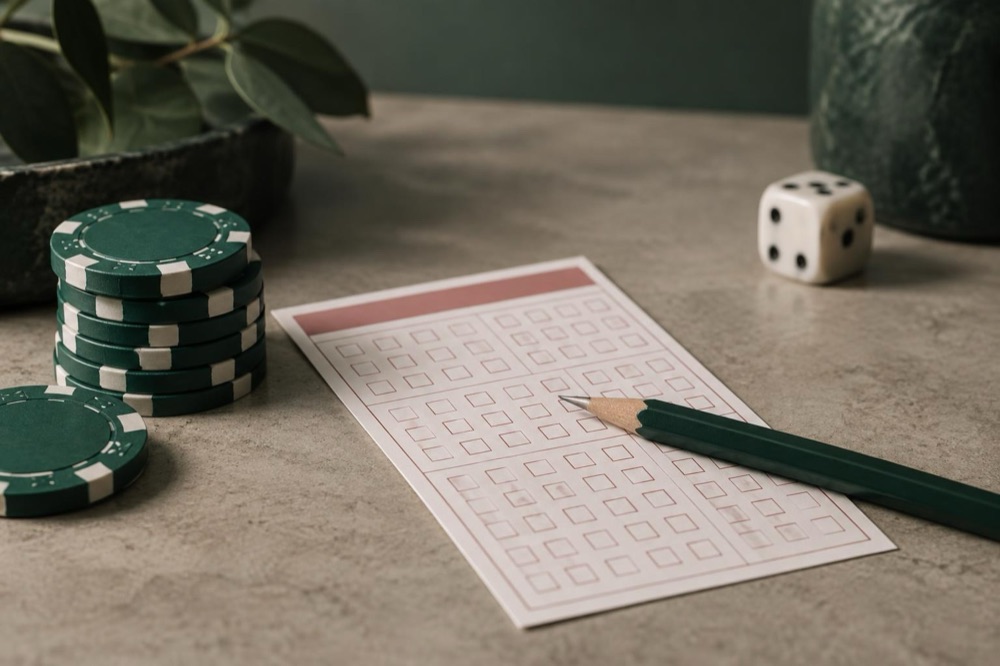
There are several ways to place a 4D bet: Ordinary, System Entry, iBet, 4D Roll and Quick Pick11. Each works differently.
- Ordinary Bet. You mark four digits, and the total stake is the sum of the marked stake amounts12.
- System Entry. You select four digits and place bets on all their permutations11.
- 4D Roll. You select three digits and one rolling digit in a specific order. The rolling digit, shown as "R", represents any number from 0 to 9, and only one of the four digits can be the rolling number11.
- iBet. You mark four digits, and the total stake is the sum of the marked stake amounts12.
- Quick Pick. The system generates a random selection of four digits for you11.
On a paper bet slip, you can select up to four number combinations of the same bet type per slip12. For Ordinary Bet and Roll Bet, you do not need to mark a bet type at all12. For a Full System Bet, the total stake is the sum of the marked stake amounts multiplied by the number of Ordinary Bet combinations, and the ticket shows the number of permutations and combinations12.
One rule catches people out. If the four-digit combination you have chosen has reached its sales limit, the bet will not be accepted12. A sold-out combination is shown with "S'OUT" next to the number on the ticket, and if you selected only a sold-out combination, no ticket is issued at all12. If you have your heart set on a particular number, buy early rather than on draw day.
What you can choose when you bet: Self Pick, Quick Pick and Favourite numbers
The choice that actually belongs to you is how you enter the bet, not what comes out of the draw. Online, you can place Self Pick bets for Ordinary, 4D Roll, System Entry and iBet for draws conducted on Wednesday, Saturday or Sunday13. You can also save up to 20 sets of 4D Favourite numbers, which is useful if you play the same numbers regularly3.
The same split between your pick and the machine's pick appears across the region's games. In Singapore TOTO, you can place Self Pick or Quick Pick bets for the current draw, or for two or four consecutive draws, along with iTOTO and Group TOTO bets3. Online, you can place Self Pick bets for Ordinary, System Entry and System Roll for the current draw, which runs on Monday or Thursday3.
In Japan's toto, you can enter your own predictions or hand the job to the computer with "Random 1000"14. A multi bet lets you cover double (2 outcomes) or triple (3 outcomes) for a single match result14. In horse racing, the Forecast, Place Forecast, Tierce, Trio and Quartet bet slips all include a Computer Pick option, where you mark the number of horses to be selected at random15. Pick Seven and Pick Five bets come in two types: your selection, or the computer's random selection16.
In the Philippines, the main Lotto games differ in their number pools and entry options.
| Game | Number pool | Entry options |
|---|---|---|
| Lotto 6/42 | Choose six numbers from 1 to 42 in any order | Lucky Pick option that has the machine generate your combinations17 |
| Ultra Lotto 6/58 | Works the same way over a pool of 1 to 58 | Jackpots can reach up to a billion pesos on rollover17 |
| Super Lotto 6/49 | Pick six numbers from 1 to 49 in any order | System Play option that covers multiple number combinations17 |
Across all of these, the odds of winning stay the same whether you play Quick Pick or pick your own numbers2. That is the single most useful sentence in this whole subject.
Special prize events: why boosted prize pools don't change the odds
Lottery operators run special events regularly, and they are genuinely worth knowing about, as long as you understand what they change. A boosted prize pool changes the size of the prize. It does not change the chance of winning it.
In China's Super Lotto, an additional bet shares only in the pari-mutuel prize tiers1. In the second prize, the additional bet pays 80% more than the basic bet5. So the additional bet changes your payout structure, not your probability of matching the numbers.
Prize pools themselves are built from specific sources. In China Welfare Lottery Double Color Ball, the pool is funded by unclaimed high-tier prize money and the portion of prizes exceeding the single-bet cap, and pool funds roll into the next draw's first prize18. That is a mechanism for carrying money forward, not a signal about which numbers will come up.
In Japan's BIG lottery, the prize fund is 50% of sales, and prize amounts vary with sales and the number of winning tickets, with first-prize figures described as theoretical values19. In WINNER's single-match lottery, odds fluctuate according to betting volume until sales close, and no carryover occurs9. In the competition prediction games, odds also move with betting status until sales end20.
The practical takeaway: when you see a bigger jackpot or a promotional prize set, you are looking at a larger or differently shaped payout. The Draw underneath is unchanged.
Recent big wins: what jackpot stories do and don't show
Jackpot stories are everywhere, and they are usually true. What they do not show is a method.

Most lottery jackpots are progressive, meaning jackpots that are not won roll over between successive draws and get larger2. That is why headline figures climb. It is a property of the prize pool, not evidence that anyone saw it coming.
These are real outcomes from real draws. They tell you the games pay. They tell you nothing about what to pick next.
How to check a draw's results and claim windows
Checking results is straightforward, and knowing the mechanics saves a lot of anxiety.
For DUNK, you check on the top page under "当せん確認" by selecting the lottery type, selecting the draw round, entering the reference number and clicking "結果を表示"21. You need the lottery type, draw round and reference number to check results on the confirmation page21. Winning results can also be checked at lottery sales counters and at 7-Eleven22.
For WINNER's single-match prediction tickets bought at lottery counters, sales run until 60 minutes before the start of each designated match23. Sales hours are 8:00 to 23:00, though they differ by store23. WINNER's competition prediction tickets work differently from BIG, toto and DUNK: even when you use a lottery counter or convenience store, you must register your prediction and issue a QR code or bar code on the official site in advance24. Some competition prediction lotteries cannot be bought at lottery counters at all9.
For 4D, sales for each draw close at 6pm on draw day3. For TOTO, including TOTO MATCH bets, sales also close at 6pm on draw day, and if the current draw is a cascade draw, sales close at 9pm3. In Japan, NUMBERS4 lottery stands operate from 8:00 to 20:00 daily, and sales on draw days, Monday to Friday, run until 18:3017.
On claiming, the rules are strict and the paperwork matters. In China's Super Lotto, winners must claim within 60 natural days from the draw date at a designated location, and unclaimed prizes are treated as forfeited, with the money going to the lottery public welfare fund25. The printed ticket is the only valid prize claim voucher, and a ticket that cannot be correctly identified because it is soiled or damaged cannot be claimed1. A single ticket's basic bet stake cannot exceed CNY 20,000, and a basic plus additional bet cannot exceed CNY 30,0001. Multi-draw bets can be placed at multipliers from 2 to 99 times1.
Super Lotto has nine prize tiers, with the first and second prizes pari-mutuel and the third through ninth fixed1. For tax, a single winning of not more than CNY 10,000 is temporarily exempt from individual income tax26. All prizes won by the same person in the same draw of the same game count as one winning income26.
If you want to go deeper on any of this, the practical guides on how 4D works, lottery odds in Asia and how to claim a lottery prize cover the mechanics in more detail.
Common Questions
Can software really predict the next winning lottery numbers?
No. Draws are random and each one is independent, so past results carry no information about the next set of numbers. Software can track frequency, generate combinations or manage your bets, but it cannot raise your chance of matching the winning numbers.
Do hot numbers hit more often than cold numbers?
Over a very long run, every number in a fair draw should appear roughly the same number of times. A number that has appeared often recently is not more likely to appear next, and one that has been quiet is not due. Frequency tables describe the past, not the future.
Is Quick Pick better than picking my own numbers?
The odds of winning stay the same whether you play Quick Pick or pick your own numbers. The only practical difference is that a random pick avoids the popular combinations many other players choose, which can mean a larger share of a pari-mutuel prize if you do win.
What time do 4D sales close on draw day?
For 4D draws on Wednesday, Saturday or Sunday, sales close at 6pm on draw day. If you bet through an outlet or online, plan to have your ticket in hand well before that, since a four-digit combination can also sell out before the cutoff.
Can I bet on the same 4D number in more than one way?
Yes. You can now place multiple bet types on the same 4D number within the same board, instead of placing them separately. The exception is 4D Roll, which can only be bet on the current draw.
How many prize claims can one Lotto ticket have?
It depends on the game. In China's Super Lotto, all prizes won by the same person in the same draw of the same game count as one winning income for tax purposes. Keep the printed ticket safe, because it is the only valid claim voucher.
What happens if red envelope prize sets are claimed early?
Promotional prize sets tied to a special event are usually limited in number and can run out before the event ends. When a set is fully claimed, later players simply miss that extra prize; the underlying odds of the draw itself do not change.
Sources26 sources
- 超级大乐透游戏规则, 中国体育彩票, 2019
- How to Play Lottery, PlaySmart, 2026
- Lottery Betting FAQ, Singapore Pools, 2026
- 138彩票, 中彩网, 2026
- 大乐透, 中彩网, 2026
- BIGについて, toto-dream, 2026
- スポーツ振興くじ, 日本スポーツ振興センター, 2026
- Integrity, toto-dream, 2026
- WINNERについて, toto-dream, 2026
- 出馬表, JRA, 2026
- 4D, Singapore Pools, 2026
- Placing 4D Bets Using Bet Slips, Singapore Pools, 2026
- Betting Online, Singapore Pools, 2026
- toto 購入方法, toto-dream, 2026
- How to Bet, Japan Racing, 2026
- Can I Buy PCSO Lotto Ticket Online, Lotto PCSO, 2026
- NUMBERS4の遊び方, 宝くじ公式サイト, 2026
- 双色球游戏规则, 中彩网, 2012
- BIGについて, toto-dream, 2026
- 当せん確認, toto-dream, 2026
- DUNK 当せん確認, toto-dream, 2026
- 当せん確認, toto-dream, 2026
- WINNERの購入方法, toto-dream, 2026
- WINNERの購入方法, toto-dream, 2026
- 大乐透开奖详情, 中彩网, 2026
- 电脑彩票中奖收入个人所得税政策, 广东省税务局, 2024