
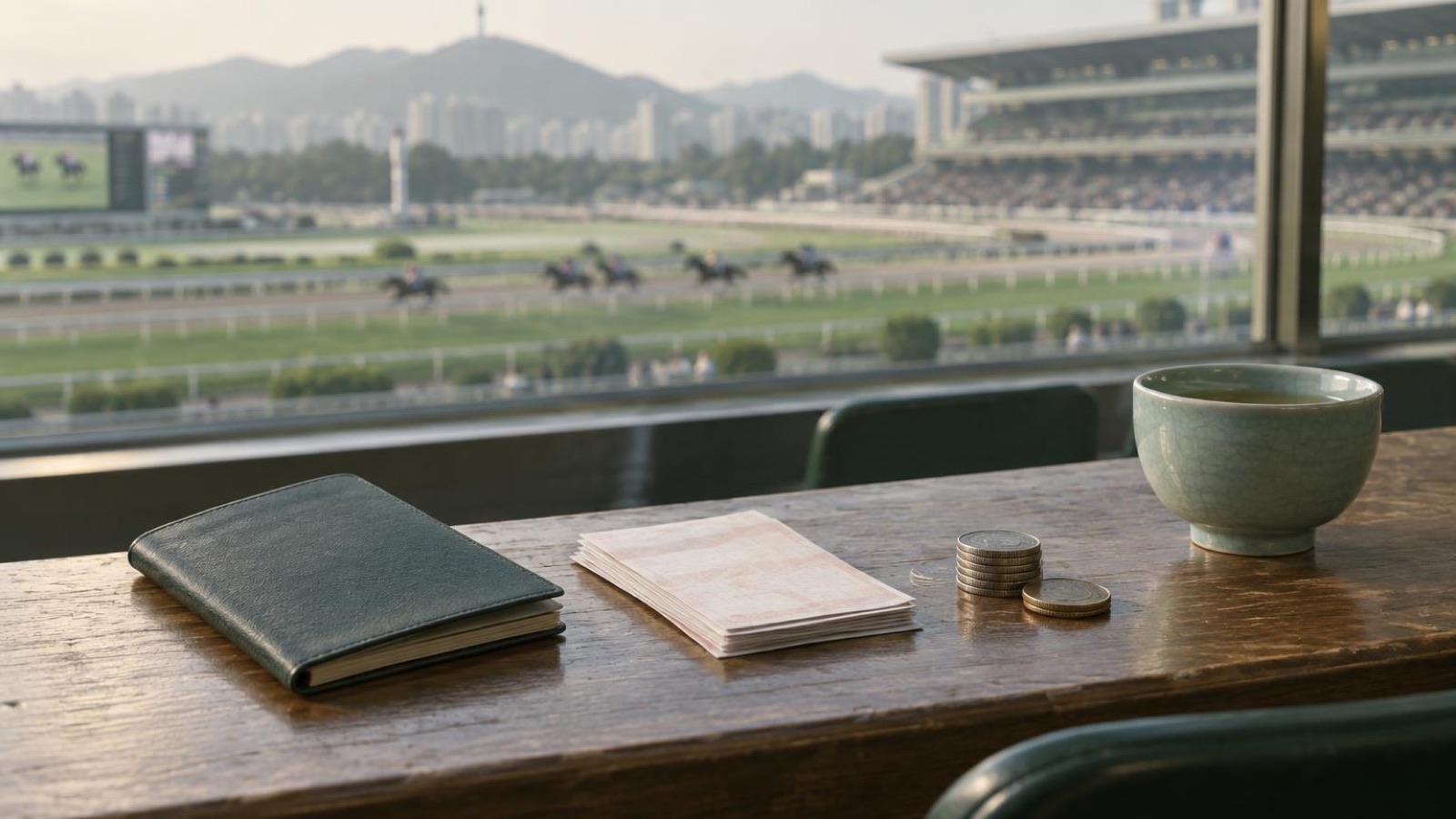
What the NOL Lounge is and who can enter
The NOL Lounge is the English-language seating area at Seoul Racecourse, run by the Korea Racing Authority (KRA). It is the part of the grandstand where the race call comes to you in English rather than Korean, which makes it the natural base for a first visit if you do not follow Korean.
The important thing to understand is who it is for. It is not a foreigners-only room. The KRA describes it as a space "available to all customers who reside in Korea through advance registration," open to Korean and overseas nationals alike4. So a Korean friend can sit with you, and a foreign resident can book without any special status. What matters is that you live in Korea and that you register ahead of time.
That is different from how Korea handles its casinos. The foreigner-only casino floors, such as those at Seven Luck and Paradise City, bar Korean nationals from entry entirely5. Racing does not work that way. The track is open to everyone, and the English Zone is a language service rather than a nationality filter.
Two practical conditions apply to the English Zone:
- Advance registration is required. You cannot simply walk in and take a seat on the day.
- All seating is reserved and requires a ticket purchase in advance through the Derby-on mobile app4.
So the sequence is: download the app, register, pick your raceday, buy your seat, then show up. If you turn up without a booking, you can still watch and bet from general admission, you just will not have the English commentary seat.
Foreign visitors at Seoul Racecourse: what the rules allow
Racing is a normal, legal day out in Korea, and foreign visitors are welcome at the track. You do not need a Korean ID number to attend, and you do not need to be a resident to bet. You do need to be an adult.

The adult threshold in Korea is 19. For casinos, the rule is explicit: persons under 19 are prohibited from entry3. The same adult standard governs racing, so bring your passport as proof of age and identity. A passport is the cleanest document for a visitor, since it shows both your date of birth and your nationality in one place.
What you can do at Seoul Racecourse:
- Watch the races from general admission or from a reserved seat.
- Buy pari-mutuel betting tickets at the track. Korean racing is pool betting, not fixed odds, so the payout depends on how much money is in the pool.
- Collect winnings at the track on the day, or through the refund process if you are betting at a branch office7.
- Use the English Zone if you have booked ahead4.
What you cannot do is bet on Korean racing through a commercial bookmaker. The official record for Korean racing lists bookmakers as "No" and off-course bookmakers as "No" as well8. Everything runs through the KRA's own pari-mutuel system.
One thing to be clear about: playing on offshore casino or betting websites from Korea is illegal, and players have been prosecuted. Korean law specifically prohibits having people in Korea take part in electronic betting on horse races held overseas, and prohibits paying out winnings to ticket holders for those bets9. If a site is offering you Korean racing or overseas racing from a Korean IP address, that is the line you are crossing.
Betting at the track: terminals, ARS and online accounts
Betting at Seoul Racecourse is straightforward once you are inside. You buy a ticket before the race, and you cash it after the result is confirmed.
The KRA may charge an admission fee to people visiting racecourses and off-course betting centers, which is where the gate price comes from9. At Seoul, general admission is KRW 9102. That is the entry cost, separate from whatever you choose to bet.
How a raceday works, step by step:
- Arrive and pay admission. KRW 910 for general admission at Seoul2.
- Pick up a racecard. This lists the day's races, the runners, jockeys, weights and form. If you are in the English Zone, the commentary will walk you through it.
- Study the pool. Korean racing is pari-mutuel, so odds move as money comes in. The odds board updates through the day.
- Buy your ticket at the windows or terminals before the race closes.
- Watch the race, then check the result and the dividend.
- Cash your ticket if you have won.
Seoul runs an average of 12 races on a raceday, with 30 to 35 minutes between races8. That gap is comfortable. It gives you time to read the next race, place a bet and get back to your seat without rushing.
On the betting side, the KRA also runs branch offices away from the tracks. These are buildings fitted with ticket sales and race relay facilities, where you can buy tickets and collect refunds on races held at the racecourses7. There are 26 of them in total, 21 in the capital area and 5 in the provinces7.
If you want to understand the bet types before you go, the pool structure is the same family of bets you will find across Asia. A win and place bet is the simplest starting point, and the quinella and quinella place bets are the next step up. For a full rundown of what each pool means, see horse racing bet types.
English commentary and other language support
English commentary at Seoul Racecourse is real, but it is limited in scope. The KRA states plainly that English commentary is currently only available for Seoul and Busan races4. If you go to Jeju or to one of the smaller meetings, expect Korean only.
The English Zone is the way to get it. Because it is a reserved, ticketed area booked through the Derby-on app, the practical steps are:
- Download the Derby-on app before your raceday.
- Register as a customer residing in Korea.
- Choose your raceday and seat, and pay for the ticket in advance.
- Bring the booking and your passport on the day.
Because the zone is open to Korean nationals as well as foreign residents, you are not relying on a special visitor concession. You are booking a service that anyone in Korea can book.
Outside the track, the KRA runs an English-language portal for international visitors, which is the best place to check schedules, results and facility information before you travel4. If you want to follow Korean racing from home, the official channels are the reliable source, and the same applies to watching horse racing across the region.
One caution on language: do not assume that a third-party site offering "English betting on Korean racing" is legitimate. Korean racing does not run through commercial bookmakers8, and electronic betting on overseas races from within Korea is prohibited9. The official KRA channels are the ones that exist.
The track's location and race day practicalities
Seoul Racecourse opened on September 1, 1989, and has been the country's main racing venue since8. It sits within easy reach of the city, and a raceday is a full afternoon rather than a quick stop.
What to bring and what to expect:
- Your passport. It is your age and identity document, and the simplest one for a visitor to carry.
- Admission money. KRW 910 for general admission2.
- Your betting budget, in cash or by card depending on the terminal.
- Your Derby-on booking, if you have reserved an English Zone seat4.
Timing matters. With an average of 12 races and 30 to 35 minutes between them8, a full card runs several hours. Arrive with time to spare before the first race so you can find your seat, get a racecard and work out the betting windows before the pools open.
A few things worth knowing before you go:
- Check the schedule first. Race meetings are not held every day, and the KRA publishes the calendar. Confirm that your date has a meeting before you travel.
- Confirm the post time. The last race falls in the late afternoon or early evening depending on the card, so check the day's timetable rather than assuming.
- Ask at the information desk. Racecards and day-of questions are handled there, and staff can point you to the right windows.
- Keep your ticket safe. You need it to collect, and lost tickets are a problem everywhere.
If you want to compare how a Korean raceday fits into the wider regional calendar, the horse racing seasons page sets out when each jurisdiction races.
Where else you can bet: offsite offices and other racecourses
Seoul is not the only option. The KRA operates a network of venues and betting offices across the country.
The KRA runs four racecourses, and English commentary is only available for Seoul and Busan races4.
| Racecourse | English commentary |
|---|---|
| Seoul | Yes4 |
| Busan | Yes4 |
| Jeju | No4 |
| LetsRun Park Yeongcheon (opened September 11, 2026) | No4 |
Branch offices. There are 26 KRA branch offices, 21 in the capital area and 5 in the provinces7. These are off-course locations with ticket sales and race relay facilities, where you can bet on races at the racecourses and collect refunds7. They are a practical option if you cannot get to a track on a raceday.
Simulcast racing. The KRA also runs overseas simulcast races. In 2026 the schedule included 3R of Busan overseas simulcast from the second week of April, plus 3R of additional overseas simulcast races in summer from Busan and Jeju2. If you want to understand how simulcast pools work when races from different jurisdictions are combined, see commingled pools and simulcast betting.
One venue to note: the Seolleung off-course betting office has closed10. If you find an old guide pointing you there, it is out of date.
For the wider picture of what gambling is legal in the country and how the different sectors fit together, see Can I Gamble in South Korea?.
Common Questions
Can tourists bet on horse racing in South Korea?
Yes. Horse racing is one of the legal forms of gambling in South Korea, and racecourses are open to visitors. You buy a betting ticket at the track, and you need to be at least 19 years old. Bring your passport, since age and identity checks apply at the counter.
What is the NOL Lounge at Seoul Racecourse?
It is the English-language seating area at Seoul Racecourse, run by the Korea Racing Authority. It offers English commentary and is open to customers who live in Korea, both Korean and foreign nationals, through advance registration. All seating is reserved and needs a ticket bought in advance through the Derby-on mobile app.
What time is the last race at Seoul Race Park?
Seoul runs an average of 12 races on a raceday, with 30 to 35 minutes between races. The card usually starts around late morning and the final race falls in the late afternoon or early evening. Check the KRA race page for the exact post time on your date.
Is there English commentary at Seoul Racecourse?
Yes, but only for Seoul and Busan races. The English Zone at Seoul Racecourse provides English commentary, and you must reserve a seat in advance through the Derby-on app. Other Korean racecourses do not currently offer English commentary.
What is the KRA helpline number?
The Korea Racing Authority customer service line is 1566-3333. You can call it for race schedules, facility questions and general inquiries. If you are calling from outside Korea, dial the country code first. Note that some KRA pages also list a second number, so confirm on the official site.
Can I bet on Korean horse racing online?
Not through an offshore site. Betting on overseas horse races from inside Korea, including electronic betting, is prohibited, and Korean racing does not run through commercial bookmakers. Use the official KRA channels at the track or at a branch office instead.
What other racecourses does the KRA run besides Seoul?
The Korea Racing Authority also operates Busan and Jeju racecourses, plus LetsRun Park Yeongcheon, which opened on September 11, 2026. It also runs 26 branch offices, 21 in the capital area and 5 in the provinces, where you can bet on races shown by relay.
Sources10 sources
- Boat racing FAQ, Korea Boat Racing Association
- Race operation information, Korea Racing Authority
- Casino regulation research paper, Osaka Prefectural Government
- Korea Racing Authority global site, Korea Racing Authority
- Seven Luck Casino Gangnam COEX branch, Visit Korea
- Paradise Casino Paradise City, Visit Korea
- LetsRun Park facility and center guide, Korea Racing Authority
- Korea racing profile, Asian Racing Federation
- Korea Racing Authority Act, Korean Law Information Center
- National Gambling Control Commission facility statistics, National Gambling Control Commission















