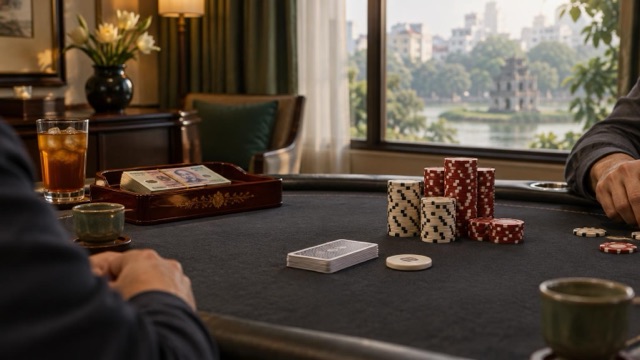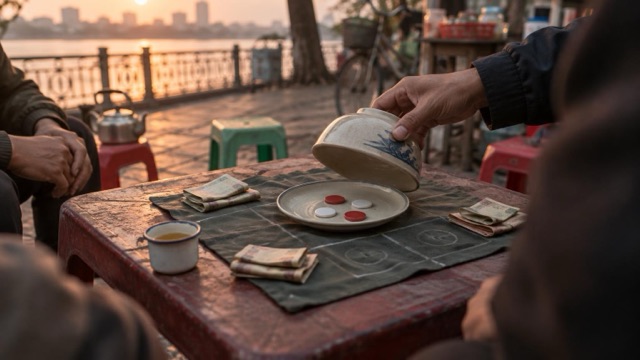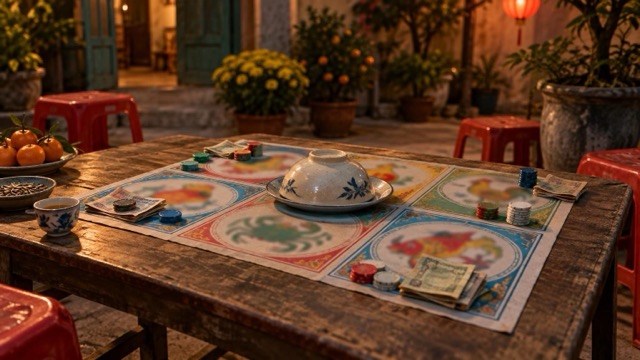
Vietnam's gambling scene has grown fast, with licensed casinos now open to eligible Vietnamese players as well as foreign visitors, and online options that sit in a greyer area. If gambling has stopped being fun and started being a problem, the single most useful step you can take is self-exclusion: a formal arrangement that blocks you from the places and accounts where you gamble. This page explains what self-exclusion is, how it works in Vietnam's casinos, what it does and does not cover, and where to find further help. For the wider picture of what you can legally play and where, see our guide to gambling in Vietnam.
What self-exclusion is
Self-exclusion is a tool you can use to take a break from gambling. It is a program you enter voluntarily with an online or land-based gambling operator, and you agree not to gamble for a chosen period of time6. In practice, it works by blocking your access:
- Online: self-exclusion prevents you from gambling by blocking access to the gaming website you excluded yourself from, for either a definite or an indefinite timeframe, which you can extend7
- At a venue: the operator is obliged to bar you from entering and playing1
The idea is simple. Willpower alone is hard to sustain when a casino floor or a betting app is one tap or one short drive away. Self-exclusion puts a wall between you and the temptation, and it is recognized as an effective tool to support your commitment to stay away from gambling8. Voluntary self-exclusion is a common program at gambling venues across North America, Australia, South Africa, Europe and many parts of Asia, so the concept will follow you wherever you travel9.
Who runs it in Vietnam
Vietnam handles self-exclusion through its own casino regulations rather than through a single national registry. Under the casino business rules, a person must not be allowed to play if they are subject to a request, filed by themselves or by a close relative with full civil capacity, asking the casino operator to bar them from playing1. The relatives with standing to make such a request are:
- your father or adoptive father
- your mother or adoptive mother
- your wife or husband
- your biological child11
This is written into Decree 06/2017/NĐ-CP, which governs betting on horse racing, dog racing and international football, and its Article 7 sets out the same exclusion mechanism for betting businesses12.
In plain terms: if you ask a Vietnamese casino to bar you, it must. And if your spouse, parent or adult child asks, the casino must bar you too. Operators confirm this in their own guidance. Corona Resort & Casino on Phu Quoc explains that a relative with authority, including parents, adoptive parents, a spouse or children, may submit a valid request to the casino business to bar a person from playing13.
Individual resorts also run their own responsible gaming programs on top of the legal requirement:
| Resort | Where | What it offers | How to apply |
|---|---|---|---|
| Hoiana | Near Hoi An | Voluntary self-exclusion and family exclusion, free and confidential | Email the Responsible Gaming team2 |
| Ha Tien Vegas | Cambodian border | Staff assist with setting limits or exclusion from the casino | Ask staff on site14 |
| Corona Resort & Casino | Phu Quoc | Accepts exclusion requests from you or an authorized relative | Casino reception desk13 |
There is no single nationwide list covering every venue in Vietnam. Each operator administers its own exclusions, which is why the sign-up process, described below, involves contacting each place where you gamble.
Who can take part in casino gambling
Self-exclusion only matters if you can gamble in the first place, so it helps to know who is actually allowed through the doors. Foreign visitors have the easiest path: gambling is straightforward and legal at any of the licensed casinos with your original passport, provided you are 21 or older, and there is no entry fee15. Ha Tien Vegas, which sits on the Cambodian border, caters only to foreign passport holders and may request your passport and visa under Cambodia's gambling regulations14.
Vietnamese nationals were barred from the country's casinos for years, but the rules have opened up. Vietnamese individuals over 21 who can show a minimum monthly income of VNĐ10 million can now gamble in casinos, and the current framework allows eligible Vietnamese players to enter licensed casino business points1. At Corona on Phu Quoc, Vietnamese players register for membership at the casino reception desk, where the age and income documents required by Vietnamese law complete the membership card application16. The income proof can be documents showing your income is taxable at level 3 or higher under the Law on Personal Income Tax, within one year before you play11.
There are also people the law bars outright, regardless of income. Vietnamese citizens who violated national security or committed other crimes abroad resulting in more than three years of imprisonment, including those serving jail time, will not be admitted11. For betting on racing and football, excluded persons include the betting business's own managers, executives, employees and their parents, spouses and children; race supervision council members and their close relatives; and jockeys, players and referees for the events they take part in or officiate17. A 2024 proposal went further, suggesting bans on bankrupt persons, those with unpaid debts, welfare recipients and law violators17.
Online gambling is a different matter. Vietnam prohibits most forms of gambling, with limited exceptions such as state-run lotteries and licensed casinos, and online gambling is not regulated: locals are still not allowed to gamble online in the country4. If you are gambling online from Vietnam, you are doing so with offshore operators, which makes the self-exclusion tools those operators offer, covered below, the relevant ones.
How to sign up
Signing up depends on where you gamble.
At a Vietnamese casino resort. Email or speak to the resort's responsible gaming team. At Hoiana, the self-exclusion and family exclusion program is free and confidential, and applications go by email to the Responsible Gaming team2. At Ha Tien Vegas, staff are ready to assist with setting limits or exclusion if needed14. Because each operator keeps its own list, you need to contact every casino where you play, not just one.
With an online operator. The process is usually a message to customer support. Here is how several operators that serve Vietnamese players handle it:
| Operator | How to request | Minimum term | What happens to the account |
|---|---|---|---|
| Las Atlantis | Message support | 6 months | Cannot be undone for the time you set18 |
| BC.GAME | Customer Support | 6 months | Locked, no promotional material sent19 |
| Wild.io | Support request | Not stated | Cannot deposit or play20 |
| LongFu88 | Support request | Not stated | Cannot receive deposits, place bets or be reopened21 |
Through a relative. In Vietnam, a close relative with full civil capacity can file the request with the operator on your behalf1. If a family member is the one making the request, the operator will need the details that identify you, and the bar then applies the same way as if you had asked yourself.
Through a multi-operator program. The National Voluntary Self-Exclusion Program is a free way to stop gaming across many different websites and casinos with a single enrollment, which saves you from contacting operators one by one22.
What happens next is that the operator activates the bar. Online, your account is locked and access to the site is blocked7. At a land-based venue, your details go on the operator's exclusion list and staff are obliged to refuse you entry1.
How long it lasts
The typical range is six months to five years. GamCare describes self-exclusion as preventing you from gambling in betting shops, casinos, arcades, bingo venues and online for a period of six months to five years3. Las Atlantis uses the same window, and stresses that once you have chosen your time span, the exclusion cannot be undone for that period18. BC.GAME locks the account for a minimum of 6 months19.
Some schemes allow an indefinite term. The Malta Gaming Authority's online self-exclusion runs for a definite or indefinite timeframe, and you can extend it yourself if you need longer7.
Deposits during self-exclusion: not allowed
Once your self-exclusion is active, deposits are off the table. The official guidance is blunt: during a self-exclusion, players are prevented from gambling23. LongFu88's Vietnam service spells it out: the account "cannot receive deposits, place bets or be reopened by the support team"21. Wild.io says the same in four words: you cannot deposit or play20.
This is deliberate. If you could keep funding the account, the exclusion would be a paper wall. Blocking deposits, bets and account reopening together is what makes the tool work.
One reassurance: money already on the account is not lost. Funds held on the account are not forfeited and can still be withdrawn during the self-exclusion7. So if you had a balance when you signed up, you can still get it out; you just cannot put anything in.
How self-exclusion affects your winnings
If you enter a casino or use a site while self-excluded, you cannot collect any winnings from that visit24. The exclusion period runs from six months to five years and covers betting shops, casinos, arcades, bingo venues and online5. During that time the operator simply does not pay out, so the money stays with the house.
For contrast, it is worth knowing what a legitimate winner in Vietnam is entitled to. Casino players are entitled to full confirmation and payment of winnings by the business, and players may request that the business keep winning and payout information confidential, except where a state authority requires disclosure11. Foreigners and overseas Vietnamese with foreign passports may receive winnings and transfer or carry winnings abroad in foreign currency under Vietnam's foreign exchange rules11. At Hoiana, the mechanics are simple:
- Show your membership card to staff when playing table games, or insert it into an electronic gaming machine before playing
- Verify winnings at any cashier with your passport before leaving2
None of that applies to a self-excluded player who sneaks back in. The winnings rule for excluded players is absolute, and it exists precisely so there is no payoff for breaking your own agreement.
What self-exclusion does not cover
Self-exclusion has limits, and knowing them helps you use it well.
It covers only the operators you signed up with. Each venue runs its own scheme. A self-limitation agreement at a California cardroom applies only to that single cardroom, and can even be limited to specific games such as blackjack or poker, or to specific services such as check cashing or marketing24. Each tribal casino has its own form and policy and must be contacted individually24. The same fragmented picture applies in Vietnam: there is no nationwide list, so an exclusion at Hoiana does not bar you at Corona, and neither bars you from an offshore website you never registered with. Multi-operator programs like the National Voluntary Self-Exclusion Program close part of this gap by covering many websites and casinos at once22.
It does not cover unlicensed activity. Vietnam prohibits most forms of gambling outside the licensed exceptions4, and an exclusion agreement with a licensed casino says nothing about the unregulated market that exists alongside the legal one. Self-exclusion gives you no protection there, and no winnings either, since illegal bets have no legal payout route. The licensed operators themselves also bar certain people from playing, including their own managers, staff and those employees' parents, spouses and children, along with jockeys, players and referees for the events they take part in25.
It does not stop you being registered by someone else. The program is voluntary and personal: you cannot register someone else, though you can seek help for a loved one10. In Vietnam the relative's request route exists, but it is the relative filing with the operator, not a third-party enrollment into a support program.
It does not cover every place on earth. Some regions have no land-based self-exclusion programs at all, with free gambling helplines offered instead10. Wherever you are, check what the local venues actually offer rather than assuming a scheme exists.
If you break your self-exclusion
The consequences are real. You cannot collect any winnings from a visit made while excluded24. Beyond losing the money, violating the exclusion terms can lead to arrest for trespassing in jurisdictions that treat the exclusion as a formal bar on entry24. In Vietnam, the operator is obliged to refuse entry to listed persons1, so being recognized at the door means being turned away, and any play that slips through leaves you with nothing to collect.
Breaking the agreement also undoes the thing you signed up for. The point of the term you chose, whether six months or five years, is to give yourself a stretch of time in which gambling is simply not available. Every breach resets that clock emotionally, even if the paperwork still stands.
If you do break it, the practical move is not to treat the whole effort as failed:
- Re-engage with the program
- Extend the term if the operator allows it7
- Reach for the counseling support described in the next section, because a breach is usually a sign that willpower alone is not enough and that talking to someone would help
Getting help beyond self-exclusion
Self-exclusion is a barrier, not a treatment. If gambling has become a problem, the support that addresses the behavior itself sits outside the exclusion list.
Helplines are the fastest starting point. The National Gambling Helpline offers free, confidential support5, and free gambling helplines exist even in places with no land-based self-exclusion programs10. Gambling support services can also help you find local support, so one call can point you toward counseling wherever you are25. PlaySmart maintains a finding-help resource for exactly this purpose26.
Operators themselves point the same way. Bovada's responsible gaming page notes that many resources are available to individuals who have, or are developing, gambling problems27. The consistent message across the industry and the support sector is that self-exclusion works best as one layer, with counseling and behavior change as the others.
Beyond the helpline, practical self-management tools help while you work on the underlying habit. Support services describe changing your gambling behavior as a process you can work through, from understanding your triggers to setting your own limits6. Deposit limits, session limits and honest budgeting are the everyday versions of the same principle that self-exclusion applies in full: putting a deliberate gap between the urge and the action.
For family members, the same doors are open. You cannot enroll a loved one in a program, but you can access help for yourself and for them10, and in Vietnam you have the additional option of filing a formal exclusion request with the casino operator on their behalf1. Hoiana's family exclusion program exists precisely for this, free and confidential, by email2.
If you are in Vietnam and want the wider picture of what is legal, where the casinos are and how the games work, our guides to casinos in Vietnam, Corona Casino Phu Quoc and online gambling in Vietnam cover the practical side. And if you are weighing whether gambling has become a problem in the first place, support services offer a plain checklist of the signs8.
Common Questions
Can I collect winnings if I entered a casino while self-excluded?
No. If you are on a self-exclusion list and enter anyway, you cannot collect any winnings from that visit. In Vietnam, a casino must also refuse entry to anyone barred at their own request or a close relative's request, so the exclusion applies before you even reach the tables.
Can I make deposits while on the self-exclusion list?
No. Once self-exclusion is active, your account cannot receive deposits or place bets, and support staff cannot reopen it for you. Any funds already held on the account are not forfeited and can still be withdrawn.
Do cardrooms and tribal casinos share the same self-exclusion list?
No. Each venue runs its own scheme. A self-limitation agreement at one California cardroom covers only that cardroom, and each tribal casino has its own form and policy, so you must contact every venue individually.
How do I remove myself from self-exclusion?
You generally cannot. Most schemes lock in for the period you chose, typically between six months and five years, and the exclusion cannot be undone early. Once the term ends, you can ask the operator about returning.
What happens if I break my self-exclusion agreement?
You forfeit any winnings from that visit, and in some places you can be arrested for trespassing. In Vietnam, the operator is obliged to bar listed persons from the casino, so staff will remove you if you are recognized.
Is self-exclusion free to join?
Yes. Programs like the National Voluntary Self-Exclusion Program are free, and Hoiana's self-exclusion and family exclusion service in Vietnam is free and confidential. You apply by email or through the venue's support team.
Where can I get counseling support for gambling?
Free, confidential helplines exist, such as the National Gambling Helpline, and gambling support services can point you to local help. Operators like Bovada also list external problem gambling resources on their responsible gaming pages.
Sources27 sources
- Từ 26/11/2025 mở các địa điểm casino hợp pháp cho phép người Việt Nam đủ điều kiện vào chơi, Thư Viện Pháp Luật, 2025-11-26
- Casino regulations, Hoiana, 2026
- Safer gambling, GamCare, 2026-05-11
- HCM City police bust online football betting rings worth over $132m, Vietnam News, 2026-07-08
- Find local support, GamCare, 2026-08-18
- Changing your behaviour, Responsible Gambling Council, 2026-09-25
- Safer gambling, Malta Gaming Authority, 2025-10-07
- Problem gambling help, Responsible Gambling Council, 2026-09-25
- Gambling FAQs, Responsible Gambling Council, 2026-09-25
- Self-exclusion, Responsible Gambling Council, 2026-09-25
- Casino Hồ Tràm có cho người Việt Nam vào chơi không? Điều kiện người Việt Nam được phép vào chơi tại..., Thư Viện Pháp Luật, 2025-11-28
- Nghị định 06/2017/NĐ-CP của Chính phủ về việc kinh doanh đặt cược đua ngựa, đua chó và bóng đá quốc tế, VCCI, 2017-01-24
- Người Việt có được chơi casino không?, Corona Resort & Casino, 2026-09-24
- Bài bưu 2, Ha Tien Vegas, 2025-05-04
- Gambling in Vietnam, Corona Resort & Casino, 2026-05
- Cách chơi casino lần đầu, Corona Resort & Casino, 2026-09-11
- Bet thủ là gì? Bet thủ phải bao nhiêu tuổi thì được tham gia các loại hình cá cược ở Việt Nam?, Thư Viện Pháp Luật, 2024-11-20
- Responsible gaming, Las Atlantis, 2026-09-26
- Terms of service, BC.GAME, 2026-09-26
- Get help, Wild.io, 2026-09-27
- Responsible gaming, LongFu88 Vietnam, 2026-09-26
- National Voluntary Self-Exclusion Program, N VSEP, 2026-09-27
- Self-barring, Malta Gaming Authority, 2025-08-05
- Help, How to Exclude, 2026-09-26
- Finding help, PlaySmart, 2026-09-25
- Help and support, PlaySmart, 2026-09-25
- Self-exclusion, Bovada, 2026-09-26