How a slot machine pays: credits, paylines and the paytable
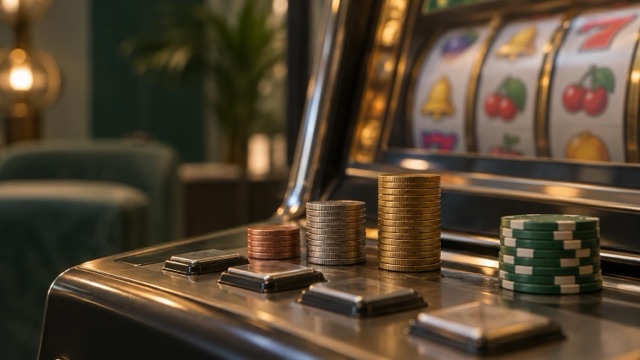
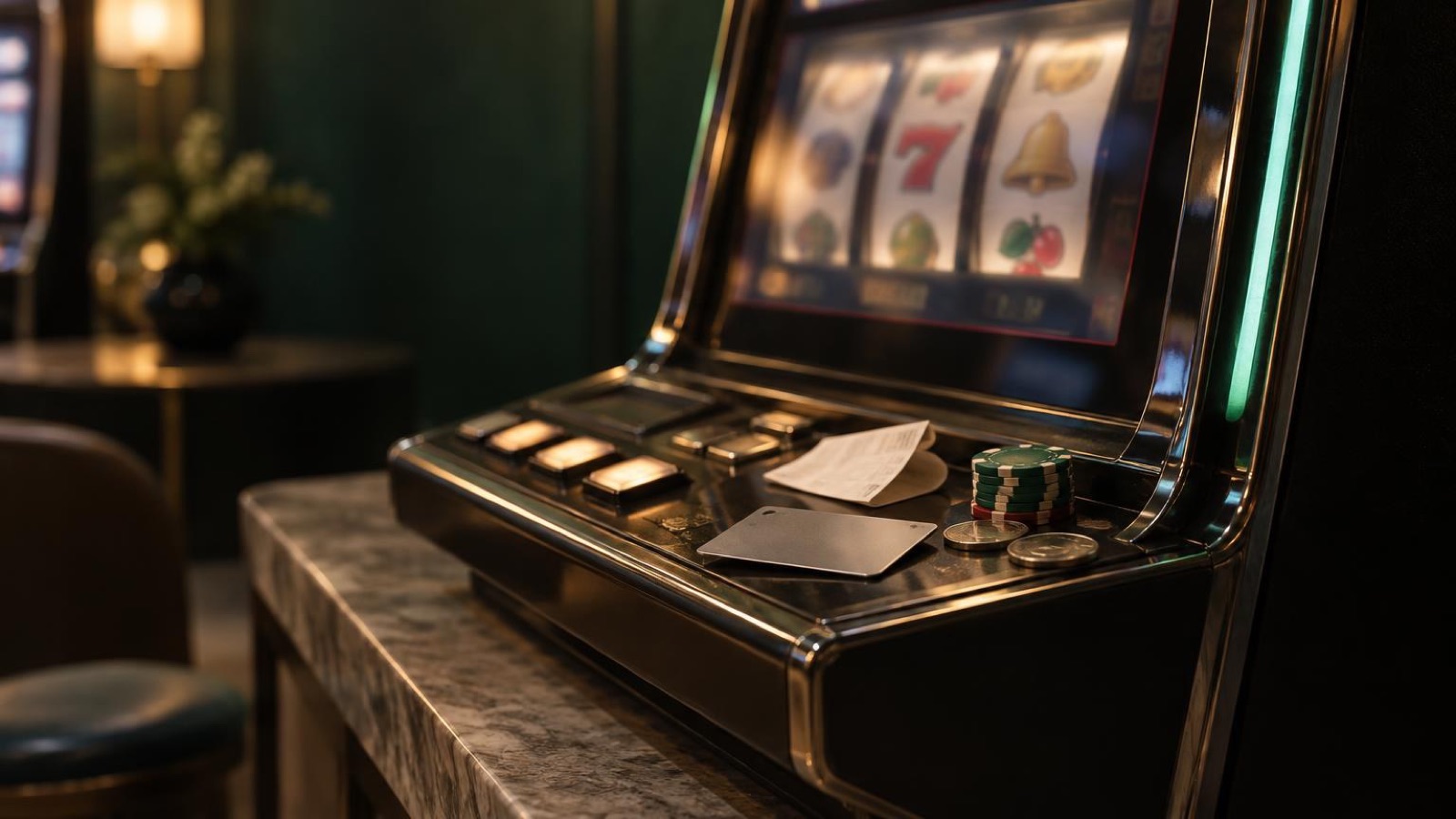
A slot machine does not hand you coins the moment a symbol lines up. It converts your win into credits on the meter, and those credits sit there until you decide to take them out. The paytable on the glass or the screen tells you what each combination on a winning line is worth, and the machine adds that value to your balance automatically.
On the older mechanical style of machine, coins are paid out according to the points scored on the winning lines, exactly as they were on the arrange-ball machines that came before them5. Modern video slots do the same thing electronically: the win is calculated, credited, and displayed. You never have to count anything or claim anything at the moment of the win.
The practical point is that a win and a payout are two separate events. The win happens on the reels. The payout happens when you cash out. Between those two moments, your money exists as a number on a screen, and that number is only as safe as the machine holding it.
What the Random Number Generator decides (and what it does not)
Every spin is decided by a random number generator, the same technology used to draw lottery numbers6. It runs continuously, whether or not anyone is playing, and it determines the result of the next spin the instant you press the button. Nothing you do at the reels changes what it has already decided.
What the RNG does not do is track you. It does not know you have been losing for an hour. It does not know the machine has not paid in a while. It does not adjust based on how many people are sitting nearby. Machines never "come due to win" and they do not freeze after a win, because the outcome is set by the machine's preset odds and the internal mechanism cannot predict what is coming6.
The RNG also decides whether you reach a bonus round at all. On some games, a replay symbol and a bonus symbol are drawn at the same time, and that simultaneous draw is the main trigger for the bonus7. Once a bonus is established, the replay probability can rise. None of that is under your control.
Jackpot sizes: what machines advertise, up to USD 19,239.50
The advertised jackpot on a machine is the number that matters for a hand pay. When a win reaches USD 19,239.50, it has hit the level at which the machine's own payout limit is reached and staff take over. That figure is the practical ceiling for an automatic machine payout, and anything above it moves to a manual process.
Progressive jackpots work differently. They start at a set amount and grow until someone wins them. One example from a lottery-style game starts at $125,000 and grows until it is won4. On linked slot machines, the same principle applies: a small percentage of every bet feeds the pool, and the pool keeps climbing until a player hits the combination.
The estimated jackpot amount is usually shown on the top screen of the machine, and the starting amount varies depending on the game theme and version2. If you are playing a game with a progressive attached, that display is the live figure, not a marketing number.
For comparison, the largest advertised lottery-style jackpot in the material runs to JPY 600 million for the BIG game, and up to JPY 1.2 billion for MEGA BIG when a carryover occurs8. Those are draw games rather than slot machines, but they show the scale that progressive pools can reach when they roll over repeatedly.
House edge and payout percentages: 8% average, 85 to 98% RTP
Slot machines return a set share of everything wagered over time. The range across machines is roughly 85 to 98 percent, which means the house keeps somewhere between 2 and 15 percent of total turnover depending on the game6. The average sits around 8 percent for the house.
That percentage is calculated over millions of spins, not over your session. A machine returning 95 percent does not give you back 95 cents of every dollar you put in during an evening. It means that across all players and all spins, that share goes back out. Your individual result can be anything at all.
For a sense of how this plays out in practice, Japan's soccer lottery has a prize rate of 49.6 percent, with sales of JPY 90.5 billion and payouts of JPY 44.9 billion in the year measured10. That is a draw game with a much lower return than a slot machine, but it illustrates the same principle: the operator keeps a slice, and the published rate tells you how big that slice is.
The rate is not a promise about your next spin. It is a long-run average, and it is the single most useful number on the machine if you want to understand what you are playing.
Denomination and bet size: how they change the payout
Denomination is the value of one credit. A one-cent machine and a one-dollar machine can run the same game with the same symbols and the same payout percentage, but the money moving through them is a hundred times different. Higher denomination does not mean a better return. It means bigger swings.
Bet size works the same way. If you cover more lines or bet more credits per line, each spin costs more and each win pays more in absolute terms. The percentage return stays where the machine is set. What changes is how fast your money moves and how large the individual wins and losses are.
There is one place where bet size genuinely changes what you can win. On multi-price progressive games, you must bet the maximum amount to be eligible for the progressive jackpot2. If you are playing a game with a progressive attached and you are not at max bet, you cannot win the pool, no matter what lands on the reels.
Prize amounts on many games are not fixed. They vary with sales and the number of winning entries, and the figures advertised are theoretical values rather than guaranteed amounts11. The same is true across a range of lottery-style products, where the published first prize is a theoretical figure that moves with sales and the number of winners12.
Cash-out process: from credits to cash at the machine and cage
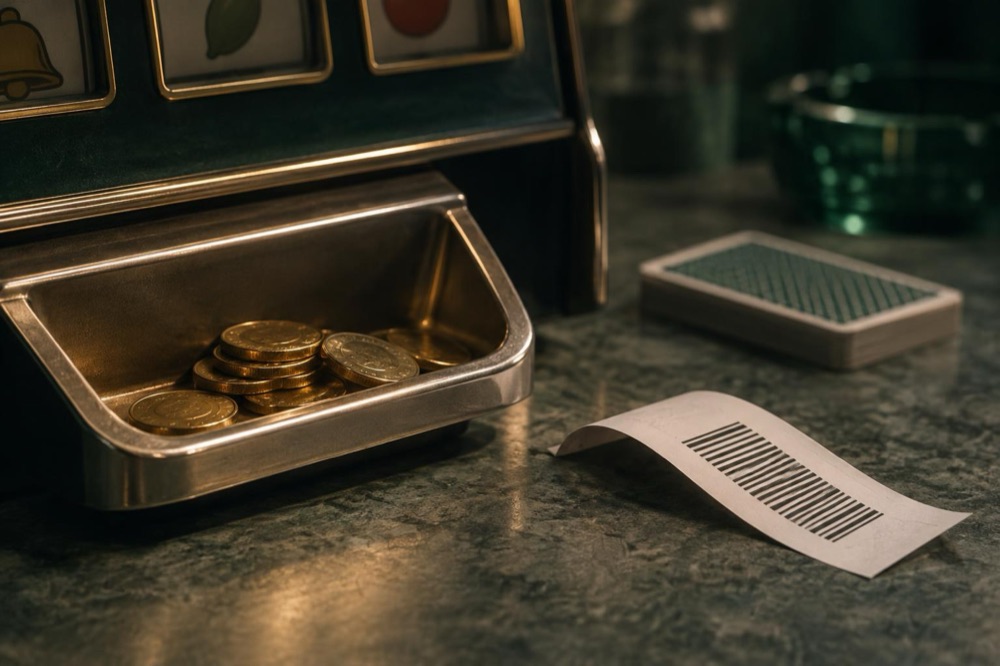
Cashing out is straightforward on a modern machine. Insert your winning ticket and press the settlement button, and the money you won comes out of the machine automatically1. On some betting terminals you can cash out at any time by inserting the winning ticket and pressing the green settlement button19. The same process applies on automatic vending machines: insert the ticket, press the settlement button, and the money is dispensed20.
Not every win comes out of the machine. On some cabinets, you hit cash out and a voucher prints. If you win $1,000 or more, a jackpot voucher is printed instead, and you present that voucher to the cashier for redemption2. That voucher rule applies to PlaySmart Tap n Play cabinets in Canadian charitable gaming centers, and it is not the same thing as a hand pay. A hand pay is what happens when a win exceeds the machine's own payout limit, which sits at USD 19,239.50, and staff pay you directly after verifying the win and your identity.
Here is the sequence for a hand pay:
- The machine locks up or displays a message that staff are needed.
- An attendant arrives and verifies the win on the machine.
- You are asked for photo identification.
- The attendant completes paperwork recording the win and your details.
- Payment is made in cash, by check, or by transfer depending on the amount and the venue.
For larger amounts, the payment method changes. On Japan's sports lottery, winnings over JPY 500,000 are handled at a credit union, and the winner can choose to receive the money directly at the counter 12 business days later or by transfer to a designated account21. That is a draw game rather than a slot machine, but the structure is the same one casinos use for large hand pays: the bigger the amount, the less likely it is to arrive as cash over the counter.
Redemption limits vary by outlet. On the same sports lottery, the payout channels and caps are tiered as follows8:
| Prize amount per ticket | Where it can be collected | Limit |
|---|---|---|
| JPY 100,000 or less | Booths, credit unions or convenience stores8 | No stated cap at booths, credit unions or convenience stores |
| Over JPY 100,000 | Credit union8 | Must go through a credit union |
| Over JPY 500,000 | Credit union8 | Requires the credit union procedure |
| Any prize at some booths | Booth8 | Capped at JPY 10,000 or JPY 50,000 per ticket |
| Any prize at convenience stores | Convenience store8 | Limited to JPY 15,000 |
Casino cages set their own thresholds, but the pattern of tiered limits is universal.
One detail that catches people out: chips and credits are not always interchangeable between games. Roulette chips can only be cashed out at the table where they came from, not at the cage22. Slot credits do not have that problem because they live on the machine or on a ticket, but the principle is worth knowing if you move between tables and machines.
Medal-based machines: borrowing, playing and settling up
Some venues, particularly in Japan, run machines on medals rather than coins or notes. You do not buy medals at the machine. You borrow them from a counter or a station, play with them, and settle up at the end based on what you have left.
The mechanics are simple. You take a tray of medals to the machine, feed them in, and play. When you are done, you take your remaining medals back to the counter and settle. The value of the medals is fixed by the venue, and the settlement converts your remaining medals back into money or into a receipt you take to a cashier.
This system exists because of how gambling is regulated in those venues. The machine itself is a game of chance played for medals, and the settlement happens separately. For you as a player, the practical effect is that you need to keep track of your medal tray the way you would keep track of chips at a table. Losing medals is losing money.
If you are used to ticket-in, ticket-out machines, the medal system feels slower. There is no ticket to pocket and no machine to cash out at. You carry value in a tray, and the tray goes back to the counter at the end.
Rules and disclaimers that limit what a machine guarantees
The most important rule on any slot floor is the malfunction clause. Any system or machine malfunction voids all plays and pays, and any ticket credit that was not dispensed is only cashed in and paid after management verifies the correct credit amount3. In plain terms: if the machine glitches, the win can disappear, and getting it back depends on a verification process you do not control.
That clause is why a large balance sitting on a machine is exposed to a malfunction ruling, while a ticket in your pocket is not.
Progressive jackpots have their own rules about how the pool is split and reset. On progressive jackpot poker, a royal flush pays a fixed prize or 100 percent of the jackpot pool, whichever is higher, while a straight flush pays a fixed prize or 10 percent of the pool, whichever is higher23. If several positions hold a straight flush at the same time, each is paid 10 percent of the pool or a fixed prize, whichever is higher24. After the jackpot is paid, the pool is reduced accordingly, and when it is fully paid out it restarts accumulating from the minimum amount23.
Those rules matter because they tell you what happens when more than one person qualifies at once. The pool is not duplicated. It is split according to the published formula, and then it rebuilds from the bottom.
The final thing to understand is that a machine guarantees nothing beyond the rules printed on it. It does not owe you a win because you have been playing a long time. It does not owe you a bigger win because you bet more, unless the game specifically requires max bet for the progressive. What it does is run the odds it was set to run, and pay according to the paytable when those odds land in your favor.
Common Questions
Do slot machines follow trends or schedules?
No. A machine's arrangement or location does not affect whether it pays, and how often it has been played says nothing about the next spin. Each result is decided independently, so a machine that has just paid is no more or less likely to pay again.
What is the largest advertised slot jackpot in the facts?
The biggest advertised figure in the material is USD 19,239.50, which is the level at which a machine's own payout limit is reached and staff take over. Progressive jackpots on linked games grow well beyond that, but the advertised amount shown on the machine is the number that matters for a hand pay.
Do higher-denomination machines pay more?
Not in percentage terms. A higher denomination means each spin costs more, so wins are larger in absolute money, but the share returned over time is set by the machine's payout percentage, not its coin size. Smaller prizes also come up far more often than the top prize on any machine.
Can skill improve your slot results?
Mostly no. The random number generator decides whether you reach a bonus game and how much is available to win. On some machines a bonus round includes an arcade-style interaction where you can influence the outcome, but luck still drives the result.
What happens to credits if you walk away from a machine?
Credits left on a machine are not safe. If a system or machine malfunction occurs, all plays and pays are void, and any ticket credit that was not dispensed is only paid after management verifies the correct amount. Cash out before you leave the seat.
Which currencies do slot machines accept?
It depends on the venue, not the machine type. Casino floors in Asia generally run on the local currency or the house's chosen currency, and machines take notes or tickets rather than foreign coins. Change counters and the cage handle conversion.
What triggers a bonus game or free games?
A bonus is triggered by the machine's internal draw, not by anything you do at the reels. On some games a replay symbol and a bonus symbol are drawn at the same time, and that simultaneous draw is the main trigger. Replay probability can rise once a bonus is established.
Sources24 sources
- Betting Guide (Chinese), Sonoda Himeji, 2026
- TAP 'N PLAY How to Play, PlaySmart, 2026
- Regulatory Framework for Gaming Venue Operations, PAGCOR, November 6, 2025
- Lightning Lotto How to Play, PlaySmart, 2026
- Slot Machine 2, Wikipedia, 2026
- How Slots Work, GameSense, 2026
- Jiisama, Wikipedia, 2026
- Sports Kuji 2026, Japan Sport Council, 2026
- Japan Racing Guide, Japan Racing Association, 2026
- Research Paper, Ministry of Internal Affairs and Communications, 2008
- About BIG, Toto Dream, 2026
- BIG Prize Information, Japan Sport Council, 2026
- BIG Details, Japan Sport Council, 2026
- About Toto, Toto Dream, 2026
- MEGA BIG Press Release, Japan Sport Council, April 24, 2026
- Vote Confirmation, Toto Dream, 2026
- MEGA BIG Press Release, Japan Sport Council, April 24, 2026
- BIG Press Release, Japan Sport Council, April 21, 2026
- How to Bet, Tokyo City Keiba, 2026
- Betting Guide (English), Sonoda Himeji, 2026
- Refund at Shops, Toto Dream, 2026
- How to Play Roulette, PlaySmart, 2026
- Stud Poker Rules, Macau DICJ, May 12, 2004
- Progressive Jackpot Rules, Macau DSAJ, October 30, 2025