

Can you chargeback a casino deposit
A chargeback is a dispute process run by your bank and the card network, not a refund button at the casino. A card issuer can reverse a card transaction, but whether you keep the money is a different question. If the operator can show the deposit was authorized and the balance was credited, the dispute usually fails.
The bigger risk sits on the operator's side. When a deposit is reversed, many operators treat the underlying bet as void. Singapore Pools states plainly that if funds debited for a bet are reversed by a bank or financial institution, the bet is deemed void and the company is entitled to a refund of any winnings already paid out5. So a chargeback on a deposit that produced a win can leave you owing the operator money rather than collecting it.
That is the practical shape of it. You are not just asking for your deposit back. You are unwinding a transaction the operator has already settled, and the operator's terms are written to survive exactly that.
What a chargeback is and when it applies
A chargeback starts with your bank, not the casino. You tell the issuer the transaction was wrong, the issuer investigates, and the network moves funds if the claim holds up. The grounds are narrow and specific. "I lost and regret it" is not one of them.
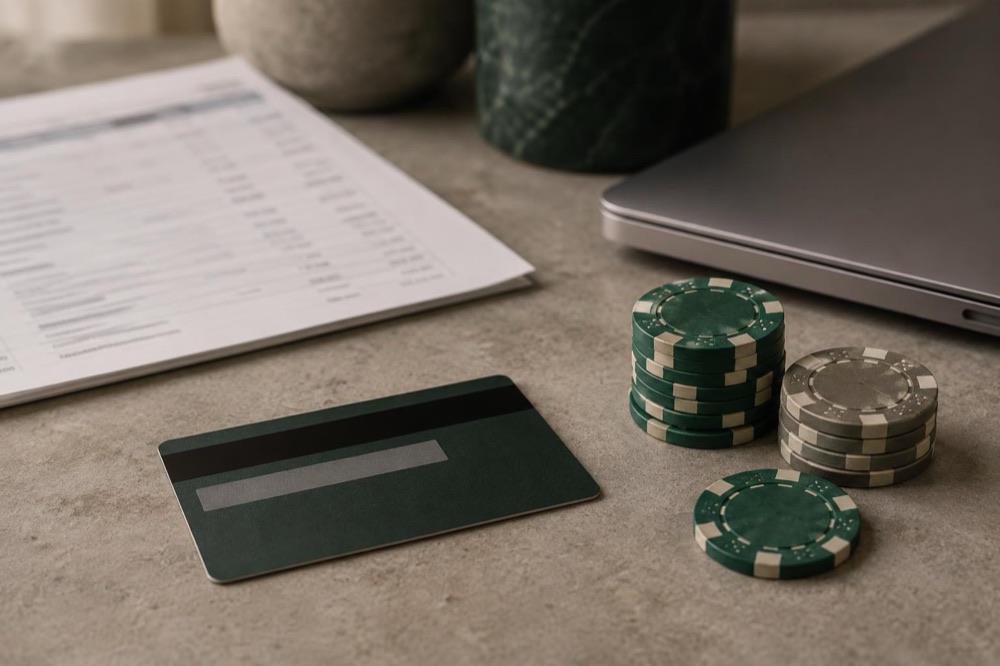
Where a chargeback does apply is when the payment itself was faulty: a card you did not authorize, a duplicate charge, a deposit that never reached your account. Those are disputes about the transaction, not about the gambling.
There is a second, separate route that has nothing to do with your bank. If a casino declares play void, it refunds wagers to patrons, and it may recover winnings from affected patrons if those patrons were clearly informed of the circumstances and the means of recovery2. That is the operator refunding you, not your bank reversing a charge. The two paths look similar from your side and are completely different underneath.
For deposits made by card, the money moves fast. Visa Debit deposits transfer funds instantly from your bank account to your casino balance1, which is exactly why a later dispute is hard to win: the operator's record shows the balance landed.
Grounds banks accept for card disputes
Banks and card networks generally accept a dispute when the problem is with the payment, not with the outcome. The categories that tend to work:
- Unauthorized use. Someone used your card without your permission.
- Duplicate or incorrect amount. You were charged twice, or charged more than you authorized.
- Deposit not credited. You paid and the balance never appeared.
- Services not delivered. The operator took the deposit and did not provide what was promised.
The categories that tend not to work:
- You lost the money gambling.
- You deposited more than you intended.
- You want to close the account and take the balance back.
- You believe the games were unfair, without evidence of a payment fault.
If your deposit was declined rather than charged, that is a different problem with a different fix, covered in why gambling deposits are declined. And if the issue is that a payment went to a person rather than a company, that is a fraud pattern rather than a chargeback, covered in deposits to personal bank accounts.
One more thing worth knowing before you file: some payments are explicitly non-refundable by rule. In Singapore, a casino entry levy that has been paid is not refundable, in whole or in part, even if the resident never enters or stays on the premises during the validity period6. A casino operator is also barred from refunding, remitting or reimbursing an entry levy, directly or indirectly7. That is a levy rather than a deposit, but it shows how firmly some gambling payments are walled off from refunds.
Stop payments: halting a deposit before it settles
A stop payment is not a chargeback. It asks your bank to halt a payment before it settles. It works on scheduled or pending transfers. It does not work on instant transfers that have already landed, which is most card and instant-bank gambling deposits.
The window matters. Some deposit systems cancel unpaid reservations on their own. A JRA Pay-easy deposit reservation whose payment is not completed is canceled after the period ends, usually the weekend8. If you are mid-deposit and want out, that automatic cancellation is often the cleanest exit, because nothing was ever charged.
Where a stop payment does apply, expect a fee from your bank, and expect the operator to treat the reversal as a failed deposit rather than a refund. The practical sequence is: the payment stops, the deposit never credits, and the operator's system simply does not record a balance. That is cleaner than a chargeback because there is no settled transaction to unwind.
If your deposit did settle and the balance is sitting in your account, a stop payment is the wrong tool. You are now in withdrawal territory, which is a different process with its own rules, covered in pending casino withdrawals and closed-loop payments.
When operators halt deposits: the junket example
Operators do not just react to chargebacks. They also stop accepting deposits when the money flow becomes a problem. The clearest recent example is the junket world.
In the Philippines case that drew wide coverage, kidnappers told Anson Que's son on the seventh day of captivity to exchange money for Ucoin after the 9 Dynasty casino service stopped accommodating big deposits. The deposit channel closed, and the ransom demand moved to crypto. That is an extreme case, but it shows the mechanism: when an operator stops taking large deposits, the money finds another route, and the people owed money are left holding a claim against a channel that no longer exists.
For ordinary players, the lesson is narrower. If you deposit through an agent or a junket rather than directly with a licensed operator, your chargeback rights are weaker, because your card payment went to the agent, not the casino. The operator never received your money and has nothing to reverse. That is why payment agents carry more risk than paying a licensed operator directly.
Operators also halt deposits for account-level reasons. A self-excluded player cannot deposit at all: the deposit function is simply switched off9. If you are on a self-exclusion or visit limit, no deposit method will work, and a chargeback is not the issue. The account is closed to deposits by design.
Who pays transaction fees: the Singapore Pools change
Fees are where chargebacks and refunds get expensive, and Singapore is the clearest case to watch because the rules changed recently.
The current position is simpler for ordinary deposits. There is no transaction fee for depositing funds, and you can deposit through a bank link or PayNow10. There is no transaction fee for bet placement, whether online or at an outlet11. Credit cards and credit facilities are not accepted for bet placements across retail and online channels13, so the card chargeback question mostly concerns debit cards and bank transfers in this market.
Refunds are where a fee can still appear. Singapore Pools may charge a reasonable administrative fee for processing a refund of a deposit rejected after pending verification or probity checks, deductible from the refunded funds3. So if your deposit is rejected during checks, you get the money back minus a processing charge. That is not a chargeback, but it is the closest thing to one in the Singapore system, and it is the operator doing the refunding.
The mechanics of a rejected deposit are worth knowing. A rejected PayNow deposit is refunded to the bank account the payment was initiated from4, and funds transferred must come from a personal bank account with the same name as your Singapore Pools account10. If you deposited from someone else's account, the refund path gets complicated, because the name on the account does not match.
Refunds of bets placed remotely may be transferred, deposited or credited directly into your remote betting account5. Singapore Pools decides the date and manner of refund payments for any bets5, and the company determines the mode, manner, locations and limits for claiming prize money at its sole discretion14. In practice, that means the operator controls the refund route, and you do not get to choose a different one.
Withdrawals follow the same logic. Payment methods include cash, check, transfer by way of PayNow to your bank accounts, and crediting of funds into your remote betting account14. Prize claims have their own tiers15.
| Prize amount | Method | Location |
|---|---|---|
| SGD 5,000 or below | Cash or PayNow | Any outlet |
| Up to SGD 20,000 | PayNow | Any outlet |
| Up to SGD 200,000 | PayNow | Head office |
| Over SGD 5,000 | PayNow or check | Any outlet (PayNow up to SGD 20,000), head office (PayNow up to SGD 200,000), or check |
None of that is a chargeback, but it is the money-out side that a chargeback would interrupt.
If you are weighing card against other methods, the trade-offs are set out in Visa debit vs credit card for gambling and e-wallet vs bank transfer at online casinos. The short version: instant methods settle fast, which makes them convenient to deposit and hard to dispute.
What happens if you win after disputing a deposit
This is the scenario people ask about most, and the answer is uncomfortable. If you dispute a deposit and the operator voids the bet, any winnings tied to that deposit can be reclaimed.
Singapore Pools is explicit: if funds debited for a bet are reversed by a bank or financial institution, the bet is deemed void and the company is entitled to a refund of any winnings paid out to you5. So a chargeback on a winning deposit does not leave you with the win. It leaves the operator with a claim against you.
The same principle runs through void-play rules generally. When casino gambling is declared void, all wagers are refunded to patrons, and the casino operator may recover winnings from affected patrons if those patrons were clearly informed of the circumstances and the means of recovery2. The operator refunds the stake and claws back the payout. Net position: you are back where you started, minus any fees.
There is a narrow exception. The recovery of winnings does not apply where the void is declared on the ground of a force majeure event16. That is a specific carve-out, not a general protection, and it does not help a player who simply filed a chargeback.
The practical takeaway: do not treat a chargeback as a way to keep a win. If the deposit is reversed, the win goes with it, and you may owe the operator the difference.
Will your bank or the operator close your account
Your bank is unlikely to close your account over one disputed gambling transaction. Repeated disputes are a different matter, because a pattern of reversals makes you an expensive customer, and banks act on that commercially rather than legally.

Operators act faster. Singapore Pools can suspend or terminate an account if the holder is the subject of casino exclusions under the Casino Control Act 2006, the Gambling Control Act 2022, or other problem-gambling measures imposed by the National Council on Problem Gambling3. That is an exclusion ground rather than a chargeback ground, but it shows how readily a betting account can be closed.
HKJC takes a different route to the same end. The operator or the Club may suspend or terminate an account if a guarantee submitted under the rules lapses and is not renewed or replaced, or if any designated bank account is found not to be held in the holder's sole name9. A deposit from a shared or third-party account can therefore put the account itself at risk, independent of any dispute.
The pattern across operators is consistent: the account is a privilege governed by terms, and a reversed deposit is a breach of those terms. If you are worried about account closure, the safer path is to resolve the deposit with the operator directly before involving your bank. If the deposit never credited, start with deposit not credited. If the operator is asking for proof of your payment method, see payment method verification.
Can you dispute a deposit made by bank transfer or e-wallet
Card chargeback rules do not extend to bank transfers or e-wallets. There is no network dispute process for a PayNow transfer the way there is for a card charge. What you have instead is the operator's own refund policy.
For PayNow, that policy is specific. A rejected PayNow deposit is refunded to the bank account the payment was initiated from4, and the funds must have come from a personal bank account with the same name as your betting account10. If the deposit is rejected after verification or probity checks, an administrative fee may be deducted from the refund3.
For e-wallets, the provider's rules govern. Some restrict which balance can be used: Instant PAT charging is only possible from PayPay money, and PayPay Later cannot be used17. That kind of restriction matters if you are trying to reverse a payment, because the funding source determines what can be unwound.
For bank transfers into a betting account, the operator decides the refund route. Singapore Pools may transfer, deposit or credit refunds directly into your remote betting account5, and it decides the date and manner of refund payments5. You do not get to redirect the money to a different account.
The general rule across all of these: the further your payment sits from a card network, the less a chargeback can do for you, and the more you depend on the operator's terms. If your deposit went through an instant transfer, the practical options are set out in instant bank transfers for gambling. If it went through a local wallet, see local e-wallets for gambling.
Common Questions
Can I get my money back from an online casino?
Sometimes, but not simply because you changed your mind. A card chargeback needs a ground your bank accepts, such as a transaction you did not authorize or goods not delivered. If a casino declares play void, it refunds wagers, and it may recover winnings already paid to you.
What happens if I win after disputing a deposit?
The operator can treat the bet as void and reclaim the winnings. Singapore Pools, for example, deems a bet void if the bank reverses the debited funds and is entitled to a refund of winnings already paid. You could end up owing money rather than collecting it.
How long does a card chargeback take?
It depends on your bank and the card network, and no fixed timeline applies to every case. Operators quote their own payout speeds instead: one site lists KYC within 2 business days, pending time within 3 business days, Bitcoin in 24 to 48 hours, and bank transfer or check in 3 to 5 business days.
Will my bank close my account for gambling disputes?
Banks rarely close accounts over a single dispute, but repeated ones can flag your account. Betting operators do act: Singapore Pools can suspend or terminate an account if the holder is subject to casino exclusions under the Casino Control Act 2006 or the Gambling Control Act 2022.
Can I dispute a deposit made with a different payment method, like a bank transfer or e-wallet?
Card chargeback rules do not cover bank transfers or e-wallets, so you ask the operator or provider instead. A rejected PayNow deposit is refunded to the bank account the payment came from, and Singapore Pools may deduct a reasonable administrative fee for processing that refund.
What is a stop payment and when can I request one?
A stop payment asks your bank to halt a payment before it settles. It works best on scheduled or pending transfers, not instant ones. Some deposit systems cancel unpaid reservations automatically: a JRA Pay-easy deposit reservation that is not paid is canceled after the period ends, usually the weekend.
Do casinos blacklist players who file chargebacks?
Operators can close or suspend accounts, and many treat a reversed deposit as a void bet. Singapore Pools may suspend or terminate an account on exclusion grounds, and HKJC can suspend an account if a designated bank account is not held in the holder's sole name.
Sources17 sources
- Visa Debit, Wizard of Odds, 2026-09-26
- Casino Patron Dispute, Gambling Regulatory Authority of Singapore, 2026-09-25
- Singapore Pools Account Terms and Conditions, Singapore Pools, 2025-12-06
- Deposit PayNow Guide, Singapore Pools, 2026-01
- SPPL House Rules, Singapore Pools, 2025
- Casino Control (Entry Levy) Regulations, Singapore Statutes Online, 2010-02-02
- Casino Control Act 2006 (Historical), Singapore Statutes Online, 2007-10-31
- PAT Deposit Instructions, Japan Racing Association, 2026-04-28
- Betting Facilities Rules, Hong Kong Jockey Club, 2020
- Deposits and Withdrawals, Singapore Pools, 2026
- Lottery Betting FAQ, Singapore Pools, 2026
- Betting at Outlets FAQ, Singapore Pools, 2026-09-26
- Singapore Pools, Singapore Pools, 2026
- General Terms and Conditions of Sale, Singapore Pools, 2024-08-27
- Tickets and Prize Claim, Singapore Pools, 2026
- Casino Control (Casino Gambling) Regulations, Singapore Statutes Online, 2009-12-01
- PayPay Deposit Service, Japan Racing Association, 2026-09-25















