
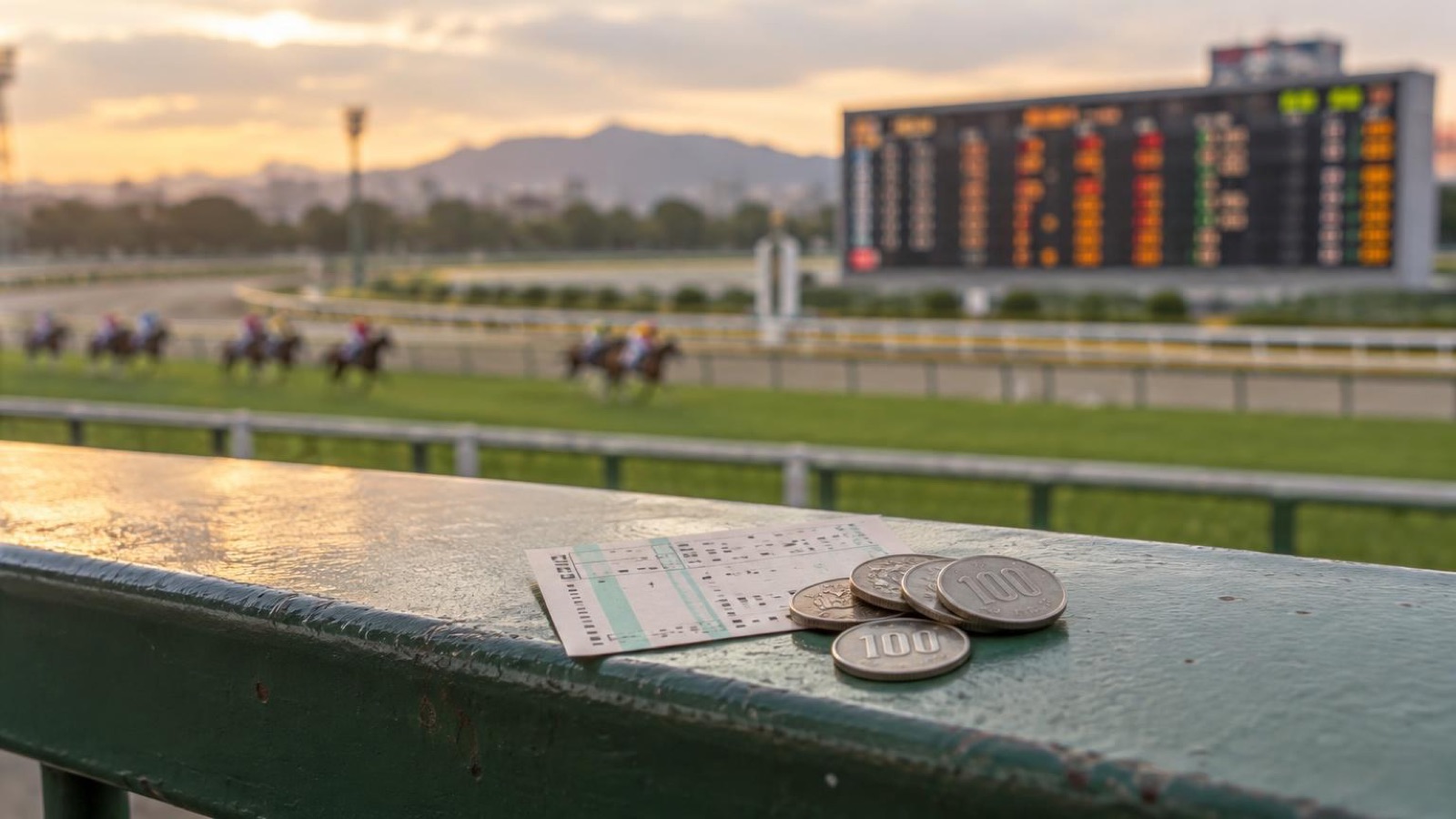
What a tote board shows: odds, pools and popularity rank
A tote board is the display that tells you what your ticket might pay. On a racecourse it appears on large in-venue televisions and dedicated odds boards, and the same numbers are repeated on monitors around the venue and on the operator's website7. The board is not a menu of fixed prices. It is a live estimate of what each winning ticket will return once all the money is counted.
Three things sit on that board at once:
- The odds themselves, shown as an approximate multiple of your stake8
- The pool, which is the total amount bet into a particular type of wager
- The popularity rank, which is simply the order of the odds from smallest to largest
The smallest number is the most heavily backed selection, and the largest is the least backed.
The board refreshes constantly. Odds are calculated by computer and pushed to the displays one after another as money arrives7. If you are reading odds on a website rather than standing at the track, the numbers you see are those at the moment you loaded the page, so refresh before you commit2.
One practical point that trips up first-timers: the board shows the payout for a standard unit, not for your actual stake. On a Canadian tote board, win odds are quoted on a $1.00 base unless the board says otherwise, and the displayed payouts for the first three finishers are quoted for a $2 bet3. If you bet more, you multiply. A $2 show payout of $2.80 on a $4 bet returns $5.609.
Win odds: what the number means and how the payout is calculated
Win odds are an approximate multiplier showing what a winning ticket pays8. The arithmetic is simple: odds times stake. If a 100 yen betting ticket is given a rate of 6.2, the payout is 620 yen1. The same rule applies across pari-mutuel products: the prize is the odds, or payout multiplier, multiplied by the amount you purchased10.

That 620 yen figure is the total returned to you, not your profit. Your profit is the payout minus the stake you handed over. This is the single most common misreading of a tote board, and it matters most at short prices. A horse showing 1.2 does not pay you 1.2 times your money in profit; it returns 1.2 times your stake, of which most is your own money coming back.
The number is also an estimate, not a contract. Prize amounts vary with total sales and with how many winning tickets are held, and the odds shown are theoretical values until the pool closes12. On a football pool such as WINNER, the prize is likewise odds times purchase amount, and the odds fluctuate with betting volume right up to the close of sales10.
Where you see the number matters too. At a Korean boat race meeting, the figure in parentheses is the winning number and the number after it is the payout14. At a Japanese boat race venue, the odds are described as the expected payout rate of the ticket, so a 100 yen ticket at a rate of 6.2 pays 620 yen1. Same idea, different notation.
Place odds: why they are shown as ranges, not single numbers
A place bet asks your selection to finish in the top group rather than win outright. The definition varies slightly by operator. In Japan, a place bet wins if your horse finishes within third place, or within second place when seven or fewer runners start2. At Sonoda Himeji the same rule is stated: pick a horse in the top three, or the top two if seven or fewer run15. Philippine operators describe it as a first, second or third place finisher in a designated race6.
Because several horses can satisfy a place bet in the same race, the place pool is shared among all of them. That is why the board cannot show one clean number. Instead it shows a range, or a set of numbers, one for each horse that could place. The final dividend for your horse depends on how much money went onto it relative to the rest of the place pool.
The range is not a guess by the track. It is a live calculation that narrows as the pool fills. Early in betting, when little money has arrived, the range can be wide. As the race approaches and the pool grows, the numbers settle. This is the same mechanism that moves win odds: the payout rises and falls depending on how many people buy a given horse and how much they stake, so odds change moment to moment16.
For a bettor, the practical consequence is that you cannot know your exact place return when you hand over your money. You know the approximate range. If you need a fixed number before committing, a place bet on a pari-mutuel board is not the product for you.
Place rules: how many runners decide whether two or three places pay
The number of runners in the race decides how many places pay. This is the rule that most often surprises people, because the same bet type behaves differently from one race to the next.
| Runners | Places that pay | Notes |
|---|---|---|
| 8 or more | First, second and third | Standard three-place payout3 |
| 5 to 7 | First and second only | Place pays two places5 |
| Fewer than 5 | Place betting usually not offered | Minimum field size applies16 |
The Japan Racing Association states it plainly: with five to seven runners, a place bet pays first or second; with eight runners, and with nine or more, it pays first through third5. Sonoda Himeji gives the same threshold from the other direction, describing a place bet as selecting a horse in the top three, or the top two when seven or fewer run15.
Singapore Pools frames it slightly differently but reaches the same place. A place bet pays if your horse, in a race with seven or more declared starters, finishes first, second or third, or if your horse in a race with four to six declared starters finishes first or second8. Note the boundary: seven or more starters means three places, four to six means two.
The minimum field size matters as well, and it too varies by operator. On Japan's local NAR racing, place betting is available when there are five or more horses in a race16. Singapore Pools goes lower, paying place bets in races with four to six declared starters8. Below the applicable minimum, the operator will not offer the bet at all, so you will not find a place price on the board.
Popularity rank: how favorites and outsiders are marked
Popularity rank is the board's way of telling you where the money has gone. The horse with the most money bet on it is the favorite, and it carries the lowest odds3. The lower the payout multiple, the more popular the wager; the higher the multiple, the less popular it is17.
At a Japanese racecourse, the same reading applies to combinations. In a sample odds display, brackets 3 and 5 look popular precisely because their multiplier is small1. At a keirin meeting, the guidance is identical: odds show the dividend, and the lower the odds the more popular the pick, known as the favorite or honmei, while the higher the odds the less popular the pick, known as the hole4. The lowest number on the board indicates the race favorite17.
This gives you a fast way to scan any tote board. Read the smallest number first. That is where the crowd's money sits. Read the largest number last. That is the outsider. Everything else sits between them, ranked.
Popularity rank is not a prediction and it is not advice. It is a description of where money has already gone. A heavily backed horse can lose, and a long-priced outsider can win. What the rank tells you is how the pool is distributed, which in turn tells you what the payout will look like if that selection comes in.
Pari-mutuel pools: why odds move until betting closes
Tote odds are pari-mutuel. In a pari-mutuel system, winners share the net pool in proportion to their stakes18. That single sentence explains almost everything about how the board behaves.
Because winners share the pool, the payout depends on two things: how much money is in the pool, and how much of it sits on the winning selection. If a lot of money lands on one horse, that horse's share of the pool is large, so each winning ticket gets less. If very little lands on it, each winning ticket gets more. This is why odds move.
The movement continues until betting closes. Odds are continuously updated according to how much bettors wager on each horse until the race starts3. On a football pool, the odds fluctuate according to betting volume until sales close and are not fixed until sales end13. At a racecourse, betting remains possible until the race starts, and the display counts down the minutes to post9.
The track also takes a cut before payouts. Take-out is the percentage the track deducts from bettors' wagers, and the remainder after take-out is used for payouts3. This is why the sum of the implied probabilities on a tote board adds up to more than 100 percent. The gap is the track's share.
Payout rates are not identical everywhere. They differ by track and by bet type, and some operators publish the rates they apply. At KBOAT, for example, a single win or place win bet on player 1 is paid at a confirmed dividend rate of 2.7 percent14. The rate you are playing into is worth checking before you assume a board is generous.
Reading odds at keirin: payout multiples and the favorite indicator
Keirin boards use the same logic as horse racing boards, with a slightly different vocabulary. Odds are payout multiples that indicate the payout amount for a winning wager17. They are described as very important information because they show the dividend, and they are the main input into deciding how much to buy19.
The favorite indicator works exactly as it does on a racecourse. The lower the payout multiple, the more popular the wager; the higher the multiple, the less popular17. In Chinese-language guidance from the same operator, the phrasing is that the lower the odds the more popular the pick, the favorite, and the higher the odds the less popular, the outsider19. The lowest number on the board indicates the race favorite17.
The arithmetic is the same as anywhere else. If you buy a 100 yen ticket and it pays at 4.5, the payout is 100 yen times 4.5, which is 450 yen4. That is your total return, stake included.
Keirin boards also carry combination bets, and the same popularity reading applies to them. A small multiple on a two-rider combination means the crowd has backed it heavily. A large multiple means it has been largely ignored. The board does not distinguish between a "good" and a "bad" number; it only reports where the money went.
Where payout rates differ by track and bet type
Two boards showing the same odds can pay differently, because the take-out behind them differs. Payout rates vary by track and by bet type, and operators publish these rates in their rules.

The pattern across Japanese racing is that win and place bets tend to carry the highest payout rate, with combination bets taking progressively more. At KBOAT, the confirmed dividend rate page shows how a specific bet on a specific runner is paid, with the winning number in parentheses and the payout after it14. That page is the operator's own statement of what a winning ticket returns.
For football pools, the same principle applies through the pool rather than a published rate. In toto, prize amounts vary with sales and with the number of winning tickets, and the odds shown are theoretical values12. The prize tiers are structured by how close your prediction was: first prize for all matches correct, second prize for one match wrong, third prize for two matches wrong13. In totoGOAL3, the second prize is one team wrong12.
The practical takeaway is that a tote board at one track and a tote board at another are not directly equivalent. The odds tell you the shape of the pool. The operator's published rates tell you how much of the pool comes back to bettors in the first place.
When odds are wrong: errors, deductions and voided results
Tote boards are machine-generated, but they are not infallible, and the rules for handling problems are worth knowing before you need them.
If a runner is withdrawn after you have bet, the treatment depends on the bet type. On pari-mutuel bets, your stake on the withdrawn runner is normally refunded. On fixed-odds bets, bookmakers apply a deduction to the odds of the remaining runners, scaled to the price of the horse that came out. A horse withdrawn at 10 to 1 or longer leaves the remaining odds unchanged20. Shorter prices trigger larger deductions, applied in graduated steps20.
Results can also change after the race. Keep a losing ticket until the result is declared official, because a disqualified horse can turn a fourth-place bet into a paying one9. If one of the three placed horses is disqualified, your fourth-place selection can move into the paying places.
On sports pools, a voided match is handled by rule rather than by deduction. If a void cause under the operator's terms occurs after the betting window, the match is voided and odds of 1.0 apply to all bet types, with examples including a baseball game suspended in the top of the seventh or a soccer match abnormally ended during the second half21. An odds of 1.0 means your stake comes back with no profit.
Common Questions
What does 4.5 odds pay on a 100 yen ticket?
You multiply the odds by your stake. At 4.5, a 100 yen ticket returns 450 yen, which is 100 x 4.5. That figure includes your original stake, so your profit is 350 yen. The number shown is an estimate until betting closes and the pool is final.
How much does a $100 place bet pay?
It depends on the final pool and which horse you backed. Place odds are shown as a range because several horses share the place pool. A $100 place bet pays $100 times whatever the final place dividend turns out to be for your horse, not a single fixed number.
What is the minimum bet for a place bet?
It varies by operator. Singapore Pools sets a $5 minimum for Win and Place bets, while its Forecast, Place Forecast, Tierce, Trio and Quartet bets start at $2. The Hong Kong Jockey Club uses a $5 unit for Place Betting. Philippine operators list a P 5.00 minimum.
Do third-place dividends get paid in every race?
No. It depends on the number of runners. With eight or more starters, three places usually pay. With five to seven runners, only the first two places pay. With fewer than five runners, place betting is often not offered at all.
What happens if a horse is withdrawn after I bet?
On pari-mutuel bets your stake is normally refunded. On fixed-odds bets, bookmakers apply a deduction to the odds of the remaining runners, scaled to the withdrawn horse's price. A horse withdrawn at 10 to 1 or longer usually leaves the remaining odds unchanged.
Why did my place bet pay two different amounts on the same night?
Because each race has its own pool. The place dividend is calculated separately for every race from the money bet into that race, so two races on the same card can pay very different amounts for the same stake. Odds also move until betting closes.
Sources21 sources
- Kasamatsu Keiba beginner odds guide, Kasamatsu Keiba, 2026
- Keiba Q&A, Japan Racing Association, 2026
- Understanding odds, Ontario Racing, 2026
- Keirin odds basics, KEIRIN, 2022
- How to bet, Japan Racing Association, 2026
- Getting started with betting, Philracom, 2026
- Kasamatsu Keiba odds display, Kasamatsu Keiba, 2026
- Horse race betting game rules, Singapore Pools, 2026
- How to place a bet, Ontario Racing, 2026
- WINNER how it works, toto-dream, 2026
- WINNER about, toto-dream, 2026
- toto about, toto-dream, 2026
- toto prize structure, Japan Sport Council, 2026
- KBOAT confirmed dividend rate, KBOAT, 2026
- Sonoda Himeji betting guide, Sonoda Himeji Racecourse, 2026
- Local how to bet, Japan Racing Association, 2026
- KEIRIN odds, KEIRIN, 2022
- Football rule 1, Hong Kong Jockey Club, 2026
- KEIRIN odds basics, KEIRIN, 2022
- HRC bookmakers betting rules, Hyderabad Race Club, 2026
- Sports Toto fixed-odds voting ticket notice, Sports Toto Korea, 2026















