
What odds actually show
Odds are an approximate multiplier showing the payout you would receive if the ticket you bought wins. At Kasamatsu Keiba in Japan, the beginner's guide puts it simply: odds show, in rough multiples, what your ticket will pay if it comes in1. A prediction of 1-3, for example, can be shown with odds of 8.4 times.
Odds also carry information. Lower odds mean the horse is favored by many people and your return is lower; higher odds bring higher payouts because fewer people are backing that selection5. So when you look at an odds board, you are seeing two things at once: what you will be paid, and where the crowd's money is going.
Some venues add display conventions that help you read the board faster:
- At JRA's Sprinters Stakes, odds shown in red indicate odds under 10 times, so the favorites stand out at a glance6
- On keirin's standard odds screen, odds of 10,000 or more are displayed as 9999.9, and an update button refreshes both the odds and the time they were last updated7
- At boat race stadiums, the same 8.4 example appears in the Chinese-language guide, which also tells you where to look: monitors inside the stadium, the large electronic display boards, and the website8
A concrete example from boat race: if you predict the finishing order 1-3, the odds shown might be 8.4 times, meaning a winning ticket pays 8.4 times the amount you bet8.
If you are new to reading prices in different formats, see decimal odds for how multipliers like 8.4 translate into a payout, and stake, profit and return for which figures include your stake.
Pari-mutuel pools: why odds move from moment to moment
Pari-mutuel betting is a system where the winners share the net pool in proportion to their stakes3. Nothing is priced in advance. All the money bet on a race or match goes into a pool, the operator takes its deduction, and what is left is divided among the people who picked correctly.

This is why the odds move. As the Kasamatsu Keiba guide explains, the payout "rises and falls depending on how many people buy a given horse or bracket and how much they put on it," so the odds change from moment to moment1. Every ticket sold changes the arithmetic for everyone who has already bet. If a wave of money lands on one horse, the pool for that horse is split more ways and its displayed odds shorten; if money drains away from another, its odds drift out.
The same principle applies away from the racecourse:
- Japan's toto football lottery states that prize amounts vary with sales and the number of winning tickets, and that published odds are theoretical values10
- The single-match WINNER lottery is more explicit: the odds, meaning the payout multiplier, fluctuate according to betting volume until sales close11
In other words, the number on the screen when you buy your ticket is not the number you will necessarily be paid at.
The mechanics of how the final dividend is worked out, including deductions and rounding, are covered in how pari-mutuel dividends are calculated. A Japanese tax authority research paper notes that under the pari-mutuel method, 70 to 80 percent of sales proceeds are distributed as the refund total, which means bettors as a whole face a 20 to 30 percent loss at the point of ticket purchase12. That deduction is built in before any odds are shown.
Popularity drives the price: more backers, lower payout
The single biggest driver of a moving price is popularity. In keirin, the lower the odds, the more popular the pick, called the favorite; the higher the odds, the less popular, the outsider4. This is not the operator's opinion. It is a direct readout of where the money has gone.
A real example makes it clear. At a Hokkaido race meeting, the win odds board looked like this13:
| Horse number | Win odds |
|---|---|
| 1 | 26.6 |
| 2 | 22.4 |
| 10 | 18.9 |
| 11 | 566.8 |
Nobody decided that horse 11 should pay 566.8 times. That number exists because almost nobody backed it, so if it won, the pool would be shared among very few tickets.
The Kasamatsu Keiba odds board guide points out the same thing in reverse: a smaller multiplier indicates a more popular combination, so in the sample odds, bracket 3 and bracket 5 look to be the popular choices14. Reading the board this way tells you what the crowd expects, whether or not you agree with it.
Fixed odds operators also weigh popularity when they set prices, though in a different way. South Korea's Proto football pools state that odds are set by the operator based on the expected match result, taking into account team records, past results, injuries, recent form, media coverage, popularity and other factors15. So even where prices are not pool-driven, the same inputs, form, injuries and public sentiment, feed into the opening line. For more on that process, see how bookmakers set odds.
Fixed odds vs pari-mutuel: which prices can change
The two systems treat price changes very differently, and the difference matters to your payout.
| Fixed odds | Pari-mutuel | |
|---|---|---|
| Who sets the price | The operator, in advance | The pool, from the money bet |
| Can the price move before you bet? | Yes, at any time16 | Yes, with every ticket sold1 |
| Can the price move after you bet? | No, your recorded odds are locked16 | Yes, until the pool closes17 |
| When is your payout known? | The moment your bet is accepted | After betting closes and the dividend is declared17 |
With fixed odds, the operator states the odds at which your stake will be multiplied if your selection wins, and may change the fixed odds of a bet type at any time16. But here is the key protection: the fixed odds recorded in the operator's official records for each bet are the odds used to calculate the payout, and neither the operator nor the bettor may change the recorded fixed odds for a valid bet, regardless of whether the odds later change16. Macau's football betting regulation says the same thing in its own words: the value may be adjusted during the acceptance period, but once a bet is accepted, the odds at acceptance become the fixed odds for that bet18.
So with fixed odds, the price can move before you bet, but not after. What you see on your ticket is what you get.
With pari-mutuel, the opposite is true. The dividend is declared only after the pool closes, and backers selecting the winning combination share the net pool or merged pool in proportion to their stakes17. The number on the board when you bet is only an estimate. Your final payout depends on the last ticket sold, not the first.
Some operators run both systems side by side:
- The Hong Kong Jockey Club offers pari-mutuel and fixed odds betting on races, and operates pari-mutuel and fixed odds betting on selected overseas football matches19
- Singapore Pools similarly offers football betting where handicap lines and odds will change during the betting period20
- In live handicap betting, the handicap line and odds change according to how the match develops, and your payout is based on the full-time result adjusted by the handicap line at the time you bet, not the score at the moment of betting21
Operators also choose what to offer. The HKJC may decide from time to time which types of pari-mutuel bets to offer on any race or races22, and which fixed odds bet types to offer for one or more races or a race day16. For overseas races commingled into Hong Kong pools, it decides which commingled pool bet types to offer, including multiple selection betting23.
When movement stops: the cutoff before post time
Odds do not move forever. They stop when betting stops, and every operator publishes a cutoff.
| Bet | When odds stop moving |
|---|---|
| JRA races in Japan | Two minutes before post time, when a bell rings2 |
| JRA Net Voting on NAR races | Two minutes before the scheduled post time24 |
| BIG, toto, DUNK, WINNER football lotteries | At the published sales cutoff time for each round25 |
At JRA races, the cutoff is two minutes before post time. Odds change constantly until then, and a bell rings at the racecourse to signal the end of sales for that race2. The same two-minute rule applies whether you are using a betting machine or filling in a betting card at the track28. One exception worth knowing: for JRA Net Voting on NAR (local government racing) races, the cutoff is two minutes before the scheduled post time, which differs from JRA races, where it is two minutes before24.
For lottery-style football bets, the cutoff is the sales close for each round, not a race post time. Japan's BIG, toto, DUNK and WINNER all publish sales cutoff times per round, and all of them state that the published times may change, with the information for each round being the place where the current cutoff is confirmed25. WINNER's sales periods may also change, and cutoff times differ by sales location and payment method; if a designated match is not held because of the best-of format, tickets for that match are not sold30.
After the cutoff, the odds are final. The closing odds displayed for a Mikuni boat race, for example, are the odds at the point when the tallying of tickets sold was completed, and later changes caused by scratches or refunds are not reflected in that display31. For more on which odds your bet is actually paid at, see starting price and final odds.
Where to check the current odds
Because odds move, you need somewhere to watch them.

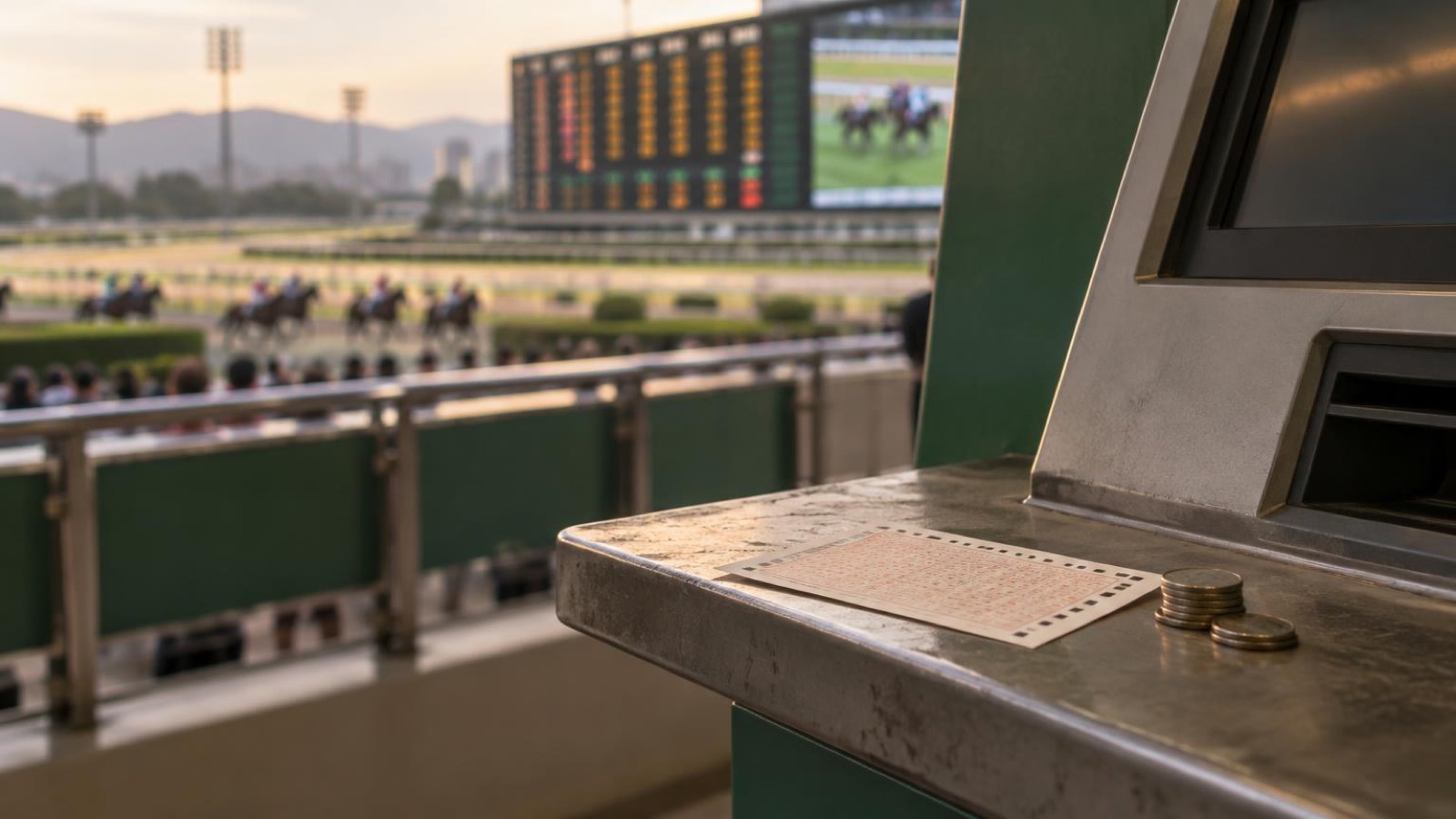
At the racecourse, the odds are calculated by computer and displayed on large in-venue TVs and odds boards, updating as tickets are sold14. JRA's English guide says the same: odds can be checked on monitors inside the racecourse, and they change constantly until the cutoff time5. At boat race stadiums, the odds appear on monitors inside the venue, on the jumbo screen, and on the website8.
Online, every major operator publishes live odds. Keirin's standard odds screen has an update button that refreshes the odds information and the time of the last update7. JRA's race cards mark odds under 10 times in red so you can spot the favorites quickly6.
If you are at a Japanese racecourse and want odds on the go, JRA's Odds Ticket service lets you view odds, usable free of charge up to 20 times per day with a JRA-UMACA card32. For reading the board itself, including win odds, place odds ranges and popularity rank, see reading a tote odds board.
What line movement means for your payout
Line movement is not just noise. It tells you three practical things.
First, it tells you what your bet is worth. In keirin, odds show the payout amount and are important information for deciding how much to buy4. A price that shortens after you bet in a pari-mutuel pool means more people joined your side and your dividend will be smaller than the board suggested; a price that drifts means the opposite.
Second, it tells you when your price is safe. With fixed odds, movement after you bet does not affect you: neither the operator nor you can change the recorded odds of a valid bet16. With pari-mutuel, movement after you bet is exactly what determines your payout, because the pool is shared in proportion to stakes3. In a dead heat in a commingled win pool, the net pool is divided equally among the winning combinations that were backed23.
Third, it tells you what happens at the edges:
- If nobody backed the winning combination in win betting, all bets are refunded; in place betting, the placed horses that were backed share the net pool, and if no placed horses were backed, all bets are refunded33
- In merged pools, if the winning combination is unbacked or there is a void match, jackpot amounts are credited back to the jackpot pool rather than paid out34
- Withdrawals trigger refunds too: in a single race pool or merged pool, bets involving the withdrawn horse are refunded, and for merged pools generally, bets on a void race are refunded in full35
For football, settlement follows the referee's announcement. Once the operator has started paying out dividends or refunds based on a referee's declaration, any later amendment by the referee or the official body of the match or tournament is ignored for payment purposes, even if it would affect your eligibility36. In a dead heat under fixed odds football rules, the stake on a winning selection is divided into as many equal parts as the selections involved, the dividend is one part multiplied by the fixed odds, and the remainder is lost38.
In short: watch the board, know which system you are betting into, and remember that in a pool your final dividend is only known when the bell rings.
Common Questions
Do odds change after I have placed my bet?
The odds on the board can keep changing until betting closes, but your own bet is settled at the price recorded when you placed it. Neither the operator nor you can change the recorded odds of a valid bet, even if the displayed price later moves.
Why do lower odds mean the horse is more popular?
In a pari-mutuel pool the money from all backers of a horse is shared among the winners. When many people back the same horse, the pool is split more ways, so each winner gets less. Low odds simply mean a large share of the money is on that horse.
Where can I see the latest odds at the racecourse?
At Japanese racecourses odds appear on monitors and large odds boards around the venue, updated by computer as tickets are sold. Boat race stadiums show them on indoor monitors and the jumbo screen, and most operators also publish live odds on their websites.
How late can I bet before the odds are final?
At JRA races in Japan, betting closes two minutes before post time, when a bell rings. For lottery-style football bets, sales close at a published cutoff time for each round, and the odds keep fluctuating until that moment.
Who decides the payout on a pari-mutuel football bet?
The operator declares the dividend after the pool closes, based on the referee's final announcement. Once payouts have started, any later revision by the referee or the tournament body is ignored for payment purposes.
What happens if I back the winning combination in a merged pool?
You share the net pool in proportion to your stake, along with everyone else who backed that combination. If nobody backed the winning combination, most pools refund all bets, and jackpot amounts are credited back to the jackpot pool.
Do operators choose which pari-mutuel bet types are offered?
Yes. Operators such as the HKJC decide from time to time which pari-mutuel bet types to offer on any given race or match, and which fixed odds bet types to make available on a race day.
Sources39 sources
- Kasamatsu Keiba beginner's guide: odds, Kasamatsu Keiba, 2026
- Go Racing guide, Japan Racing Association, 2026
- Football Rule 1, Hong Kong Jockey Club, January 17, 2026
- Keirin odds basics, Keirin, 2022
- Go Racing guide, odds section, Japan Racing Association, 2014
- Sprinters Stakes runner list, Japan Racing Association, 2026
- Standard odds screen help, Keirin, 2022
- BOAT RACE English guide, BOAT RACE, 2026
- BOAT RACE odds display guide (Chinese), BOAT RACE, 2026
- About toto, toto, 2026
- About WINNER, toto, 2026
- Research paper on horse racing betting, National Tax Agency, Japan, June 2025
- Race runner and odds list, Hokkaido Keiba, 2026
- Kasamatsu Keiba odds board guide, Kasamatsu Keiba, 2026
- Proto FAQ, Sports Toto Korea, September 25, 2026
- Horse Race Rule 5, fixed odds betting (Chinese), Hong Kong Jockey Club, September 27, 2026
- Horse Race Rule 1, pari-mutuel definition, Hong Kong Jockey Club, May 2025
- Regulation of sports lotteries, football betting, Macau Official Gazette, April 20, 2018
- Responsible gambling introduction, Hong Kong Jockey Club, September 26, 2026
- Sports betting FAQ, Singapore Pools, 2026
- Live handicap betting bet types, Hong Kong Jockey Club, September 25, 2026
- Horse Race Rule 3, pari-mutuel bets, Hong Kong Jockey Club, January 2023
- Horse Race Rule 6, commingled pools (Chinese), Hong Kong Jockey Club, May 2025
- IPAT Q&A, National Association of Racing, September 27, 2026
- BIG purchase guide, convenience stores, toto, September 25, 2026
- BIG purchase guide, shops, toto, September 25, 2026
- DUNK purchase guide, shops, toto, September 25, 2026
- How to use a betting machine, Japan Racing Association, September 26, 2026
- How to bet, Japan Racing Association, September 26, 2026
- WINNER sales announcement, Japan Sports Promotion and Safety Center, May 7, 2026
- Race 2 closing odds, Mikuni Asagachi, BOAT RACE, July 25, 2025
- Odds Ticket glossary, Japan Racing Association, September 25, 2026
- Horse Race Rule 6, single pool rules (English), Hong Kong Jockey Club, May 2025
- Football Rule 4, jackpot pool, Hong Kong Jockey Club, March 30, 2026
- Horse Race Rule 3, withdrawals (Chinese), Hong Kong Jockey Club, January 2023
- Football Rule 4, referee declarations (2023), Hong Kong Jockey Club, December 15, 2023
- Football Rule 3, fixed odds (Chinese), Hong Kong Jockey Club, 2023
- Football Rule 3, dead heats, Hong Kong Jockey Club, April 29, 2026
- Football betting game rules, Singapore Pools, May 29, 2026















