
What ZENT is
ZENT is a Japanese pachinko and slot hall operator. Its shops sit under the Fuso banner and are concentrated in central Japan, mainly Aichi and Gifu prefectures. If you have spent any time in Nagoya or the surrounding cities, you have probably driven past one: a large roadside building with a bright sign, a big car park and rows of machines inside.
The shops are part of the Zennichiyuren group, a national association of pachinko hall operators. That matters for one practical reason: Zennichiyuren member halls across the country apply the same basic house rule on children, which is that they firmly refuse entry to customers accompanied by children2. So if you are traveling with kids, ZENT is not a stop you can make as a family.
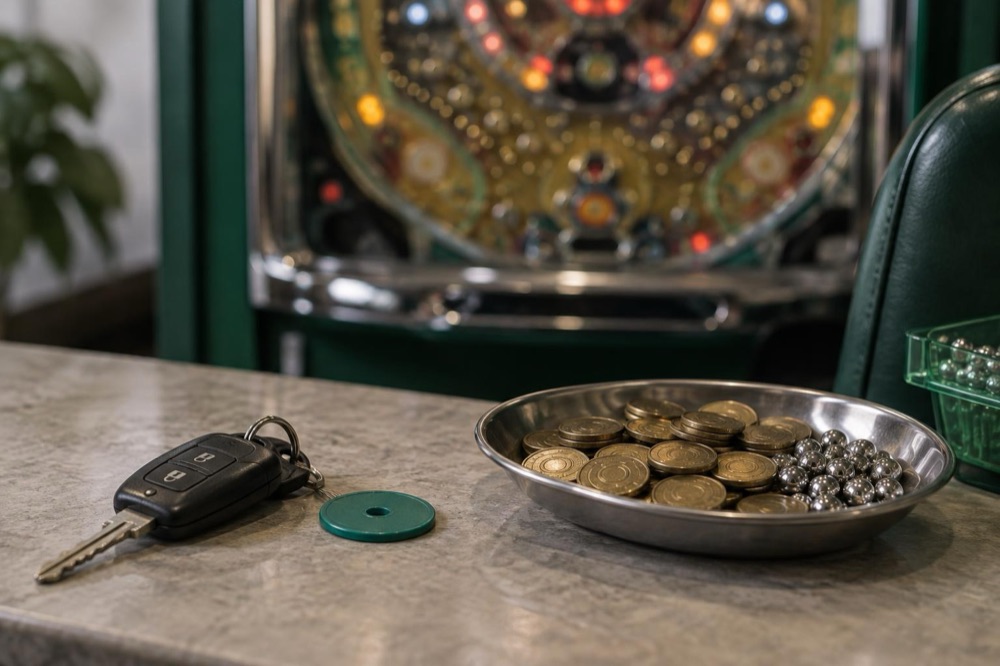
ZENT is not a casino. There are no table games, no dealers and no chips. It is a pachinko and pachinko-slot operation, which is the mainstream legal form of machine gambling in Japan. You buy balls or medals, play them on the machines, and exchange what you win for prizes at the counter. That structure is why there is no entry levy and no age-gated door policy beyond the standard adult-only rule.
If you are trying to place ZENT in the wider picture of what you can and cannot do in Japan, the country guide on whether you can gamble in Japan covers the whole landscape, and the page on casinos in Japan and who can go in explains the separate casino track, including the resort that is planned but not yet open.
Where ZENT operates and who can enter
ZENT Fuso partner shops are spread across Aichi and Gifu. Three examples give you the shape of the network:
- Nagakute is at 2-913 Sakuta, Nagakute City, Aichi1.
- Anjo is at 2-14-8 Hyakku-cho, Anjo City, Aichi1.
- Kani is at 1636-1 Miyashita, Hiromi, Kani City, Gifu1.
These are suburban and roadside locations rather than city-center sites, which is typical for pachinko halls of this size. Most customers arrive by car.
On who can enter: the halls are for adults. Zennichiyuren member halls nationwide firmly refuse entry to customers accompanied by children2. That rule applies to everyone, whether you are a Japanese citizen, a foreign resident or a visitor. There is no separate door policy for tourists, and no nationality restriction. You do not need to be a member to walk in and play.
The one thing that does differ by shop is the member card. Cards are issued branch by branch, so a card you pick up at Nagakute is tied to that shop's terms. If you plan to visit more than one ZENT location, expect to sign up again at the second one.
Entry rules and ID requirements
Walking in is simple. There is no ticket, no fee and no queue system at the door. You go in, find a machine, and buy balls or medals from the counter or the machine itself.
The ID question comes up in two situations.
If you just want to play, you generally do not need to show ID at the door. ZENT is not a casino and does not run passport checks at entry the way casino operators in the region do. For comparison, Korean foreigner-only casinos require a passport at entry for age and nationality verification, and some also run metal detector screening3. ZENT does none of that.
If you want a member card, you will need to identify yourself. Sign-up is done at the shop counter with a short form, and photo ID is required. A passport or residence card is the practical choice for a visitor or foreign resident. The card is issued on the spot in most cases, so the discount can be used the same day.
One thing to know before you go: pachinko halls in Japan are adult environments with loud music, heavy smoking areas in some shops and no childcare. The Zennichiyuren rule on children is enforced, not advisory2. If you are traveling with family, plan around it.
Games and gaming floor layout
ZENT shops are pachinko and pachinko-slot halls. The floor is rows of machines, split broadly into two types:
- Pachinko, where you buy balls and play them on a vertical machine.
- Pachinko slot, usually called pachislot, where you buy medals and play a slot-style machine.
There are no table games, no poker, no baccarat and no sports betting inside a ZENT shop. If table games are what you are after, that is a different category of venue entirely, and in this region it means a licensed casino. Macau is the deep end of that market: MGM Cotai alone runs a casino floor of about 24,549 square meters with 972 slot machines and 410 gaming tables5, and Sands Cotai Central also lists 410 gaming tables6. Those are the kind of numbers you will not find at a pachinko hall.
What you will find at ZENT is a large, bright, noisy room with hundreds of machines, a counter where you buy and exchange, and staff on the floor to help. The pace is fast and the machines are the whole product.
If machine play is not your thing and you want to see what else is available in Japan, the Japan gambling guide lays out the legal options, including the lottery and racing tracks, which are a completely separate system from pachinko.
Membership and loyalty program
ZENT member cards are shop-specific and give small, concrete discounts rather than a points scheme. Two examples from the published terms:
- At Nagoya Kita, the card gives JPY 100 off the basic fee, limited to app use, first time only. You tell the ZENT Nagoya Kita store staff your app ID1.
- At Nagakute, the card gives 10 percent off the bill, with the discount capped at JPY 5,000, and it cannot be combined with other tickets1.
Read those two carefully, because they are different kinds of offer. The Nagoya Kita discount is a one-time reduction on a basic fee and only applies if you are using the app. The Nagakute discount is a percentage off your bill with a hard ceiling, and it does not stack with other promotions.
To sign up, ask at the counter. You will fill in a form and show ID. The card is issued by that shop, so the terms you get are the terms of the branch where you signed up.
For contrast, some membership programs in the region are national and free to join with no enrollment or annual fee, and they carry benefits like automatic transfer of winnings and recurring purchase options7. ZENT's card is a simpler, local thing: a discount card for one shop.
Dining and other facilities
ZENT shops are built for long sessions, so the practical facilities are food, drink, seating and parking.
At the Nagoya Kita branch, the shop is open 05:00 to 24:00 and open all year, which tells you something about how the site is set up: it is a place people come to for hours, not a quick stop1. Expect vending machines, a smoking area, restrooms and a simple food offering. Larger pachinko halls in Japan typically run a small restaurant or snack counter inside, and ZENT's bigger roadside sites follow that pattern.
For a sense of how much food and drink can sit inside a Japanese gambling venue, look at what racing and boat-racing tracks put on site.
| Venue | Food and other facilities |
|---|---|
| Boat Race Miyajima | A dining area, a smoking corner, baggage check, a service corner for sales, a first aid room and a Happy Room9 |
| Tokyo's L-WING venue | A food and drink outlet serving alcohol, snacks, rice bowls and noodles on its first floor10 |
| Amagasaki Boat Race Course | Dining outlets consolidated onto the first floor of the main stand with a new food court, a mini convenience store and curry and udon specialty shops11 |
Pachinko halls are leaner than that, but the principle is the same: you can eat without leaving the building.
If you want a full meal rather than a snack, the surrounding area is your better bet. ZENT's locations are suburban, so there is usually a family restaurant, a convenience store or a shopping center within a short drive.
How to get there
ZENT shops are roadside sites, and driving is the normal way in. The addresses above put Nagakute, Anjo and Kani within easy reach of the Nagoya ring and the Chuo Expressway corridor.
For a sense of the driving times on this kind of network, comparable Japanese gambling venues publish their access like this: Theater Ena is 4.6 km and about 10 minutes from Ena Interchange on the Chuo Expressway by car, and 10 km and about 20 minutes from Nakatsugawa Interchange12. DASH Kanonji is 10 minutes north via Route 11 from Onohara Interchange on the Takamatsu Expressway, or 15 minutes west on Route 11 from Sanuki-Toyonaka Interchange13. ZENT's Aichi and Gifu sites sit in the same kind of pattern: a short drive from a major interchange, with a large free car park on site.
If you are coming by train, expect a walk or a bus from the nearest station. Suburban pachinko halls are not usually built next to a station exit, because their customer base drives.
Once you are inside, the layout is straightforward. Buy balls or medals, pick a machine, and play. Staff will help if you are new to the machines, though English support varies by shop and by shift.
Dress code and etiquette
There is no dress code at ZENT. It is a casual pachinko hall, so everyday clothing is fine. You will see people in everything from work clothes to tracksuits. No smart casual rule applies here.
That is worth stating plainly because casino venues in the region do enforce dress codes, and travelers often assume the same rules carry over. Livewire Majestic in Singapore, for example, applies a smart casual dress code and does not allow sleeveless shirts, singlets, shorts, construction boots, caps, helmets or sunglasses14. Ha Tien Vegas in Vietnam asks for smart casual as a minimum, no extreme attire, closed-toe shoes and a clean, presentable appearance15. None of that applies at ZENT.
A few practical etiquette points for a first visit:
- Keep your voice down on the floor. Halls are loud, but the noise is machines, not conversation.
- Do not block aisles. Staff move through constantly to refill and assist.
- Ask before taking photos. Some shops restrict photography inside.
- Smoking rules vary. Many halls have designated smoking areas rather than a smoke-free floor.
- Children are not allowed. This is a firm house rule across Zennichiyuren member halls2.
If you are new to pachinko and want to understand the wider legal picture before you go, including what is and is not permitted in Japan, start with the Japan guide. If you are curious about the casino resort that is planned for Osaka but not yet open, the Osaka IR page explains the timeline.
Common Questions
What are ZENT's opening hours?
Hours vary by shop. Nagoya Kita is open 05:00 to 24:00 every day of the year. Nagakute and Tobu open weekdays 11:00 to 15:00 and 16:45 to 23:00, and weekends and holidays 11:00 to 23:00. Anjo opens weekdays 17:00 to 23:00 and weekends and holidays 11:00 to 23:00.
Is there an entry fee for foreign visitors?
No. ZENT is a pachinko and slot hall group, not a casino, so there is no entry levy. You walk in and play. You pay only for the balls or medals you buy at the counter or machine.
Can ZENT members enter for free?
Entry is free for everyone at ZENT shops. The member card does not cover entry because there is nothing to cover. It gives you small discounts instead, such as JPY 100 off the basic fee at Nagoya Kita or 10 percent off the bill at Nagakute.
Where exactly is ZENT located?
ZENT Fuso partner shops are in Aichi and Gifu prefectures in central Japan. Examples include Nagakute at 2-913 Sakuta, Nagakute City, Aichi; Anjo at 2-14-8 Hyakku-cho, Anjo City, Aichi; and Kani at 1636-1 Miyashita, Hiromi, Kani City, Gifu.
Is there parking at ZENT?
Most ZENT partner shops are roadside locations with their own free car parks, which is how the majority of customers arrive. Spaces are not reserved, so on weekends and holidays you may need to wait briefly for a space at the busier branches.
Does ZENT have a dress code?
No formal dress code. ZENT is a casual pachinko hall, so ordinary everyday clothing is fine. There is no smart casual rule and no ban on caps, shorts or sandals. Staff may ask you to remove hats if a shop has its own house rule.
Can tourists sign up for ZENT membership on the spot?
Yes, in most cases. You fill in a short form at the counter and receive a member card the same day. Bring photo ID such as a passport or residence card. The card is issued by the individual shop, so a card from one branch may not work at another.
Sources15 sources
- ZENT Fuso partner shop list, ZENT, 2026
- Children and Zennichiyuren member halls, Zennichiyuren, 2026
- Seven Luck Casino Gangnam COEX entry rules, Visit Korea, 2026
- Seven Luck Casino entry requirements, Visit Korea, 2026
- MGM Cotai regulatory report 2024, DICJ, 2024
- Sands Cotai Central regulatory report, DICJ, 2017
- Club toto membership, toto-dream, 2026
- Club toto guide, toto-dream, 2026
- Boat Race Miyajima facilities, Boat Race, 2026
- L-WING facilities, Tokyo City Keiba, 2026
- Amagasaki Boat Race Course dining renewal, Boat Race, 2020
- Theater Ena access, Kasamatsu Keiba, 2026
- DASH Kanonji access, Sonoda Himeji, 2026
- Livewire Majestic dress code, Singapore Pools, 2026
- Ha Tien Vegas dress code, Ha Tien Vegas, 2026