
Niraku: 49 stores in operation
NIRAKU is one of Japan's larger pachinko hall operators, with 49 stores in operation. The company runs its own branches rather than franchising, so the layout, staffing and machine mix are set by NIRAKU itself at each location.
The stores are not spread evenly across the country. The Tokyo branch list alone includes Niraku Higashiyamato, Niraku Kamikitadai, Niraku Musashimurayama Inadaira, Niraku Ota Nagahara and Niraku Nakano Sun Mall No. 2, among others1. That concentration matters if you are planning a visit: you are most likely to find a NIRAKU store in the greater Tokyo area, not in every prefecture.
If you are used to casino resorts in Macau, Singapore or the Philippines, the scale is different. A NIRAKU store is a pachinko parlor, a single-floor or multi-floor hall filled with machines, not a resort with hotels, restaurants and shows. The comparison that helps most is a large arcade crossed with a slot floor, with staff on hand to help first-timers.
Who operates Niraku
NIRAKU is a Japanese company that operates pachinko and pachislot halls under its own name. It is not a casino operator, and it does not hold a casino license. Its business is the pachinko hall itself: the machines, the staff, the prize exchange and the building.
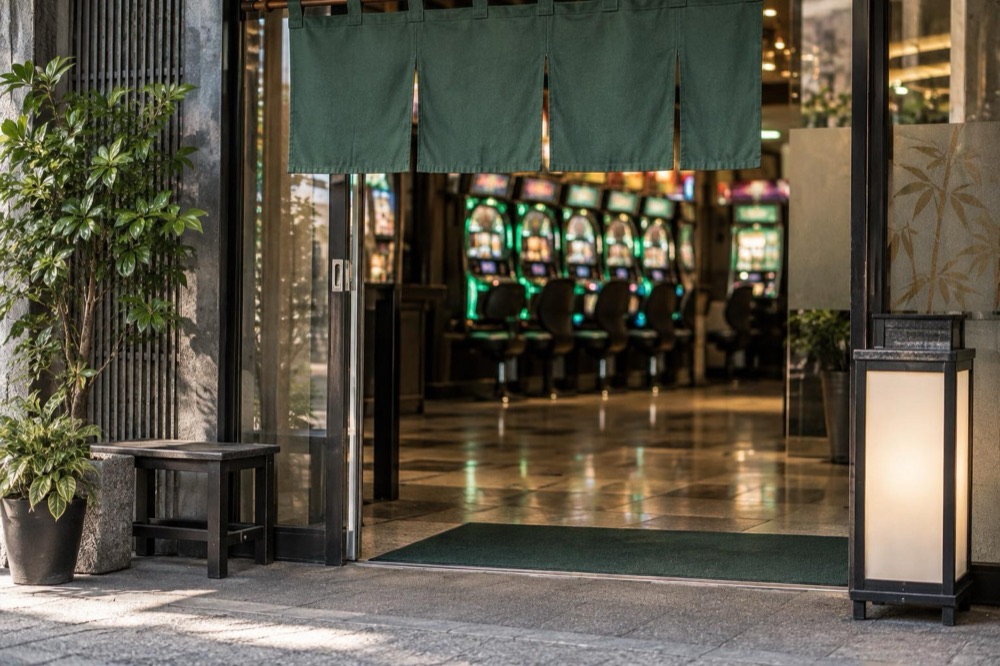
That distinction is worth holding onto, because Japan's casino rules are separate from its pachinko rules. The country has been moving toward licensed casino resorts, and the Osaka project is the furthest along, but those resorts are a different business from a pachinko chain. If you want the casino side of Japan, see Casinos in Japan: Who Can Go In and When Will the Osaka Casino Resort Open?. If you want the pachinko side, NIRAKU is one of the names you will see on the sign.
For a visitor, the practical point is simple: NIRAKU stores are pachinko parlors, and the rules that apply to them are the everyday rules of a Japanese amusement business, not the entry restrictions that apply to a casino.
Entry rules for visitors
Pachinko parlors in Japan are open to the public. There is no membership requirement, no nationality restriction and no need to register in advance. You walk in during opening hours, find a machine, and play.
That applies to everyone: Japanese citizens, foreign residents and short-term visitors. You do not need to show a passport or a residence card to get through the door. If you are asked for ID at all, it will be for an age check, and the legal age for pachinko in Japan is 18.
A few practical points are worth knowing before you go:
- Age. You must be 18 or older to play pachinko in Japan. Bring ID if you look young, because staff can ask.
- No dress code. There is no formal dress code at a pachinko parlor. Casual clothes are fine.
- No entry fee. You do not pay to walk in. You pay for the balls or medals you play with.
- Smoking. Many pachinko halls still allow smoking on the floor, though some have separate smoking areas. If smoke bothers you, check the store before you settle in.
- Noise. Pachinko halls are loud. That is normal, not a sign of anything wrong.
One thing that does not apply here: the entry restrictions you may have read about for Japanese casinos. Those rules, including limits on how often Japanese customers can enter, apply to licensed casino resorts, not to pachinko parlors2. A NIRAKU store is not a casino, so those limits do not apply to your visit.
Games you will find on site
NIRAKU stores offer two things: pachinko and pachislot. There are no table games, no poker room, no sportsbook and no electronic casino games. If you want those, you are looking at a different kind of venue entirely, such as the casinos covered in our Macau or Philippines guides.
The machine mix varies by branch. Here is what the Tokyo store pages show:
| Store | Pachinko machines | Slot machines |
|---|---|---|
| Niraku Higashiyamato | 276 | 233 |
| Niraku Kamikitadai | 406 | 237 |
| Niraku Musashimurayama Inadaira | 384 | 287 |
| Niraku Ota Nagahara | 174 | 95 |
| Niraku Nakano Sun Mall No. 2 | 283 | 258 |
Those figures come from the operator's own store listings1. The pattern is consistent: pachinko machines outnumber slot machines at every branch, and the larger stores carry several hundred of each.
How pachinko works. You sit at a machine and buy a supply of small steel balls. You turn a dial to launch them into the play area, and where they land determines whether you win more balls. Modern pachinko machines have digital screens and animated sequences, so the experience is closer to a video game with a physical ball feed than to a traditional slot machine.
How pachislot works. Pachislot is the slot side of the hall. You buy medals rather than balls, and you play a machine with reels. The mechanics will be familiar if you have played slots anywhere else, though the prize exchange at the end is a Japanese-specific process.
Prize exchange. In Japan, you do not cash out winnings directly at the counter. You exchange the balls or medals you have won for prizes, and the prizes are then exchanged for cash at a separate window, usually just outside the hall. This two-step process is how pachinko operates in Japan, and it is the same at every NIRAKU store.
If you have never played pachinko before, tell the staff. They are used to first-timers and will show you how to buy balls, how to set the dial and what to do when you are finished.
Getting there
NIRAKU stores are typically placed near train stations or main roads, which makes them easy to reach without a car. Here are the addresses for the Tokyo branches listed on the operator's site1:
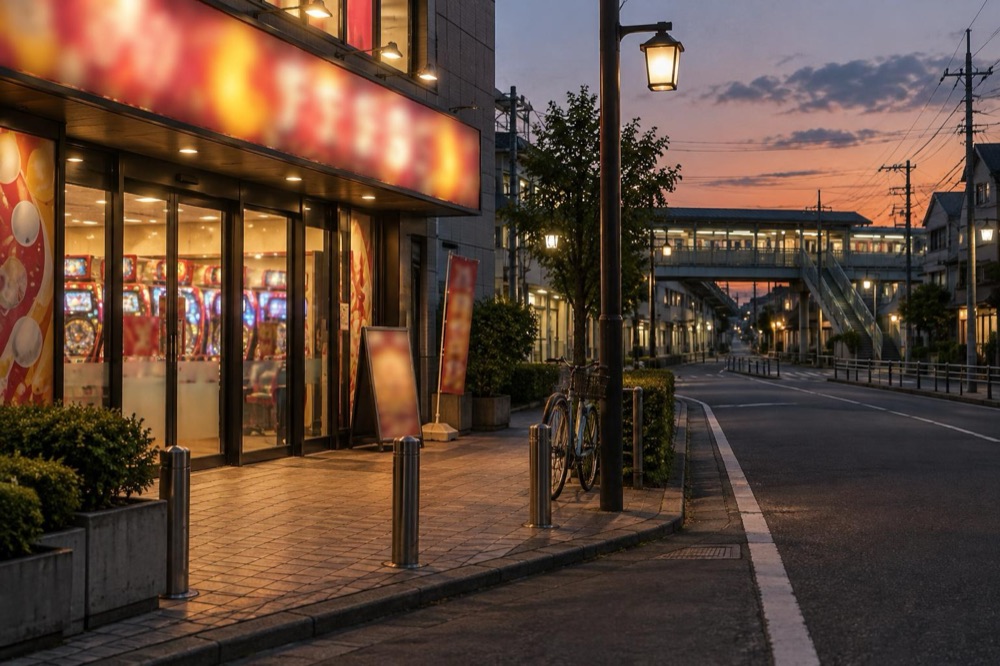
- Niraku Kamikitadai: 1-1-4 Kamikitadai, Higashiyamato City, Tokyo
- Niraku Higashiyamato: 4-482-2 Tatsuno, Higashiyamato City, Tokyo. Phone: 042-567-0822
- Niraku Musashimurayama Inadaira: 2-75-1 Inadaira, Musashimurayama City, Tokyo. Phone: 042-520-2266
- Niraku Ota Nagahara: Taniguchi Building, 1-7-16 Kamiike-dai, Ota-ku, Tokyo
- Niraku Nakano Sun Mall No. 2: Takagi Building, 60-7 Nakano 5-chome, Nakano-ku, Tokyo
For branches outside Tokyo, the store locator on the NIRAKU site is the reliable source. Addresses and phone numbers are listed per store, and the phone number is useful if you want to confirm opening hours before a long trip.
A few notes that help when you are navigating:
- Station proximity. The Tokyo branches sit in residential and suburban districts rather than central tourist zones. Nakano Sun Mall is the most central of the group, right by Nakano station. The Higashiyamato and Musashimurayama stores are further out and best reached by train plus a short walk or bus.
- Opening hours. Pachinko halls generally open in the morning and close late in the evening. Hours vary by store, so check the individual branch page or call ahead.
- Payment. Bring cash. Pachinko parlors in Japan are cash-based for buying balls and medals, and not every store takes cards at the counter.
If you are comparing this with other gambling options in the region, our Japan guide covers the wider picture, including horse racing, boat racing and the lottery.
What to check before you go
A short checklist saves a wasted trip.
Confirm the store is open. Branch pages list hours, but hours can change. A quick phone call is the surest check, and the store pages list phone numbers for the Tokyo branches1.
Bring cash. You will need it to buy balls or medals. There is no entry fee, so the only money you spend is what you put into play.
Bring ID if you look young. The legal age is 18. Staff can ask, and it is easier to have it ready.
Know what you are walking into. A pachinko hall is loud, smoky in places and busy. If you want a quiet game, this is not it. If you want to see a genuinely Japanese form of gambling that has nothing to do with casinos, it is exactly the right place.
Do not expect casino games. No blackjack, no roulette, no baccarat. If that is what you want, look at the casino guides linked above instead.
Understand the prize exchange. You will not walk out with cash directly from the machine. You exchange winnings for prizes, then exchange those prizes at a separate window. It is a two-step process, and it is normal.
Check the rules on play. Japan's pachinko industry is regulated, and the machines are set to legal payout limits. You will not find the kind of odds variation you might see in an unregulated market. That is a feature of the system, not a fault in the store.
One last point for visitors from elsewhere in Asia: pachinko is legal in Japan and open to foreigners, but that does not make it legal to play online casino games from Japan. Playing on offshore casino websites is illegal in Japan, and players have been prosecuted. Keep the two separate. A NIRAKU store is a legal, licensed pachinko hall. An offshore casino site is not.
Common Questions
How many Niraku stores are there?
NIRAKU reports 49 stores in operation. The company runs pachinko and slot parlors, mostly in the Tohoku and Kanto regions of Japan, with several branches in Tokyo including Higashiyamato, Kamikitadai, Musashimurayama Inadaira, Ota Nagahara and Nakano Sun Mall.
Who owns and operates Niraku?
NIRAKU is a Japanese pachinko hall operator listed on the Tokyo Stock Exchange. It builds and runs its own stores rather than franchising them, and each branch is staffed and managed directly by the company.
Can foreigners enter Niraku?
Yes. Pachinko parlors in Japan are open to anyone of legal age, including visitors and foreign residents. There is no membership requirement and no nationality restriction. You simply walk in during opening hours, and staff will help you at the machine or the counter.
What games are available at Niraku?
NIRAKU stores offer pachinko and pachislot (slot) machines. Machine counts vary by branch, from around 174 pachinko and 95 slot machines at a smaller store to over 400 pachinko machines at a larger one. There are no table games or sports betting.
How do I get to Niraku?
Most NIRAKU branches sit near train stations or main roads. For example, Niraku Kamikitadai is at 1-1-4 Kamikitadai, Higashiyamato City, Tokyo. Check the store page for the exact address and phone number before you set out.
Is there an entry fee?
No. There is no admission charge at NIRAKU stores. You walk in for free and buy balls or medals at the counter or machine. You pay only for the balls or medals you play with, and any winnings are exchanged for prizes.
Sources2 sources
- NIRAKU store list (Tokyo), NIRAKU
- Casino Implementation Act petition summary, House of Councillors