

How home-country tax on winnings works for expats
If you win money in Asia, the first question is not whether the win is taxable in principle, but which tax system can reach you. There are three possibilities, and they can overlap.
The first is the country where you are physically playing. Most Asian countries tax big gambling wins at the point of payout, through withholding. The lottery agency, casino or betting operator deducts the tax before handing over the money, so the question of declaring it yourself usually never arises. China, Vietnam, South Korea, Thailand and the Philippines all work this way for prizes above certain sizes, and we cover the details for the biggest of these below.
The second is your country of residence, which may be different from where you won. If you live in China or Vietnam as an expat, the local tax rules apply to your winnings there regardless of your passport. Our page on expat tax residency and winnings explains when a win becomes taxable where you live rather than where you won it.
The third, and the one that catches many expats off guard, is your home country. Some countries, most notably the United States, tax their citizens on worldwide income no matter where they live. Others tax only residents, so once you have genuinely left, a win in Asia is not their business. A survey of eleven countries found seven do not tax lottery prizes at all and four do, with Italy taxing only partly6. So the answer to "do I owe tax at home?" depends entirely on which passport you hold and whether your home country taxes citizens, residents, or neither.
There are also practical points that matter to expats specifically. Foreigners winning at licensed electronic game businesses in Vietnam may receive prize payments in foreign currency, in cash or by bank transfer7, and foreigners and overseas Vietnamese with foreign passports may carry or transfer winnings abroad in foreign currency under Vietnam's foreign exchange rules8. On the other side of the ledger, some home countries withhold at source on foreigners: US casinos, for example, withhold tax from non-resident aliens on large wins from slot machines, keno and other high-odds games, though not from table game winnings9. If tax is withheld both where you won and at home, a tax treaty or foreign tax credit may relieve the double charge; see our page on double taxation of gambling winnings.
The rest of this page walks through the three Asian systems an expat is most likely to run into: China, Vietnam, and Hong Kong.
China: lottery winnings are incidental income under the Individual Income Tax Law
China is the clearest case study, because the rules are national, uniform and recently restated. In August 2024, four government departments issued a joint announcement confirming that lottery winning income is classified as incidental income (偶然所得) under the Individual Income Tax Law and its implementation regulations, and is taxed on the amount of each income, meaning each win is assessed on its own10.
This classification matters because it fixes two things. First, incidental income is taxed at a flat proportional rate rather than through the progressive brackets used for salary income, so a big win does not push your other income into higher bands. Second, the taxable amount is the full amount of each winning, with no deduction for the cost of the tickets you bought. The rule applies to both of China's official lotteries, the welfare lottery and the sports lottery, and to both computer-drawn games and instant scratch tickets11.
The 2024 announcement was not a new tax. It restated and consolidated rules that had been applied since the 1990s, and confirmed that the existing preferential policies continue13. For an expat living in China, the practical effect is simple: if you buy a lottery ticket at a China Sports Lottery or China Welfare Lottery outlet and win, the tax treatment is settled before you walk up to the counter to claim.
Exemption threshold: single winnings up to CNY 10,000
The threshold that matters is CNY 10,000, and it applies per single win, not per year.
A single lottery winning of CNY 10,000 or less is temporarily exempt from individual income tax1. This exemption has been in place since the 1990s under the same policy, and the 2024 announcement confirmed it continues13. It applies to both the welfare lottery and the sports lottery, and to both computer lottery and instant tickets14.
The word "single" has a precise meaning. For computer lottery, all prizes won by the same person in the same draw of the same game count as one single winning15. So if you hold several winning tickets in the same draw of the same game, those prizes are added together and tested against the CNY 10,000 threshold as one amount. Prizes from different draws or different games are separate wins, each tested on its own.
There is also an administrative detail worth knowing. For computer lottery payouts over CNY 3,000, the redemption counter registers your real-name identity and redemption information, and you are expected to cooperate with the registration15. For single computer lottery wins between CNY 3,000 and CNY 10,000, the lottery institution files a tax-exempt declaration on your behalf, so the exemption is documented even though no tax is due10. You do not need to declare these small wins yourself.
20% tax on each winning above the threshold
Above the threshold, the tax is a flat 20% of the full amount of the win, not just the portion above CNY 10,000.
The 2024 announcement states that lottery winning income is incidental income subject to a proportional rate of 20%, with the amount of each income as the taxable income14. So a win of CNY 10,001 is taxed on the whole CNY 10,001, not on the one yuan above the line. This cliff-edge structure means a win just above the threshold is taxed on everything.
A worked example from the tax authorities themselves: a CNY 100,000 instant lottery win is taxed at 20%, so CNY 20,000 is withheld and the winner receives CNY 80,00015. The same arithmetic applies at any scale: a CNY 1 million win has CNY 200,000 withheld.
The rate and the per-win basis apply to both resident and non-resident individuals in China, so a foreign visitor buying a sports lottery ticket is taxed on exactly the same terms as a local16. For context on what you might win, single-match sports lottery bets carry a maximum prize of CNY 100,000 per bet, and parlays combining six matches or more carry a maximum of CNY 1 million per bet17.
Withholding: how lottery operators collect the tax for you
In China you never file or pay the tax yourself. Lottery institutions are responsible for withholding individual income tax and handling the filing on the winner's behalf19. They file the exemption declarations for computer lottery wins between CNY 3,000 and CNY 10,000, and file tax declarations for single wins over CNY 10,000 from computer and instant lottery19. The sports lottery's own redemption rules state the same: for single-bet winnings over CNY 10,000, the winner must pay individual income tax according to law, withheld and remitted by the sports lottery institution20. You walk out with the net amount.
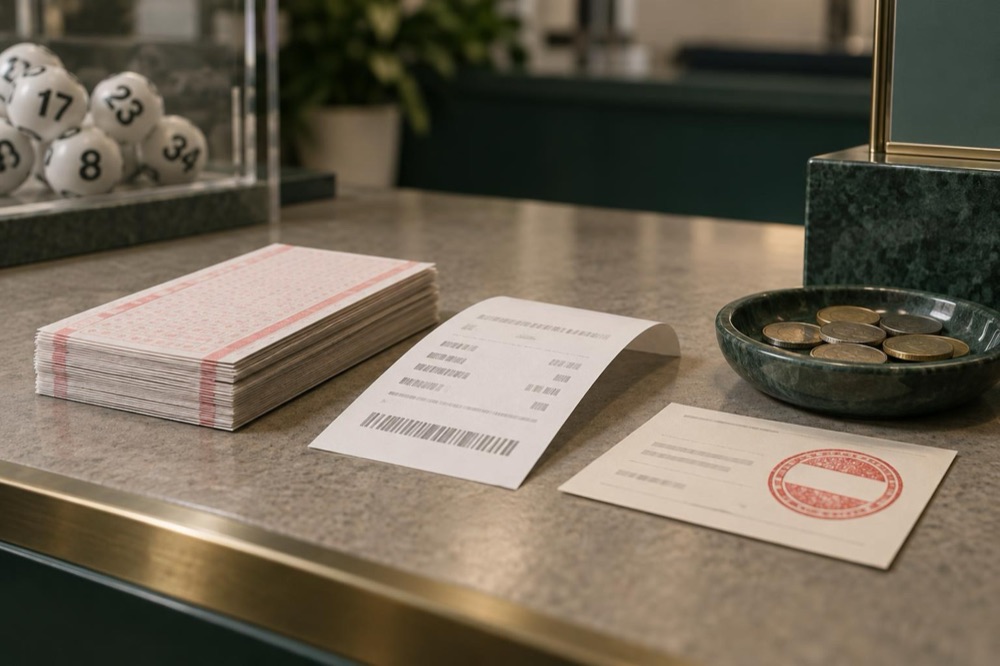
This withholding model is the norm across Asia, though the rates and thresholds vary widely:
| Country | What is withheld | When |
|---|---|---|
| China | 20% of the full win | Single lottery win above CNY 10,00014 |
| Vietnam | 10% of the prize value above the threshold | Win above the threshold, per ticket2 |
| South Korea | 22% (income tax 20% plus resident tax 2%) | Lottery winnings over KRW 2,000,000 up to KRW 300,000,00017 |
| South Korea | 33% (income tax 30% plus resident tax 3%) | Lottery winnings over KRW 300,000,00017 |
| South Korea | 20% other income tax plus resident tax of 10% of that | Cycle betting refunds at a payout rate of 100x or more, or per-bet refunds of KRW 2,000,000 or more21 |
| Thailand | 1% of the prize money | Charity lottery prize claims22 |
| Philippines | 20% | Casino and poker jackpot payouts above ₱10,00024 |
South Korea's travel lottery adds a wrinkle: for prizes worth over KRW 50,000, the 22% withholding is borne by the winner personally26. Thailand's charity lottery also charges stamp duty of 1 baht per 200 baht of prize money, or fraction of 200 baht, on top of the 1% withholding23.
The practical takeaway for an expat is that in almost every case the money hits your hand already net of local tax. Whether you then owe anything at home is a separate question, covered by our page on tax on winnings from gambling abroad, and if tax was withheld in error or beyond a treaty limit, our page on tax refunds on winnings explains the reclaim process.
Vietnam: lottery winnings tax threshold raised to VND 20 million
Vietnam taxes prize winnings under its Personal Income Tax Law, and the rules are in the middle of a significant change.
Under the rules in force through June 2026, taxable income from lottery winnings is the entire prize value exceeding VND 10 million on one lottery ticket received in one draw, before deducting any expenses2. For other prizes, such as promotions and betting wins, the taxable amount is the prize value exceeding VND 10 million per win27. The calculation applies to both resident and non-resident individuals16.
From July 1, 2026, the new Personal Income Tax Law raises the threshold: only prize value exceeding VND 20 million per win is taxable, and the tax rate for resident individuals is 10% of the taxable prize income2. So a VND 25 million Vietlott win that would have been taxed on VND 15 million under the old rule will, from July 2026, be taxed on VND 5 million, producing tax of VND 500,000.
Lottery winnings sit on a longer list of taxable prize income in Vietnam, which also includes promotion prizes, betting wins and prize contests2. The threshold change applies to the whole category.
Two related points matter to expats in Vietnam. First, Vietnamese nationals who want to enter a casino must show regular income of at least VND 10 million per month, or documents showing their income is taxed at bracket 3 or higher under the Personal Income Tax Law28. Second, foreigners and overseas Vietnamese holding foreign passports may receive winnings and transfer or carry them abroad in foreign currency under Vietnam's foreign exchange rules8, and licensed electronic game businesses for foreigners may pay prizes in foreign currency, in cash or by bank transfer7. Our page on taking winnings home covers the cash declaration side of moving money out.
Hong Kong: lottery winnings are tax free
Hong Kong is the easy case. The Inland Revenue Department does not charge betting duty to winners of ordinary lucky draw activities and does not issue betting duty receipts to winning individuals3. Winnings from Mark Six or other permitted betting are simply not taxed as your income.
The betting duty that does exist in Hong Kong is charged on the other side of the transaction: on the proceeds of lotteries and the net stake receipts from authorized betting on horse races and football matches conducted by a betting conductor, as well as on contributions to authorized cash sweeps30. That is a tax on the operator, not on you, and it is built into the odds and payout structure rather than deducted from your prize. Our page on how gambling duties affect players explains how these operator-level taxes reach players indirectly.
Singapore takes the same position on winnings. Winnings from betting or lottery, such as Toto and 4D, are not taxable because they are windfalls and not considered income, and you do not need to declare them in your Income Tax Return4. For expats whose home country taxes worldwide income, though, a Hong Kong or Singapore win that is locally tax free may still be reportable at home; the local exemption does not bind your home tax authority.
What the law does not cover
No tax rule covers everything, and it helps to know where the edges are.
In South Korea, the Income Tax Act treats refunds received by purchasers of the following tickets as other income, regardless of the legality of the underlying activity31:
- horse race betting tickets
- cycling and boat race winning tickets
- bullfighting betting tickets
- sports promotion betting tickets
These public betting products are legal, but the classification shows how Asian tax systems slot gambling proceeds into general income categories rather than having a dedicated gambling tax.
In Japan, winnings with an annuity attachment are subject to income tax as temporary income of the year in which received32. Japan's racing bodies also note that winning betting ticket refunds may in some cases be taxable and require a final tax return, directing winners to consult the National Tax Agency33. Our page on horse racing winnings tax covers the Japanese pari-mutuel system in detail.
In China, the enforcement guidance on gambling cases explicitly states that relatives playing mahjong or poker for money without a profit motive are not punishable, and nor are non-relatives playing for small stakes34. Small private games sit outside both the gambling rules and any tax net.
Finally, Timor-Leste's gaming decree-law expressly excludes fiscal matters, including the tax on game prizes, from its scope35, leaving prize taxation to separate legislation. The general lesson for expats is that gambling regulation and prize taxation are usually separate legal tracks: a game being legal tells you nothing about whether the win is taxed, and a win being tax free locally tells you nothing about what your home country expects. For the full picture of how each jurisdiction treats prizes, see our guide to tax on lottery winnings in Asia, and for the broader rules on reporting, our page on declaring gambling winnings.
Common Questions
Do I pay tax in my home country on winnings I already paid tax on abroad?
It depends on how your home country taxes its people. Countries that tax citizens or residents on worldwide income generally expect you to report foreign winnings, though a tax treaty or foreign tax credit may offset tax already withheld abroad. Check the rules for your specific passport and residency situation.
Who pays the tax if the lottery operator does not withhold it?
In China, lottery institutions are legally responsible for withholding personal income tax and filing on your behalf, so the tax comes off your prize before you are paid. In most Asian countries with withholding, the operator deducts at source, and the winner bears the tax in practice.
Is each lottery winning taxed separately or added together for the year?
In China, all prizes won by the same person in the same draw of the same game count as one single win, and each win is taxed on its own. Wins are not added together across the year. Vietnam similarly taxes each winning separately, on the amount above the threshold.
Do small lottery wins under CNY 10,000 need to be declared?
No. Single lottery winnings of CNY 10,000 or less are exempt from individual income tax in China, and the lottery institution files the exemption for computer lottery wins between CNY 3,000 and CNY 10,000. You do not need to declare them yourself.
What tax rate applies to a single large lottery win in China?
A flat 20% proportional rate applies to lottery winnings above CNY 10,000, taxed on the full amount of the win. For example, a CNY 100,000 instant lottery win has CNY 20,000 withheld, leaving CNY 80,000.
Are welfare lottery and sports lottery winnings taxed the same way?
Yes. Both China's welfare lottery and sports lottery follow the same rule: single winnings up to CNY 10,000 are exempt, and anything above that is taxed in full at 20%, withheld by the lottery institution when you claim the prize.
Sources35 sources
- Announcement on lottery winnings income tax, Government of China, 2024
- Trúng Vietlott có phải nộp thuế TNCN không, trúng Vietlott phải nộp thuế bao nhiêu?, Thu Kien Tu, 2026
- Betting duty FAQ, Hong Kong Inland Revenue Department, 2026
- Winnings (Toto, 4D)), Inland Revenue Authority of Singapore, 2026
- Lottery winnings tax rule, Daxing'anling government, 2024
- Survey of foreign lottery prize taxation, Ministry of Internal Affairs and Communications (Japan), 2010
- Quản lý ngoại hội với kinh doanh trò chơi điện tử có thưởng cho người nước ngoài, Bao Chinh Phu, 2022
- Casino Hồ Tràm: có cho người Việt Nam vào chơi không?, Thu Kien Tu, 2025
- SEC filing on non-resident alien withholding, US Securities and Exchange Commission, 1994
- Lottery winnings tax guidance, Guangdong Tax Bureau, 2024
- Lottery winnings individual income tax rule, Shanghai Tax Bureau, 2024
- Lottery winnings tax rule, Hunan Civil Affairs Department, 2024
- Individual income tax exemption for lottery winnings, Liaoning Tax Bureau, 2024
- Four-department announcement on lottery winnings income tax, Government of China, 2024
- Personal income tax on lottery winnings, Guangdong Tax Bureau, 2024
- Điều kiện lĩnh thưởng vé số 2025: trúng số có phải đóng thuế thu nhập cá nhân không?, Thu Kien Tu, 2025
- China Basketball Lottery Single-Match Winning Margin Game rules, Shanghai Sports Lottery, 2021
- China Sports Lottery Single-Match Win-Draw-Loss Game rules, Changchun Sports Bureau, 2018
- Lottery winnings tax rule, China Tax Administration, 2024
- Sports Lottery prize redemption rules, China Sports Lottery, 2021
- Ticket refund guide, Korea Cycling & Boat Racing Association, 2026
- Check reward, Government Lottery Office of Thailand, 2026
- Prize payment FAQ, Government Lottery Office of Thailand, 2026
- Casino Regulatory Manual for Licensed Land-Based Casinos, PAGCOR, 2025
- Implementing rules and guidelines for online poker operators, PAGCOR, 2023
- Travel Lottery, Visit Korea, 2026
- Thuế thu nhập cá nhân từ trúng thưởng, Bao Chinh Phu, 2011
- Từ 26/11/2025: mở các địa điểm casino hợp pháp cho phép người Việt Nam đủ điều kiện vào chơi, Thu Kien Tu, 2025
- Vietnamese to be permitted to gamble in casinos, Vietnam News, 2017
- Betting duty FAQ (English), Hong Kong Inland Revenue Department, 2026
- Income Tax Act Article 21, Korea Law Translation Center, 2025
- Tax treatment of winnings with annuity attachment, National Tax Agency of Japan, 2026
- Ways to bet: velodromes, JKA, 2026
- Notice on applying the law in gambling violation cases, Chengqu government, 2024
- Decree-Law No. 6/2016, Ministry of Justice of Timor-Leste, 2016















