
Warning signs to watch for in behavior, money and mood
Most families do not see the gambling itself. They see its traces: the bank balance that does not add up, the credit card statements, the relative who is suddenly vague about where the evening went. The signs tend to cluster in three areas.
Money. This is where problems surface first and most often. Common signs include cash disappearing from wallets or joint accounts, withdrawals the person cannot explain, valuables sold or pawned, loans from friends, employers or licensed lenders, and household bills falling behind while the person still has an income. In Singapore, the authorities treat indebtedness so seriously that a person can be required to declare whether they have gambling-related debts, and family members can raise a relative's debts as grounds for exclusion from casinos7. If debts keep appearing that the household income cannot explain, gambling is one of the common reasons.
Behavior. Gambling that has become a problem tends to take over a person's routine. The person gambles more often, for longer, and at higher stakes than before, and may gamble when alone rather than socially. They may become preoccupied with odds, results and "systems," borrow to keep playing, and make repeated unsuccessful attempts to cut back. Regulators now train venue staff to recognize patrons who display signs of problem gambling and offer them assistance, which tells you these signs are visible to outsiders too8.
Mood. Anxiety and irritability are central. Thailand's state lottery operator puts it plainly: if you or someone in your family starts to feel that gambling is no longer fun, or feels anxiety coming from gambling, that is the point to ask for help9. Families describe the same pattern: tension and restlessness when the person cannot gamble, defensiveness or anger when gambling is mentioned, and mood swings that track wins and losses. In more serious cases this can slide into depression and, at the worst, thoughts of self-harm; if that happens, it is a crisis-line situation rather than something to wait out.
No single sign proves anything. A bad month with money can have many causes. But a pattern across all three areas, especially one that is getting worse, is what families of problem gamblers most often describe. For a fuller checklist, see our page on the signs of a gambling problem, and for what doctors actually mean by the term, what is gambling disorder.
How gambling harm shows up differently online and in person
The signs differ depending on where the gambling happens, and families often miss online harm for longer.
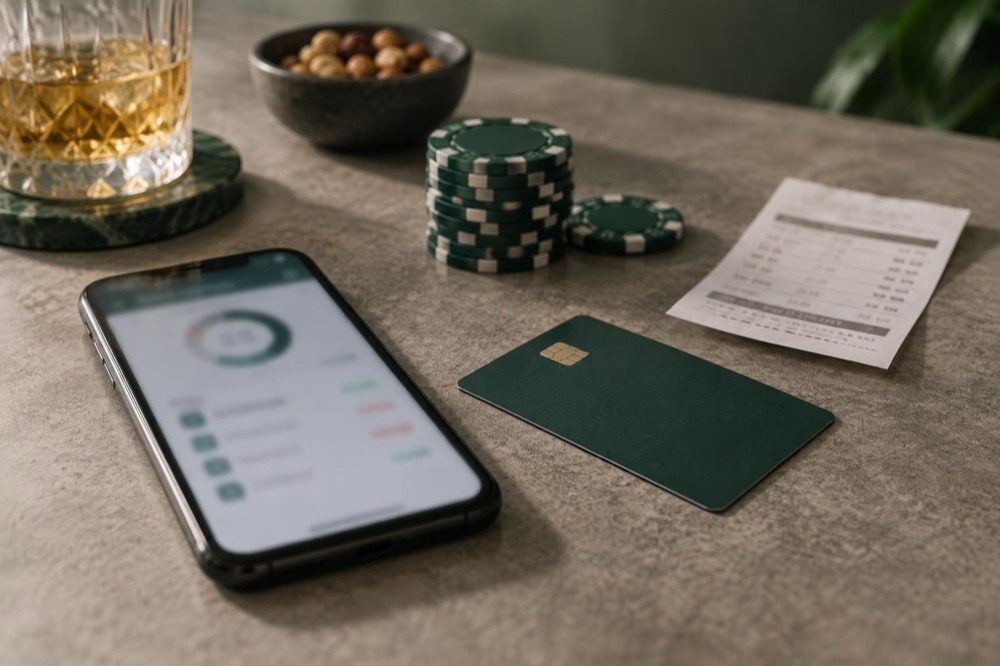
In-person gambling at casinos, racecourses and betting shops leaves visible traces. The person is physically absent for stretches of time, comes home late, carries chips or betting slips, and may be known to venue staff. Venue-based harm is also the kind that venue staff are trained to notice: Singapore's regulator requires gambling operators to provide assistance to patrons who seek help or display signs of problem gambling8. In Macau, the Gaming Inspection and Coordination Bureau can, with the person's consent, pass their details to the Social Welfare Bureau and request its intervention when there are signs of gambling disorder10. So at a physical venue, there is a second set of eyes.
Online gambling is different in three ways that matter to families:
- It is invisible. There are no chips, no late nights at a casino, no betting slips in a jacket pocket. A person can lose heavily from the sofa next to you, on a phone, at any hour.
- It is always available. There is no closing time and no journey home during which the impulse can fade. Losses can accumulate faster and in private.
- It overlaps with unlicensed sites. A person gambling online may be doing so through legal channels or through illegal sites, and families often cannot tell the difference. Regulators such as PAGCOR in the Philippines warn the public directly against playing on illegal online gambling sites, which adds a second layer of harm: money placed with them has no legal protection6.
The practical consequence is that with online gambling, the money trail is often the only trail. Bank statements, e-wallet transactions and payment-app records are where families find the evidence, sometimes long after the behavior started.
Why people hide their gambling and how hiding is spotted
Hiding is close to universal in gambling problems, and it is worth understanding why, because it changes how the evidence gets read.
People hide gambling for three main reasons: shame, fear of consequences, and the hope of winning the money back before anyone notices. The last one is the most dangerous. A person who has lost money gambling often believes that one more session will fix everything, and that confession can wait until then. This is what "chasing losses" looks like from the outside, and it is one of the clearest signals that gambling has moved from entertainment to harm; see our page on chasing losses.
Hiding shows up in patterns families learn to recognize:
- Secret accounts, or a second phone or e-wallet you did not know about.
- Statements redirected to a work address or an email you cannot access.
- Vague or shifting explanations for where money went.
- Unusual interest in the household finances, or unusual defensiveness about them.
- Lies that seem too small to bother with, told to cover absences or spending.
A screening questionnaire can help when the picture is unclear. The Hong Kong Jockey Club publishes a self-test used in its responsible gambling program, and similar tools exist across the region; our page on gambling self-assessment tests explains the main ones. A relative can also work through the questions with the person's behavior in mind as a first, private step11.
One caution: discovering hidden gambling does not always mean addiction. But discovering hidden gambling that continues after being found out, or that comes with mounting debt, is a different matter. That combination is what families most often describe by the time they call a helpline.
Scam gambling sites and lost money: what families should know
A growing number of families in Asia discover that a relative's losses did not go to a licensed casino or lottery at all, but to an illegal gambling website. This changes the situation in ways worth knowing in advance.
The money is usually gone. Illegal online gambling sites operate outside any regulatory system. PAGCOR, the Philippine regulator, issues public warnings against playing on them precisely because players have no protection there6. When a site disappears or simply refuses to pay out a "win," there is no license to revoke and no regulator to appeal to. Families generally treat money deposited with an unlicensed site as unrecoverable and plan accordingly.
The losses can be larger than they look. Because unlicensed sites have no deposit limits and no regulator watching, a person can lose far more, far faster, than at a licensed venue.
There can be legal exposure. In mainland China, participating in cross-border gambling carries administrative penalties of detention and fines under the Public Security Administration Punishments Law, and criminal liability where a crime is constituted, besides the property losses themselves, which mainland authorities describe as potentially large12. A relative gambling on offshore sites from mainland China is therefore taking a legal risk as well as a financial one.
Watch for secondary scams. After the first loss, families sometimes encounter "recovery agents" who promise to retrieve the money for a fee. These are almost always scams targeting people who have already been victimized once; paying them tends to mean losing money twice.
If this has happened in your family, the practical steps families take are: preserving records of every transaction and message, reporting the site to the local police or cybercrime authority, and contacting a gambling counseling service, which is used to dealing with scam-site cases. Our page on gambling and debt covers where to get credit and debt counseling.
Family exclusion: barring a relative from casinos and betting venues
One of the most concrete things a family can do is apply to have a relative barred from gambling venues. These schemes exist in several Asian jurisdictions, and they are designed to be used by family members, not only by gamblers themselves.

In the Philippines, PAGCOR runs a Family Exclusion and Banning program specifically for loved ones: a spouse, child or parent of someone with a gambling problem can apply5. PAGCOR also operates a broader Player Exclusion Program that gives patrons who feel their relatives or themselves are developing a problem the option of barring themselves or their relatives from all gaming venues and sites6.
In Singapore, the National Council on Problem Gambling administers a range of exclusion and visit-limit mechanisms, including family exclusions and third-party exclusions, alongside a process for declaring indebtedness7. Research on Singapore's casino framework notes that family members of problem and pathological gamblers can ask casino staff to refuse the gambler entry13. Singapore also restricts citizens' use of credit cards and borrowing at casinos, which limits how deep a hole a local gambler can dig there13.
In Japan, racing and boat-race operators operate a family-application entry restriction system: a person who is in a state of gambling addiction or a similar condition can be restricted from entering racecourses and off-course ticket shops, on application by family14.
Self-exclusion, where the gambler volunteers their own name to a bar list, is also well established internationally, including in several US states, Canada and Austria, and venues in Nevada will bar problem gamblers on request even without a statewide scheme15.
Exclusion is not a cure, and a person determined to gamble can find illegal channels, which is why it works best alongside counseling. But it removes easy access, and families report it as one of the most useful levers available. Our pages on family exclusion orders and self-exclusion schemes compared set out how each scheme works, and what happens after you self-exclude explains the practical consequences.
Where prevention is heading: campus programs and industry tools
Prevention is moving in two directions that families should know about, because both change what a young relative or a licensed venue customer will encounter.
The first is education aimed at young people. The Responsible Gambling Council has been running post-secondary campus tours in Ontario featuring BetGuard, a centralized self-exclusion tool for regulated online gambling, reaching students at an age when gambling problems often first appear. In Asia, regulators are pushing help information into places gamblers already look: PAGCOR has ordered gambling advertisements replaced with problem gambling helpline materials, so that the message reaches the audience at the moment of exposure16. Hong Kong's football betting licensees have long been required to display prominent notices at betting premises and on websites warning of the seriousness of problem gambling and giving information on the services available locally17.
The second is tools built into the gambling itself. Singapore's regulator requires operators to run a pre-commitment program that lets patrons set limits on their gambling expenditure or on the period of continuous play, alongside patron education and help services8. Macau's law allows the DICJ to refer a gambler showing signs of disorder to the Social Welfare Bureau with their consent10.
For families, the significance is this: the environment is slowly being redesigned so that problems are caught earlier, by systems rather than only by relatives. Until that work is finished, the family remains the earliest warning system most gamblers have. Our page on young people and gambling covers the risks and warning signs in that age group in more detail.
Helplines and counseling services: where to turn
You do not need to be the gambler to call. Every major helpline in the region takes calls from worried family members, and several exist largely for them.
| Place | Helpline | Notes |
|---|---|---|
| Hong Kong | 1834 633 | Gambling counseling hotline run with the Ping Wo Fund counseling centers; serves problem gamblers and their families1 |
| Hong Kong | 6829 8764 | Problem Gambling Counselling and Treatment Centre direct line19 |
| Singapore | 1800-6-668-668 | National Council on Problem Gambling helpline and webchat; callers can remain anonymous3 |
| Singapore | 6354 8154 | National Problem Gambling Helpline20 |
| Japan | 0570-007-221 | Gambling consultation line, Monday to Friday except national holidays and year-end/New Year4 |
| Japan | 090-1404-3327 | National Association of Families of Gambling Addicts, a self-help group run by affected families21 |
| Thailand | GLO help channel | State lottery operator's consultation channel for anyone whose gambling has stopped being fun9 |
A few things worth knowing before you call:
- Hong Kong's four counseling and treatment centers all support the 1834 633 hotline, which offers immediate initial counseling to problem gamblers and their families1. The Ping Wo Fund also funds counseling and treatment referral for families22.
- Singapore's helpline offers anonymity, which matters if you want to discuss a relative without triggering anything official. The NCPG also administers counseling services alongside its exclusion programs3.
- Japan has a dedicated family organization. The National Association of Families of Gambling Addicts holds family meetings every month across the country, where families learn how to respond to the illness, plus phone support and seminars21. Public sports operators also run counseling by phone, self-check tools and email24.
- In Japan, the consultation line is explicitly for the worried person too. The Nagoya racecourse guidance invites anyone who feels absorbed in buying betting tickets, or their family, to seek consultation24.
For a full comparison of numbers, hours and languages across the region, see gambling helplines in Asia, and for support in English and other languages, gambling help in your language. Families looking for peer support can also find it through Gamblers Anonymous and peer support groups, and our page on help for families of problem gamblers goes deeper into counseling options for relatives specifically.
Family mahjong and card games in mainland China
One question comes up repeatedly from families in mainland China, and it is worth answering plainly because it causes real confusion.

Playing mahjong or card games with money at stake among relatives, without any profit motive, is not punished. The same applies to games with small money stakes among people who are not relatives. This comes from official guidance on how the law is applied in gambling violation cases. A later notice adds one qualification: such games among relatives are stopped if they are conducted in public places.
What this means in practice: a family that plays mahjong for small stakes at home over Lunar New Year is not the target of gambling enforcement, and a relative doing so is not showing a sign of a gambling problem by that fact alone. The warning signs described earlier in this page are about pattern and harm: escalating stakes, money the household cannot afford, secrecy and chasing losses. A social game with modest stakes and no profit motive is a different thing from a relative losing money they do not have.
The line is crossed when profit motive enters, when stakes become large, or when the activity moves to public places or organized venues. Cross-border and online gambling sit entirely outside this family-game exception, and carry the penalties described earlier12. If you are unsure where the line falls in your situation, see our page on gambling in China.
Talking to a family member or partner about their gambling
The conversation is often the hardest part, and how it opens matters more than most people expect.
Prepare before you speak. Counsellors at Hong Kong's 1834 633 line and Singapore's NCPG helpline talk to family members routinely and can help you plan what to say18. A ten-minute call tends to give better guidance than months of guessing.
Lead with what you have observed, not with accusations. "I found three loans I did not know about" is harder to argue with than "you have a problem." Specifics work: dates, amounts, statements. Vagueness invites denial.
Expect denial, and treat it as normal. Denial in the first conversation is common and does not mean the talk failed. The goal of the first talk is not a confession; it is to let the person know the gambling is visible and that help exists.
Protect the household money first. Before or alongside the conversation, practical steps families take include separating accounts, removing a name from joint credit, and keeping valuables and cash out of easy reach. This is not punishment; it is containment, and counselors describe it as such.
Lending money and quietly paying debts rarely helps. Paying a gambling debt without any change in behavior usually funds the next session. Where families do help financially, counselors suggest tying it to counseling or an exclusion application.
A concrete next step lands better than a vague demand. A helpline number, a counseling appointment, or an application to an exclusion scheme5 is easier to accept than a demand to "stop gambling."
Support for the family matters too. The family meetings run by Japan's family association exist precisely because living with a gambler is its own strain21. Counseling services across the region accept family members as clients in their own right23.
If the person is in acute distress or has talked about self-harm, that is a situation for a crisis line rather than something to handle alone; see our page on gambling crisis help. And if they are not ready to stop yet, family exclusion applications, debt counseling and your own support do not require the gambler's cooperation to begin.
Common Questions
What is the first sign that someone's gambling is a problem?
Often it is a change around money: unexplained withdrawals, borrowed cash, or bills going unpaid while gambling continues. Mood shifts such as anxiety or irritability when not gambling, and hiding how much time or money is spent, are also early indicators worth acting on.
Is there a helpline I can call about a relative's gambling?
Yes. Hong Kong runs the counseling hotline 1834 633 for gamblers and their families. Singapore's National Council on Problem Gambling helpline is 1800-6-668-668. Japan has a gambling consultation line at 0570-007-221, and a family self-help group at 090-1404-3327.
Can a family member recover money lost to a scam gambling site?
Rarely. Regulators such as PAGCOR warn that illegal online gambling sites operate outside the law, and money deposited with them is usually gone. Keeping records and reporting the site to the authorities helps with the report, but the funds are typically not returned.
Does hiding gambling always mean addiction?
No, but it is a strong warning sign. People hide gambling out of shame or fear of confrontation, and families often only discover the scale of the problem through bank statements, loans, or a crisis such as a debt collector's call.
How do families bring up a partner's gambling?
Counselors suggest calling a helpline first to plan the conversation. Leading with what has been observed, such as specific loans or statements, works better than accusations. Denial in the first conversation is normal, and protecting household finances can happen alongside the talk.
Are there programs for students about gambling harm?
Yes. The Responsible Gambling Council runs post-secondary campus tours featuring self-exclusion tools for students, and regulators such as PAGCOR are replacing gambling advertisements with problem gambling helpline materials to reach younger audiences.
Who enforces user protection at gambling venues?
Regulators do. Singapore's GRA requires patron education and assistance for patrons showing signs of problem gambling. In Macau, the DICJ can refer gamblers showing signs of disorder to the Social Welfare Bureau, and PAGCOR runs exclusion programs in the Philippines.
Sources24 sources
- Gambling policy and counselling services, Home and Youth Affairs Bureau, Hong Kong
- Problem gambling help, Hong Kong Jockey Club
- National Problem Gambling Helpline and WebChat, National Council on Problem Gambling, Singapore
- Gambling disorder leaflet, MHLW, Japan
- Exclusion programs, PAGCOR
- PAGCOR warns public against playing in illegal online gambling sites, PAGCOR, 2022-12-28
- Third-party exclusions and visit limits, National Council on Problem Gambling, Singapore
- Harm minimisation, Gambling Regulatory Authority of Singapore
- Responsible gambling help channel, Government Lottery Office, Thailand
- Law No. 10/2012, Article 16-B, DICJ, Macau, 2018-12
- Problem gambling self-test, Hong Kong Jockey Club
- Cross-border gambling penalties notice, Chifeng Public Security Bureau, 2026-02-06
- Gambling report 2011, Home and Youth Affairs Bureau, Hong Kong, 2011
- Family-application entry restriction system, Boat Race Association, Japan, 2018-10-01
- Self-exclusion lists research, 2023
- PAGCOR orders replacement of gambling ads with problem gambling helpline materials, PAGCOR, 2026-06-17
- Legislative Council panel paper on football betting, Hong Kong Legislative Council, 2004-02
- Problem gambling counselling hotline, Hong Kong Government, 2014-06-18
- Gambling counselling hotline services, Hong Kong Government, 2018-05-09
- National Problem Gambling Helpline, National Council on Problem Gambling, Singapore
- Gambling dependence families leaflet, Secretariat of the National Association of Families of Gambling Addicts, Japan
- Gambling policy and counselling services (English), Home and Youth Affairs Bureau, Hong Kong
- NCPG services, National Council on Problem Gambling, Singapore
- Gambling dependence guide, Nagoya Racecourse