Gambling debt help: what this page covers
Gambling debt is usually about more than the money. By the time losses have turned into loans, credit card balances or borrowed sums from family, the gambling itself has often become a problem, and sorting out the debt works best when you deal with both together. This page maps out the help that exists across Asia and beyond:
- the helplines and counseling services you can call today
- what gambling operators publish about responsible play
- recent research on gambling harm
- policy changes that affect problem gamblers
- what to do if you lost money to a scam gambling site
The starting point is simpler than many people expect. GamCare, a British support charity, offers free, confidential one-to-one support for anyone affected by gambling harm, including family and friends, not just the person who gambles9. BeGambleAware makes the same point: its helpline is there for anyone worried about their own gambling or someone else's10. You do not need a diagnosis, a certain level of debt, or proof that things have gone badly wrong before you call.
Regulators have pushed in the same direction. Singapore's Gambling Regulatory Authority requires operators to assist patrons who seek help on responsible gambling matters or who display signs of problem gambling11. In the UK, the Gambling Commission advises anyone gambling online to read the terms and conditions for each product first, so you understand exactly what you are betting on before you commit money12. That advice matters doubly when debt is involved, because unclear terms are often where losses pile up fastest.
If you want to work through the emotional side first, our pages on signs of a gambling problem and what is gambling disorder explain how doctors define it. If debt is the urgent thing, read on for the services that deal with it directly.
Counseling and helplines for gambling losses
The fastest way to see what is available is side by side. Here are the main lines across the region:
| Place | Service | Number or address | Who it is for |
|---|---|---|---|
| Hong Kong | Gambling counseling hotline | 1834 633 | Gamblers and family members1 |
| Hong Kong | Caritas Addicted Gamblers Counselling Centre | 1834 633, press 2 | Gamblers and families14 |
| Hong Kong | HKJC counseling line | 6829 8764 | Anyone affected by betting15 |
| Singapore | National Problem Gambling Helpline and WebChat | 1800-6-668-668 | Gamblers and families, anonymous option3 |
| Japan | Betting-ticket worries line | 0570-007-221 | Racing bettors5 |
| Japan | Gambling addiction consultation hotline | 070-4501-9625 | Anyone concerned17 |
| Japan | National Association of Families of Gambling Addicts | 090-1404-3327 | Families, self-help group18 |
| Philippines | National Problem Gambling Helpline | 24/7 line | Anyone struggling7 |
| United States | National Problem Gambling Helpline Network | 1-800-522-4700 | Callers and web chat19 |
| Canada (BC) | Gambling Support BC | 1-888-795-6111 | British Columbians, 24/720 |
Hong Kong
Hong Kong runs one of the longest-standing services in the region. The gambling counseling hotline 1834 633 is supported by all four of the city's Problem Gambling Counselling and Treatment Centres, and it has been in service since October 20031. The government's own guidance puts it plainly: people with gambling disorder and their family members "can call to receive immediate initial counseling"13. The Caritas Addicted Gamblers Counselling Centre, one of the four centers, takes calls on the same number: dial 1834 633 and press 214. The Hong Kong Jockey Club, which runs the city's legal betting, also lists a direct counseling line at 6829 876415.
Singapore
Singapore's National Council on Problem Gambling runs the National Problem Gambling Helpline and WebChat, reachable at 1800-6-668-6683. The council's services go beyond a listening ear4:
- counseling
- self-exclusions and visit limits
- family exclusions
- third-party exclusions
- exclusions by law
Family members can apply to have a relative barred from casinos, and the council's helpline counselors can be contacted by phone or webchat if the person wishes to remain anonymous16. If debt is the pressure point, the exclusion services are worth knowing about, because they can physically separate the gambler from the venue while the money side is sorted out. Our page on family exclusion orders explains how those work.
Japan
Japan has several specialized lines, each aimed at a different kind of gambling:
- Betting tickets: horse racing fans worried about becoming absorbed in buying betting tickets can call 0570-007-221, open Monday to Friday except national holidays and the year-end and New Year period5.
- Pachinko and pachislo: the Recovery Support Network runs a telephone counseling service dedicated to those machines6.
- General gambling: a consultation hotline operates at 070-4501-962517.
- Families: the National Association of Families of Gambling Addicts, a self-help group run by affected persons and families, can be reached at 090-1404-332718.
The range matters: pachinko debt, betting-ticket debt and family fallout each have a service aimed at them.
Macau
Macau's approach ties counseling into the self-exclusion process. On the DICJ self-exclusion application form, the applicant may agree to accept counseling services from a problem gambling prevention institution, and consent to the Gaming Inspection and Coordination Bureau passing personal data to that institution solely for counseling purposes21. Agreeing is optional, but it means the act of excluding yourself can also connect you to counseling in one step.
English-language and international services
The National Gambling Helpline in the UK, run by GamCare, is available for free, confidential support, and GamCare also helps you find local support services22. Gambling Therapy offers online support services for anyone affected by gambling, at gamblingtherapy.org, which is useful if you are in a country without a local line or prefer to write rather than talk23. For younger gamblers, the UK Gambling Commission points to organizations that can help, including specific help for a young person struggling with gambling24. Our page on gambling help for expats, visitors and international students lists which of these services you can use as a non-resident.
North America
If you are dealing with this in Canada or the United States, the options are also free. The Philippines' National Problem Gambling Helpline serves as a 24/7 support platform for people struggling with gambling-related issues7. Gambling Support BC offers free 24/7 support at 1-888-795-6111 for British Columbians struggling with their own or a family member's gambling20. In the United States, the National Problem Gambling Helpline Network can be reached at 1-800-522-4700, with web chat also available19.
Responsible gambling policies: where operators publish them
Operators across the region publish responsible gambling policies, and knowing where to find them helps you check what protections a site or venue actually offers before you play.
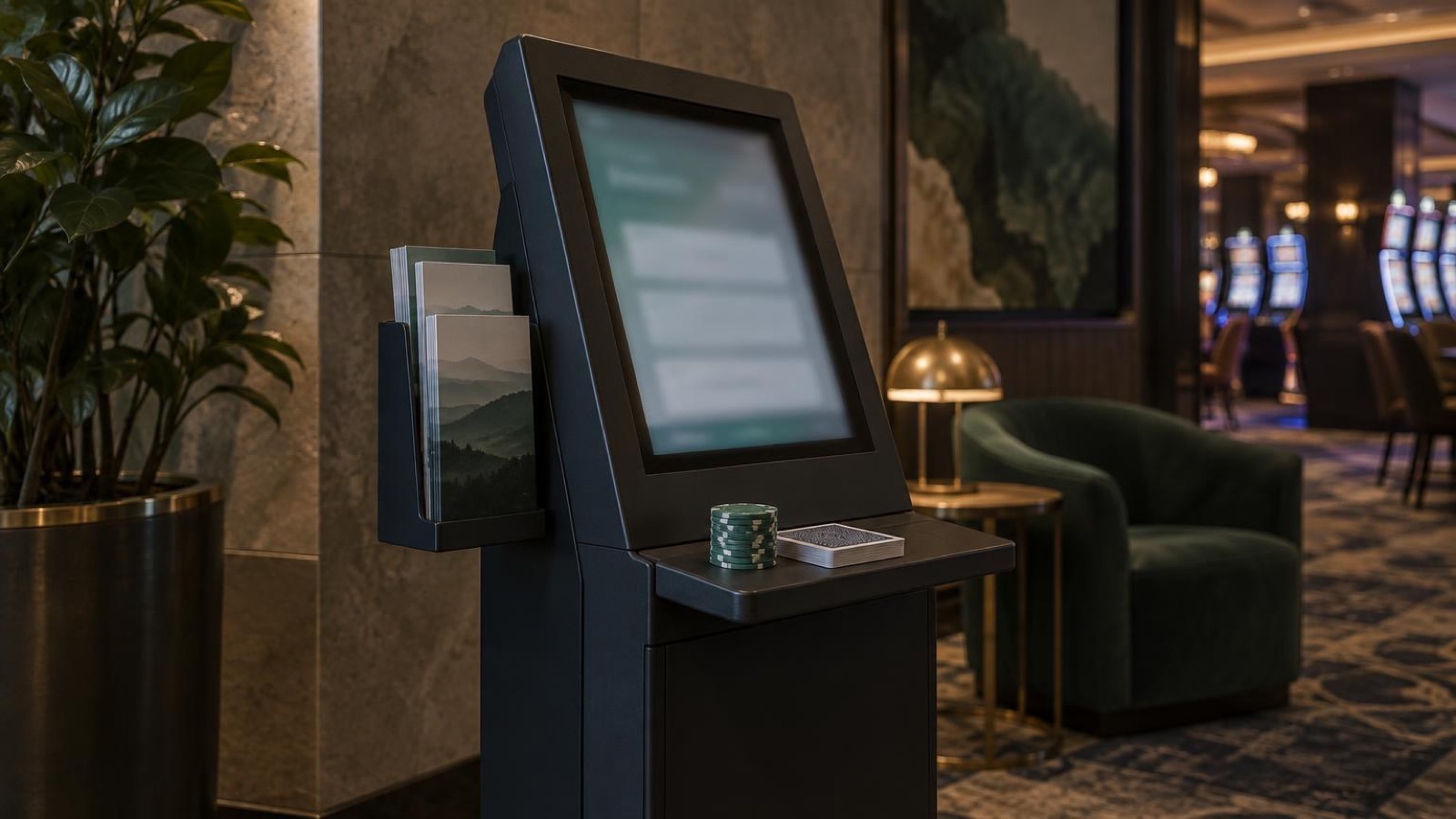
In Macau, the Responsible Gambling Kiosks are physical touchpoints. They are set up in major casinos and social service organizations, and they provide8:
- responsible gambling information
- electronic applications for self-exclusion and problem gambling family counseling
- a gambling disorder assessment with a printable behavior report
- a 24-hour helpline
- interactive games
The casino versions sit in these venues8:
| Casino | Location type |
|---|---|
| Studio City Casino | Cotai |
| Wynn Palace Casino | Cotai |
| Galaxy Macau Casino | Cotai |
| The Parisian Macao Casino | Cotai |
| MGM Cotai Casino | Cotai |
| The Venetian Macao Casino | Cotai |
| Grand Lisboa Palace Casino | Cotai |
A community version is available at all Macau operating casinos plus Social Welfare Bureau offices and counseling centers25. If you are standing in a Macau casino wondering how to get help, the kiosk is the fastest route.
In South Korea, Sports Toto's Responsible Gaming Code commits the operator to26:
- researching and developing services such as self-diagnosis for gambling-indulged players and self-exclusion
- notifying addiction risks and helpline numbers at retailer shops
- providing customers with information on responsible gaming so they can make informed decisions before participating
Online, the picture varies. Here is what four major operators publish:
| Operator | Where the policy sits | What it names |
|---|---|---|
| SBOBET | Linked from general terms and conditions | Its responsible gambling policy27 |
| Roobet | About page | GambleAware as a partner28 |
| TrustDice | Terms and conditions | Gamblers Anonymous, GamCare, Gambling Therapy29 |
| 10CRIC | Responsible gaming help page | gamblingtherapy.org and begambleaware.org30 |
The pattern to look for is simple: a policy that is easy to find, named external support organizations, and tools such as deposit limits or self-exclusion that you can activate yourself. If a site buries its policy or names no outside charity, treat that as information.
In Hong Kong, the Ping Wo Fund, financed by the Hong Kong Jockey Club, contributes to the delivery of counseling service, treatment and support to problem gamblers31. The Jockey Club's own responsible gambling pages sit alongside this, so the operator that takes the bets also funds the treatment network.
Singapore's amended casino legislation adds a transparency requirement: the Authority must publish the list of casino games and other forms of casino gambling, and the mode of play and rules approved for each casino, on its official website24. That means the rules of what you are playing are public record, which is worth checking when you are trying to reconstruct how losses happened.
Recent research and prevention campaigns
Research bodies in the region and beyond keep producing practical findings on how gambling harm develops and how to prevent it. The Responsible Gambling Council, based in Canada, publishes guidance for the public on safer play and maintains that treatment centers are ready, willing and able to help32. Its materials emphasize that help does not require hitting a crisis point first.
One of the most useful tools for someone worried about debt is the gambling harms self-assessment from BeGambleAware. You answer questions about your gambling and get advice and content tailored to you, plus access to free and confidential support34. For someone unsure whether their losses are still "normal", a structured self-assessment gives a more honest answer than guesswork. Our page on gambling self-assessment tests explains how these screening questionnaires work and what the scores mean.
Prevention campaigns increasingly target the point of sale. In the Philippines, PAGCOR ordered the replacement of gambling advertisements with problem gambling helpline materials, putting the National Problem Gambling Helpline in front of people while they are gambling rather than only afterwards7. That reflects the research consensus that people reach for help at the moment of loss, not weeks later.
Policy changes affecting problem gamblers
Several jurisdictions have recently changed how the rules treat problem gamblers, and the changes generally push in the direction of earlier intervention.
A provision in Macau's gaming law is aimed at offenders with gambling problems: if there are signs that a person who violated the law has a gambling disorder, the DICJ may, with that person's consent, transfer their personal data to the Social Welfare Bureau and request its intervention35. In practice, this means that even someone caught up in an enforcement case can be routed into support rather than only penalized.
Vietnam is moving toward restricting who can bet at all. An official proposal published in November 2024 recommends banning bankrupt persons, people with unpaid debts, welfare recipients and law violators from betting, along with setting a minimum player age36. If adopted, it would put debt status itself at the center of who is allowed to gamble, on the logic that people already in financial trouble are the most exposed.
Self-exclusion lists are the longest-running tool of this kind. Under these schemes, problem gamblers voluntarily report their information to regulators or casinos, which are then obliged to bar the listed persons from casinos. The system has been implemented in Michigan, New Jersey, Indiana, Missouri, Illinois and Mississippi in the United States, and in Canada and Austria; Nevada has no statewide scheme, but casinos there will bar problem gamblers on request37. If you are considering exclusion as part of getting debt under control, our page comparing self-exclusion schemes sets out the durations and coverage.
Industry forums and user-protection initiatives
The industry itself has begun organizing around user protection. In South Korea, Kangwon Land and the Korea Racing Authority held the second Gambling Industry Policy Forum on September 21, 2026 at the Grand Hyatt Seoul, bringing together about 100 officials and experts to discuss proactive user protection using generative AI and user data. The idea is to spot patterns of harmful play before they become crises, rather than responding after the fact.
Funding structures matter too. Hong Kong's Ping Wo Fund shows one model: the operator that profits from gambling contributes to the delivery of counseling, treatment and support to problem gamblers31. When you call 1834 633 in Hong Kong, you are using a service the industry helps pay for. Similar logic drives the Responsible Gambling Council's work with operators on embedding safer play tools33, and the Nova Scotia resource centers near the lobbies of Casino Nova Scotia in Halifax and Sydney put help physically inside the venue32.
For a reader with debt, the practical takeaway from these initiatives is that help is increasingly built into the places where the losses happen: kiosks in casinos, helpline numbers at betting shops, resource centers by the lobby. You do not have to go looking far from where the problem started.
Scam gambling sites and recovering losses
Losing money to a scam gambling site is a distinct problem from losing it fairly, and it needs a different response.
First, the honest expectation: money deposited with an unlicensed site that refuses to pay out is often gone, and no counselor or lawyer can reliably get it back. What you can do is limit the damage:
- Keep records of everything: deposits, bets, chat messages, withdrawal refusals.
- Report the site to your local cybercrime or consumer authority.
- Be alert to the second wave of scams, where someone contacts you promising to recover your losses for a fee.
Second, protect yourself going forward. The UK Gambling Commission's guidance applies anywhere: before you gamble with a site, look at the terms and conditions for each gambling product, so you understand exactly what you are betting on and can make an informed decision about gambling with them12. Licensed operators such as TrustDice and 10CRIC at least publish terms and point to external support organizations29; scam sites typically do neither.
Third, get support for the fallout. A large loss to a scam site can trigger the same chasing behavior as any other loss, and the BeGambleAware self-assessment can help you check where you stand and connect you to free, confidential support34. If the loss has left you in debt, the helplines listed earlier can refer you onward, and family support services exist precisely for this situation10. If the experience has left you feeling desperate, our page on gambling crisis help lists crisis lines across Asia.
The pattern across everything on this page is the same: the earlier you ask, the more options you have. Helplines are free, confidential, and used to hearing about debt. The call itself costs nothing but time.
Common Questions
Where can I find a gambling addiction helpline?
Hong Kong runs 1834 633, Singapore runs 1800-6-668-668, and Japan has several lines including 0570-007-221 for betting tickets. The Philippines National Problem Gambling Helpline runs 24/7, and the United States network number is 1-800-522-4700. All are free and confidential.
Which gambling sites have published responsible gambling policies?
Most licensed operators publish a responsible gambling page in their help or terms sections. SBOBET links its policy from its general terms, Roobet lists GambleAware as a partner, and TrustDice and 10CRIC point customers to Gambling Therapy and BeGambleAware.
What recent rules affect problem gamblers?
Singapore's Casino Control amendments took effect on September 21, 2026, Macau's gaming law lets the regulator refer offenders with gambling disorder signs to social services with consent, and Vietnam has proposed barring bankrupt persons and those with unpaid debts from betting.
How do I respond to losses on a scam gambling site?
Keep records of deposits, bets and messages, report the site to your local cybercrime or consumer authority, and watch out for recovery scams that charge fees to reclaim money. Free counseling can help with the financial and emotional fallout.
Where was recent research on gambling harm published?
The Responsible Gambling Council in Canada publishes research and reports on safer gambling tools, and BeGambleAware offers a self-assessment tool that tailors advice to your answers. Both are free to use.
What is the Gambling Industry Policy Forum?
It is a Korean forum hosted by Kangwon Land and the Korea Racing Authority, bringing together officials and experts to discuss user protection in gambling, including the use of AI and player data to intervene early.
Sources37 sources
- Gambling policy and responsibilities, Home and Youth Affairs Bureau, Hong Kong, 2026
- Gambling policy and responsibilities (archived), Hong Kong Housing Authority, October 2003
- National Problem Gambling Helpline and WebChat, National Council on Problem Gambling, Singapore, September 25, 2026
- NCPG services, National Council on Problem Gambling, Singapore, September 25, 2026
- Betting ticket rules, Nagoya Racecourse, September 25, 2026
- Recovery support for pachinko and pachislo addiction, Zennichiyuren, September 25, 2026
- PAGCOR orders replacement of gambling ads with problem gambling helpline materials, PAGCOR, June 17, 2026
- Responsible gambling information kiosks, Gaming Inspection and Coordination Bureau, Macau, 2026
- What support do we provide, GamCare, 2026
- Helping someone who gambles, BeGambleAware, 2026
- Responsible gambling advertising and promotion, Gambling Regulatory Authority of Singapore, 2026
- What to look at before you gamble, Gambling Commission, August 23, 2021
- Government news release on gambling counselling hotline, Hong Kong Government, May 9, 2018
- Caritas Addicted Gamblers Counselling Centre, Caritas Hong Kong, September 26, 2026
- Problem gambling help, Hong Kong Jockey Club, September 26, 2026
- Self-exclusions and visit limits, National Council on Problem Gambling, Singapore, September 25, 2026
- Gambling addiction consultation leaflet, SCGA, September 26, 2026
- Gambling disorder leaflet, Ministry of Health, Labour and Welfare, Japan, 2023
- Help for US residents, Responsible Gambling Council, September 25, 2026
- Game Break brochure, GameSense, 2026
- Casino self-exclusion application form, Gaming Inspection and Coordination Bureau, Macau, April 2023
- Find local support, GamCare, August 18, 2026
- Responsible gambling, Lucky Red Casino, September 26, 2026
- Gambling and young people, Gambling Commission, June 3, 2021
- Responsible gambling kiosk locations, Gaming Inspection and Coordination Bureau, Macau, 2026
- Sports Toto responsible gaming code, Sports Toto, September 25, 2026
- General terms and conditions, SBOBET, November 19, 2025
- About us, Roobet, September 26, 2026
- Terms and conditions, TrustDice, September 26, 2026
- Responsible gaming, 10CRIC, July 30, 2019
- Responsible gambling, Hong Kong Jockey Club, September 26, 2026
- What is safer gambling, Responsible Gambling Council, September 25, 2026
- Safer gambling tips, Responsible Gambling Council, September 25, 2026
- Gambling harms assessment, BeGambleAware, September 25, 2026
- Law No. 10/2012, Article 16-B, Gaming Inspection and Coordination Bureau, Macau, December 2018
- Pushing back gambling through legal framework improvements, Bao Chinh Phu, November 28, 2024
- Research paper on self-exclusion lists, academic research paper, 2011