Macau: the only place in China where casino gambling is legal
Macau holds a unique position in the Chinese-speaking world: it is the only location in China offering legalized casino gaming6. That single fact explains why so much of the region's cross-border gambling traffic flows through its doors. Hong Kong residents ride the ferry or the bridge for a weekend; mainland permit holders cross at Gongbei or the HZMB; foreign residents of Shanghai or Beijing fly in for a few nights. Everyone is coming for the same thing, because there is nowhere else in China to get it.
The practical setup is built around that flow. Casinos are open 24 hours, so arrival time never matters1. A number of the larger casinos offer a free direct shuttle bus service to and from the border crossings, which means you can step off the ferry at Taipa or walk out of the Gongbei border gate and be inside a casino lobby within minutes without spending anything on transport1. For a first visit, this is the single most useful thing to know: you do not need to plan how to reach the casinos, because the casinos have already planned it for you.
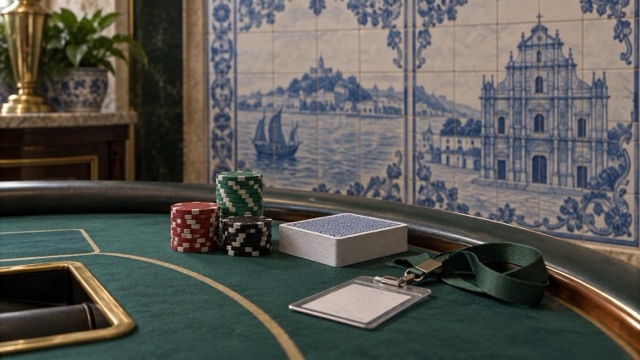
The floors themselves are large, loud and hotel-like. Most visitors come for baccarat, which dominates the pits, but the bigger properties spread across table games of several kinds, live poker rooms, and mass-market slot floors alongside the high-limit rooms upstairs. If you are used to smaller regional casinos elsewhere in Asia, the scale here is the first thing that hits you.
Resident or visitor: which rules apply to you
The short answer for Macau is: the rules of the place you are standing in. Macau's casino entry rules do not distinguish between its own residents, Hong Kong ID holders, mainland permit holders and foreign passport holders at the door. The 21-year minimum, the ID checks and the gaming rules apply to everyone in the same way, and the government has said plainly that non-resident visitors should receive the same protection as locals, which is why the entry age is not lowered for tourists7.
That is not how every cross-border pair in Asia works, and it is worth knowing the contrast before you assume Macau's openness is the norm:
- Singapore treats its own people differently from everyone else. A casino operator must not allow any Singapore citizen or permanent resident to enter or remain on casino premises unless the person has paid the entry levy, a daily fee that applies only to citizens and PRs8. Visitors and foreign residents walk in free. So a Malaysian living in Johor Bahru and commuting up to Marina Bay Sands is treated as a visitor, while a Singapore citizen doing the same trip pays the levy.
- Japan, under its integrated resort law, imposes limits on the number of entries, an entry fee levy, and restrictions on lending by casino operators, and these apply to Japanese nationals and foreigners residing in Japan alike, while short-term visitors are exempt9. A foreign resident of Tokyo is in the restricted group; a tourist on a 90-day stamp is not.
- South Korea runs a two-tier system in which many casinos are for foreigners only. The Hyatt Regency casino in Jungmun, Jeju, for example, is for foreigners only10, and Paradise Casino Walkerhill admits foreigners aged 19 or older, with a passport required at the door for age and nationality checks11. Foreign residents of Korea with an ARC can enter these rooms; Korean citizens cannot, and must use the one casino open to them at Kangwon Land.
- The Philippines applies a flat 21-and-over rule at PAGCOR casinos and licensed sites, with no distinction between citizens, residents and visitors12.
The pattern to take away: your passport or residence card is read differently depending on where you are, and the only reliable way to know which tier you fall into is to check the rules of the destination, not your home country. Our pages on which gambling law applies to you and when an expat counts as a resident go through this in more detail.
Minimum age and entry rules: 21 and ID checks
Macau's casino entry age is 21, set out in Law 10/2012, which lists persons under 21 among those barred from entering casinos2. This is not a soft guideline: the government consulted on the entry regime and kept the 21-year minimum for all persons including visitors, stating that non-resident visitors should receive the same protection as residents and that it was not appropriate to modify the rule for tourists7.
In practice, this means:
- Bring your passport or your Macau or Hong Kong ID card. Even at the poker room cage, a valid original passport is mandatory for registration3, so a day-tripper from Hong Kong should not assume the HKID card alone will be enough everywhere.
- Staff can also refuse entry to anyone they consider unsuitable, though the law requires them to respect a non-discrimination principle covering sex, race, nationality, residence, language or religion2.
- Certain people are barred outright regardless of age, including intentional bankruptcy offenders whose rights have not been restored14.
One transitional quirk from the entry law is worth knowing if you employ or accompany young staff: persons under 21 who were already employed in casinos before the law took effect may keep their jobs, but until they turn 21 they are barred from entering other casinos or gambling in them2.
Online casinos are not licensed in Macau
Macau has not authorized the practice of online games of fortune; no online casino gaming is licensed there4. The government has also stated that no online gaming of any kind has been approved, and that offshore platforms and their equipment are not located in Macau, so Macau has no jurisdiction over them7. In plain terms: the legal casino product exists only inside the physical buildings.
This matters for cross-border players in two directions:
- From Hong Kong: betting with online casinos is illegal because online casinos are neither licensed nor exempted in Hong Kong, and this applies even if the gambling website is registered overseas15. The Hong Kong Jockey Club is the only legal online betting channel, and any person betting with online gambling platforms not offered by the Club breaches the Gambling Ordinance15.
- From mainland China: the authorities state that gambling abroad, online gambling, and providing funds or technical support for gambling all violate the Criminal Law and the Public Security Administration Punishment Law5. A mainland resident playing on an offshore site from home is not exploiting a Macau loophole; they are within the reach of mainland rules.
So the commuter's instinct that "I'll just play online instead of crossing the border" does not work anywhere in this triangle. The legal product is the physical casino in Macau, the Jockey Club's channels in Hong Kong, and nothing online in either mainland China or Macau itself.
Table games, stakes and what a Macau floor actually plays
Baccarat is the engine of the Macau floor, and the mass-market pits are built around it. But the floors are broader than that, and a first-time visitor will find:
| Game | What the floor offers |
|---|---|
| Baccarat and sic bo | Dominate the mass pits, with minimums that vary by property and by time of day |
| Craps | Exists in Macau under official rules; bet amounts must be multiples of the table minimum, so you cannot toss down an odd figure that does not fit the table's grid16 |
| Live poker | Branded poker rooms such as PokerStars LIVE Macau, where cash games run from HK$25/50 up to high stakes; registration requires a valid original passport, and the room operates on the standard tournament and cash-game structure familiar to anyone who has played elsewhere3 |
| Slots and electronic tables | Fill the spaces between the pits, open around the clock like everything else1 |
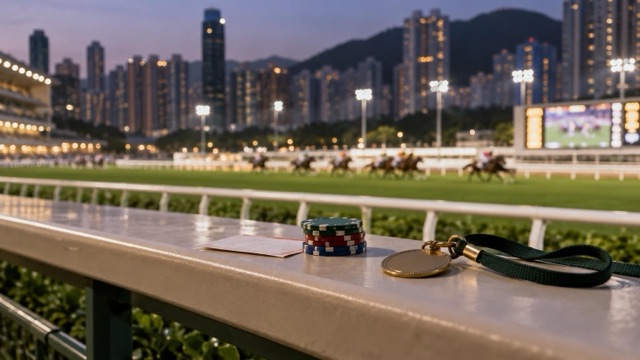
One piece of Macau's gambling history has disappeared: horse racing. The territory's racing had more than 40 years of history, but its appeal to local residents and tourists had been declining for years, and the racecourse is gone17. Anyone planning a racing day in Macau should know it no longer exists; the racing action in the wider region is at Sha Tin and Happy Valley in Hong Kong.
Self-exclusion and where players can turn
Macau runs a formal self-exclusion system through the Gaming Inspection and Coordination Bureau (DICJ). The essentials:
- You can ask to be barred from all of Macau's casinos, or only from some of them; the application can cover the whole market or part of it18.
- The exclusion period is up to two years2.
- An application can be made by the person themselves, or through a confirmed request from a spouse, ascendants, descendants or second-degree collateral relatives, in which case the DICJ director can impose the bar2.
- If the application is submitted through any Macau casino, DICJ will verify the excluded person's details, and the person must attend the DICJ office in person18.
- Breaking the bar is serious: entering or remaining in the casinos during the exclusion period constitutes the crime of disobedience18.
- Excluded persons may choose to accept or decline counseling services from problem gambling prevention bodies18.
Applications can also be filed through responsible gambling information kiosks, which are available to anyone aged 21 or over19. The idea of self-exclusion lists, where problem gamblers voluntarily report their information to regulators or casinos which are then obliged to bar them, is well established internationally, including in several US states, Canada and Austria14.
Elsewhere in the region, the same machinery exists in different forms. PAGCOR in the Philippines runs a player exclusion program giving patrons, or relatives who feel someone is developing a problem, the option of barring them from all gaming venues or sites20. A self-exclusion in one jurisdiction does not follow you across the border, so a Hong Kong resident who excludes themselves in Macau should check what, if anything, applies at home, and vice versa.
Money at the tables: Hong Kong dollars, not renminbi
The working currency of the Macau casino floor is the Hong Kong dollar. Poker stakes are quoted in HK$, from HK$25/50 cash games upward3, and table action generally runs in HK$ even though the local currency is the pataca. Renminbi is not the currency of the tables, which surprises some mainland visitors; plan on HK$ for gaming, with patacas for taxis and small purchases outside.
A few related points for cross-border players:
- Hong Kong's legal gambling, meaning the regulated horse racing, football betting and Mark Six lottery run by the Jockey Club, does not accept credit betting21, so do not arrive at a Hong Kong betting counter expecting to bet on account.
- In the Philippines, PAGCOR's foreign exchange gaming pits admit only persons with foreign passports or, for Hong Kong patrons specifically, certificates of identity duly issued by the government of their residence22. This is a good example of how a Hong Kong ID is read abroad: in Manila's FX pits it functions as the identity document of record, while in Macau it is simply one of several accepted IDs.
- For mainland visitors, the practical money question is moving winnings home. Mainland China does not tax Macau casino winnings, because gambling is not legal on the mainland and the winnings are not treated as taxable income there, but large sums can face customs and banking questions when you cross the border, so plan for that before a big night rather than after.
Getting there: entry for regular commuters
The border logistics are the easy part. A number of larger casinos offer a free direct shuttle bus service to and from the border crossings1, and the casinos never close1, so a Hong Kong resident can leave Central after dinner, play until dawn, and be back for breakfast if so inclined.
The part that needs more care is the legal position of the traveler, and it depends on which side of the border you live on:
- Hong Kong residents cross freely and gamble legally in Macau. At home, all gambling is illegal except the regulated horse racing, football betting and Mark Six lottery approved under the Betting Duty Ordinance, licensed activities such as mahjong parlors, and exempted social gambling under section 3 of the Gambling Ordinance23. The government has confirmed that any unauthorized gambling activity is unlawful except where the law permits it24. None of that restricts a trip to Macau; it just means the Macau trip is the legal casino option, not a Hong Kong one.
- Mainland residents are in a different position. Chinese public security guidance states that participating in cross-border gambling, whether inside or outside the border, is an illegal and criminal act that police will crack down on severely according to law25. Official announcements repeat that gambling abroad, online gambling, and providing funds or technical support for gambling all violate the Criminal Law and the Public Security Administration Punishment Law5, and regional public security bodies warn that participants face administrative penalties of detention and fines, with criminal liability if a crime is constituted, besides possible large property losses26. In practice, mainland visitors enter Macau every day on travel permits and play in its casinos, which are fully legal on the Macau side; the risk sits with activities that Chinese law treats as cross-border gambling organization or online play, not with the existence of the casinos themselves. Anyone unsure where the line falls should read our page on gambling rules by nationality and the country guide to Macau.
For everyone else, foreign residents of Hong Kong, Macau or the mainland included, the trip is straightforward: passport or residence ID at the border, passport or ID at the casino door, HK$ at the tables, and a free shuttle to carry you back.
Common Questions
Do mainland Chinese have to pay tax on winnings from Macau casinos?
Mainland China does not tax Macau casino winnings, because gambling is not legal on the mainland and winnings are not treated as taxable income. The practical difficulty is moving money back: large sums can face customs and banking questions when you cross the border.
Is live poker legal in Macau casinos?
Yes. Poker rooms operate inside Macau casinos, including branded live poker rooms with cash games running from low stakes to high stakes. You need a valid original passport to register at the poker room cage.
What happened to horse racing in Macau?
Horse racing in Macau ended after more than 40 years of history. The government noted that its appeal to local residents and tourists had been declining for years before the racecourse closed.
Can I gamble online from Macau?
No. Macau has not authorized any online games of fortune, and no online gaming of any kind has been approved. Offshore platforms are not located in Macau and Macau claims no jurisdiction over them, so playing on them carries no local protection.
Which currencies can I use in Macau casinos?
Hong Kong dollars are the working currency of the Macau casino floor, and poker and table stakes are quoted in HK$. Macau patacas are accepted locally, but renminbi is not the currency of the tables.
How do I exclude myself from Macau casinos?
Apply to the Gaming Inspection and Coordination Bureau (DICJ), for yourself or through a close family member's confirmed request. You can ask to be barred from all or only some casinos, for up to two years, and applications can also be filed through responsible gambling kiosks or any casino.
Sources26 sources
- Gaming, Macao Government Tourism Office, 2021.
- Law 10/2012 (Legal Framework for Casino Gaming), Imprensa Oficial, 2015.
- PokerStars LIVE Macau, SoMuchPoker, 2026.
- Public Consultation Report, DICJ, 2021.
- Press Release on Cross-Border Gambling, National Immigration Administration, February 2021.
- Company Information, Sands China (archived), accessed 2026.
- Consultation Summary Report, Macao Government, March 2018.
- Casino Control Act 2006, section 116, Singapore Statutes Online, 2026.
- Integrated Resort Legislation Response, House of Councillors, Japan, 2018.
- Casino Information, Visit Korea, 2026.
- Paradise Casino Walkerhill, Visit Korea, 2026.
- Player Exclusion Program, PAGCOR, 2026.
- Responsible Gaming, PAGCOR, 2026.
- Research Paper on Gaming Law, 2011.
- Myths About Illegal Gambling, Hong Kong Jockey Club, 2026.
- Craps Rules, DICJ, 2010.
- Macao Horse Racing Ends, Government Information Bureau (archived), January 2024.
- Self-Exclusion (自我隔離), DICJ, 2026.
- Responsible Gambling Information Kiosks, DICJ, 2026.
- PAGCOR Warns Public Against Illegal Online Gambling, PAGCOR, 2022.
- News on Betting Regulation, Hong Kong Government, June 4, 2025.
- PAGCOR Charter (RA 9487), PAGCOR, 2026.
- Gambling Policy, Home and Youth Affairs Bureau, Hong Kong, 2026.
- Government News on Gambling Ordinance, Hong Kong Government, June 4, 2025.
- Notice on Crackdown on Cross-Border Gambling, Ministry of Public Security, October 2020.
- Public Security Warning on Cross-Border Gambling, Chifeng Public Security Bureau, January 2026.