Gambling in South Korea: illegal for most, legal in pockets
South Korea has one of the most unusual gambling landscapes in Asia. On one hand, the country runs a full set of legal betting products: a casino, horse racing, cycle racing, motorboat racing, lotteries, sports betting through Sports Toto, and even bullfighting. On the other hand, almost all of it is reserved for small, government-supervised stakes, and the casino floor is off limits to Korean citizens everywhere except one mountain resort in Gangwon Province5.
The split goes back to how the industry was built. Casinos were licensed from the late 1960s onward with one purpose in mind: attracting foreign tourists and their money, not serving the domestic population. Lotteries and pari-mutuel racing, by contrast, were created as public projects, with proceeds flowing to government funds, and were opened to Koreans on that basis5.
The result is a system where gambling is a crime for Korean citizens under the Criminal Act, with narrow exceptions at approved venues, and where that rule even follows Koreans overseas: a South Korean national who gambles at a casino in Macau or Las Vegas is still treated as breaking Korean law7. Online gambling is prohibited outright, and the ban is strictly enforced, even though several forms of land-based gambling are legal6.
Despite the restrictions, illegal gambling is quite common. The officially recognized illegal forms include internet gambling, hwatu (Korean flower cards), poker and adult game rooms, and the illegal online market covers private sports betting, ladder games and Powerball-style draws9. The gap between what Koreans may legally do and what they actually do has shaped the whole modern history of gambling in the country11.
Games of chance in traditional Korean culture
Long before there was a casino or a lottery in Korea, there were games of chance played with hwatu, the Korean flower cards that remain one of the most familiar forms of gambling in the country8. Card games of this kind, like other games of chance across the region, evolved into their familiar forms over time, with the games that survived being those people kept choosing to play9.
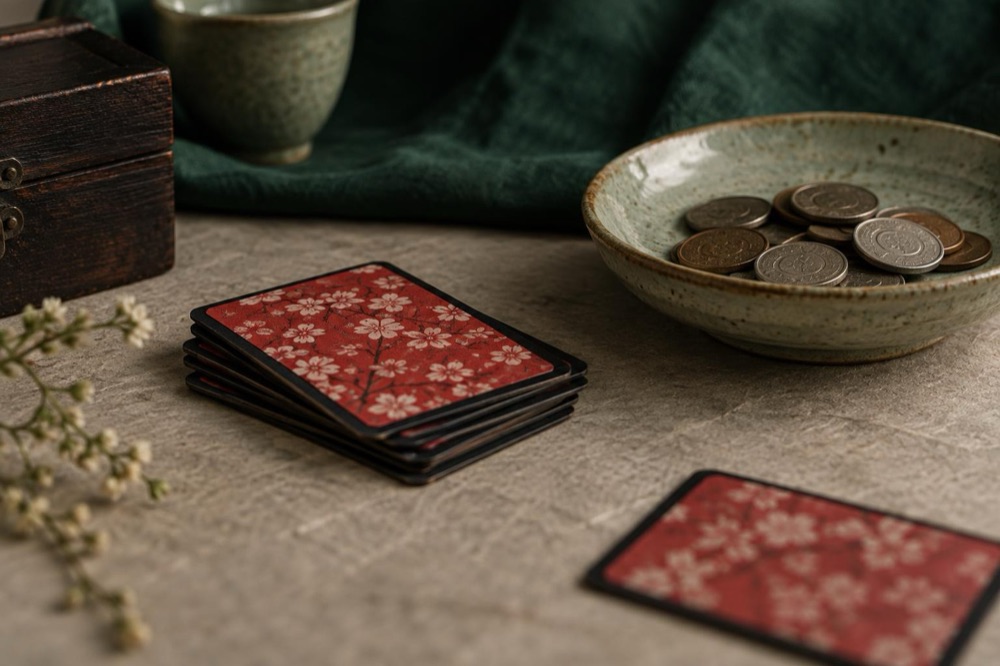
Hwatu itself sits in an odd position today. It is a beloved folk pastime, and it appears on the official lists of illegal gambling when played for money outside permitted settings, which tells you how deeply woven into everyday life it is: the state does not treat it as exotic, just as something that needs a boundary9.
That boundary matters because the traditional games never disappeared. When online gambling arrived in Korea, hwatu and poker were among the first things to move onto web boards and private sites, and adult arcades running card-style games became a recurring enforcement target10. The modern illegal market, in other words, grew out of games Koreans had been playing at kitchen tables for a century.
Betting on contests is old here too. Bullfighting, in particular, survives as a legally recognized gambling event, one of the seven categories the National Gambling Control Commission treats as an authorized industry, a remarkable exception for a country otherwise so restrictive5.
Lotteries and racing: the public projects that opened betting to Koreans
While casinos were being built for foreigners, the state built its own gambling products for Koreans, and these became the backbone of legal betting in the country.
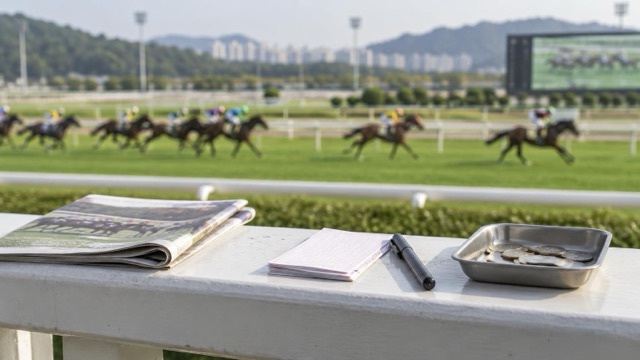
Horse racing is the oldest of them. The Korea Racing Authority runs the sport today, with tracks including LetsRun Park Seoul, and it is one of the few legal ways a Korean citizen can place a bet in person. The legal product has limits, though, and those limits pushed bettors toward the illegal market: illegal horse racing sites offered unlimited betting, higher payout rates and online purchase, none of which the legal pari-mutuel pools could match13. Online betting on horse races from outside the racetrack was abolished in 2009, closing what had been a legal remote channel13.
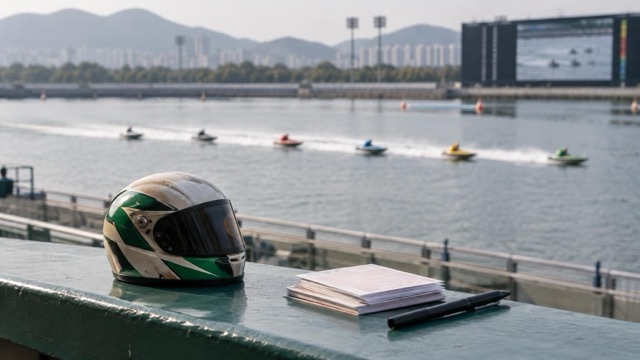
Cycle racing (keirin-style track cycling) and motorboat racing were added as separate legal products, each run by public foundations, each with its own network of venues and betting windows5. Like horse racing, they exist to raise public funds, and like horse racing they are open to Korean citizens.
Put together, the legal menu for a Korean citizen is: one casino, three racing products, lotteries, Sports Toto and bullfighting. Everything else, from poker rooms to online casinos, sits on the illegal side of the line9.
Casinos for foreigners only
The casino era began in August 1967, when the Paradise Group opened the Golden Gate Casino in Incheon, the first casino in Korea1. The following year, 1968, Paradise opened Walkerhill in Seoul, which still operates today and bills itself as Korea's leading foreigner-only casino14.
From the start, the model was tourism. Casinos were licensed to bring in foreign visitors, and Koreans were kept out. That design has never changed. Today there are 17 casinos in the country, and 16 of them are legally reserved exclusively for foreign passport holders and expatriates2. Entry requires a passport, the minimum age is 19, and the venues are regulated by the Ministry of Culture, Sports and Tourism7.
The foreigner-only sector has had its ups and downs. For years it depended heavily on Japanese and Chinese visitors, and it suffered badly when Chinese group tourism dried up. The return of Chinese group tourists has put the industry back in momentum, with the mass-market segments benefiting most from rising inbound visitor numbers18. New supply has been rare: the first new foreigner-only casino license in 19 years was granted in January 2024, the first such license since Grand Korea Leisure received one in January 200621. The government has long signaled that any new licenses would only be for foreigner-only casinos, keeping the locals-banned rule intact23.
For a foreign visitor today, the foreigner-only casinos are the main gambling option: Walkerhill in Seoul, Paradise Grand on Jeju, Paradise City near Incheon airport, and venues in Busan and elsewhere, all open to anyone with a foreign passport14.
Kangwon Land: the one casino for Koreans
The great exception opened in a former mining town. Kangwon Land was established in June 1998 as part of a nationwide project, jointly led by the government and Gangwon Province, to revive the economy of a region hit hard by mine closures3. A small casino opened first in 2000, and the main casino followed in 200225. A full-scale expansion was completed on March 28, 200326.

What made it historic was the entry rule. Under special legislation, Kangwon Land became the first and only casino in Korea where Korean citizens and foreign visitors can play side by side1. It is also the largest casino in the country and operates year-round without closing days27.
Kangwon Land's status as the only casino where Koreans may play has made it a cultural landmark in its own right, and the resort has become one of the best-known gambling destinations in the country15. Its fame is a measure of how much demand there is among Korean gamblers, demand that the country's other casinos, open only to foreign visitors, cannot meet.
If you want the full picture of visiting, see our pages on Kangwon Land and the Kangwon Land Casino at High1 Resort.
Sports betting and the rise of online gambling
Sports betting in its legal form means Sports Toto, the sports promotion voting ticket that covers a short list of sports. Most other forms of sports betting are illegal, and the illegal market has always offered far more: every sport, online games, and betting by internet and mobile, against Sports Toto's handful of products29.
That gap is the engine of the illegal market. Illegal operators can take unlimited bets on anything; the legal product cannot. The same pattern appeared in horse racing, and it reappears with every new technology13.
Online gambling itself is prohibited in South Korea, and players caught gambling online can face penalties and charges6. Despite this, the rate of online gambling in the country has increased, surpassing the government's ability to curb the pastime11. Illegal sports gambling in particular covers all sports and online games, accessible via the internet and mobile, far beyond the limited menu of the legal operators32.
The newest chapter is still being written. Prediction markets, where people bet on the outcome of real-world events, have boomed in Korea in a legal gray zone, since wagering money online on the outcome of an event is considered illegal gambling under Korean law33. And the esports industry has been pushing lawmakers to green-light a Toto betting proposal on esports, part of a wider Sports Toto expansion that would fold competitive gaming into the legal betting menu29. Both show the same historical pattern: a new form of betting appears, the law catches up slowly, and the question is whether it gets absorbed into the state-run products or pushed underground.
Who may take part
The history leaves a clear split that still governs a visit today.
- Foreign visitors and expatriates can enter any of the 16 foreigner-only casinos with a passport, aged 19 or over, and can also play at Kangwon Land2.
- Korean citizens may gamble only in limited circumstances: small wagers at approved venues such as the Seoul horse racing track and Kangwon Land, plus the racing products, lotteries, Sports Toto and bullfighting19.
- Korean citizens abroad are still covered by Korean law, which treats gambling by nationals as a crime even in a foreign country7.
- Everyone is barred from online gambling, which is prohibited and enforced6.
For more detail, see gambling in South Korea and gambling as a visitor.
Timeline
| Year | Event |
|---|---|
| August 1967 | Golden Gate Casino opens in Incheon, the first casino in Korea1 |
| 1968 | Paradise Casino Walkerhill opens in Seoul14 |
| June 1998 | Kangwon Land established as a government-backed regional revival project3 |
| October 2000 | Kangwon Land licensed (October 12) and opened (October 28)4 |
| 2002 | Kangwon Land's main casino opens25 |
| March 2003 | Kangwon Land completes its full-scale expansion26 |
| 2009 | Online horse race betting outside racetracks abolished13 |
| January 2006 | Grand Korea Leisure receives a foreigners-only casino license22 |
| January 2024 | First new foreigners-only casino license in 19 years granted21 |
| 2026 | Prediction markets boom in a legal gray zone; esports Toto proposal advances33 |
What the history means for a visit today
If you are a visitor, the history works in your favor. The whole casino industry was built for you: 16 foreigner-only casinos across Seoul, Incheon, Busan and Jeju, plus Kangwon Land, all open with a passport2. The longest-running names, Walkerhill and the Paradise properties, have been refining the foreigner-only formula since the 1960s14.
If you live in Korea as a foreign resident, the same rules generally apply at the casino door, but the online ban covers you too: online gambling is prohibited in the country regardless of nationality, so the legal options are the land-based ones6.
If you are Korean, the history explains the narrow menu. The legal products are the public ones, the racing tracks, the lottery counters, Sports Toto and Kangwon Land, and everything else carries real risk, from the strictly enforced online ban to the crime that follows nationals even abroad6. The practical takeaway is simple: the state's gambling offerings exist, they are genuinely popular, and the boundaries around them are older and firmer than most people expect.
Common Questions
When did Kangwon Land open?
Kangwon Land was established in June 1998 as a government-backed project to revive a former mining region. Its small casino opened in 2000, with the license granted on October 12 and the doors opening on October 28, and the main casino followed in 2002.
Is gambling illegal in South Korea?
Gambling is a crime for Korean citizens under the Criminal Act, with limited exceptions at government-approved venues. Legal forms include Kangwon Land casino, horse racing, cycle and motorboat racing, lotteries, Sports Toto and bullfighting. Online gambling is prohibited.
Which casinos in South Korea can locals enter?
Only one: Kangwon Land, at High1 Resort in Jeongseon, Gangwon Province. It is the only casino in the country where Korean citizens and foreign visitors can both play. All other casinos are reserved for foreign passport holders.
What forms of gambling are legal for Korean citizens?
Korean citizens can legally bet at Kangwon Land casino, on horse racing, cycle racing and motorboat racing, buy lottery tickets, bet on sports through Sports Toto, and attend bullfighting events. Online gambling of any kind is illegal for them.
When did casinos first appear in Korea?
The first casino was the Golden Gate Casino in Incheon, opened by the Paradise Group in August 1967. Paradise Casino Walkerhill in Seoul followed in 1968 and is still operating today as a foreigner-only casino.
Why is gambling banned for South Koreans?
The Criminal Act makes gambling a crime for Korean citizens, a rule that applies even when they travel abroad. The government permits only a small set of approved betting products, run by public bodies, and treats everything else as illegal.
Can foreigners gamble in South Korea?
Yes. Foreign passport holders aged 19 or over can enter any of the country's foreigner-only casinos, including Walkerhill, Paradise Grand Jeju and Inspire, plus Kangwon Land. They bring a passport, as entry rules are checked at the door.
Sources34 sources
- Socio-economic origins of KLC and MBS in S. Korea and Singapore, APEBH Conference, February 2013
- Korea faces calls to establish unified task force to combat illegal overseas gambling, The Korea Times, June 13, 2025
- Kangwon Land casino history, Yonhap News Agency, August 25, 2016
- Casino facility statistics, National Gambling Control Commission, 2026
- South Korea's foreigner-only casinos hit jackpot as Chinese tourists return, South China Morning Post, July 13, 2026
- Online gambling in South Korea, Wizard of Odds, 2026
- Over 50 arrested for running fake Kangwon Land gambling websites, Korea JoongAng Daily, August 17, 2026
- Poker guides: Korea, SomuchPoker, September 27, 2024
- FAQ on legal and illegal gambling, KCycle, 2026
- Gambling industry categories, Korea Casino Gaming Portal, 2026
- Kangwon Land Casino, Kangwon Land, 2026
- FAQ on legal and illegal gambling, KBoat, 2026
- Illegal horse racing market advantages, Yonhap News Agency, January 10, 2020
- Paradise Casino Walkerhill, Paradise Casino, 2026
- S. Korea casinos to gain from inbound tourism, GGRAsia, 2026
- Kangwon Land Casino, VisitKorea, 2026
- Kangwon Land Casino, VisitKorea, 2026
- Local casinos regain momentum as Chinese group tourists return, The Korea Times, July 13, 2026
- First new foreigners-only casino license in 19 years, Yonhap News Agency, January 24, 2024
- Gambling industry overview, National Gambling Control Commission, 2026
- Kangwon Land Casino, VisitKorea, 2026
- 1st foreigners-only casino in 19 years to open in Korea, The Korea Times, February 2, 2024
- Chow Tai Fook to invest US$2.6bln in S. Korean casino resort, Macau Business, February 13, 2015
- Paradise Grand Casino Jeju, SomuchPoker, February 20, 2026
- South Korea plans to add esports to legal activity, LinkedIn, 2026
- Kangwon Land, Jeongseon County, December 13, 2016
- Kangwon Land Casino, VisitKorea, 2026
- Best online casinos for players from South Korea, Wizard of Odds, May 6, 2026
- South Korea's esports industry wants lawmakers to green-light Toto betting proposal, CasinoBeats, May 23, 2025
- Illegal sports gambling vs Sports Toto, Yonhap News Agency, October 14, 2020
- Average age of teen gambling suspects falls to 16, The Korea Times, May 3, 2024
- Betting on the future: prediction markets, cryptocurrency and South Korean law, KEIA, July 27, 2026
- Prediction markets boom as Korea grapples with legal gray zone, The Korea Times, July 21, 2026
- High1 Casino, High1 Resort, 2026