What Busan SPO1 Cycle Racing Park is
Busan SPO1 Cycle Racing Park is a cycle racing venue in Busan, South Korea. It is part of the Korea Sports Promotion Foundation (KSPO) cycle racing network, which operates 17 branches across the country including the Gwangmyeong main venue and a training center1. The "SPO1" name refers to the KSPO's cycle racing brand, and the Busan venue is one of the regional parks where live cycle racing takes place.
Cycle racing in Korea works much like horse racing. Riders on track bicycles compete over a set number of laps, and spectators bet on the outcome through pari-mutuel pools. The betting is operated by the KSPO, a government-linked body, which means the odds are set by how much money is wagered on each combination rather than by a bookmaker.
If you have bet on horse racing in Korea, the experience will feel familiar. The main difference is the sport itself: cycle racing is faster, the fields are smaller, and the racing is often more tactical because riders can draft behind each other and time their sprint.
For a broader look at how cycle racing and motorboat racing work across the country, see Betting on Cycle Racing and Motorboat Racing in South Korea. If you want to compare it with horse racing, Betting on Horse Racing in South Korea covers the tracks and bet types there.
Where it is and how to get there
Busan SPO1 Cycle Racing Park is in Busan, South Korea's second-largest city, on the southeastern coast. The exact street address is not published in the sources available here, so check the official KSPO cycle racing site for the current address and directions before you travel.
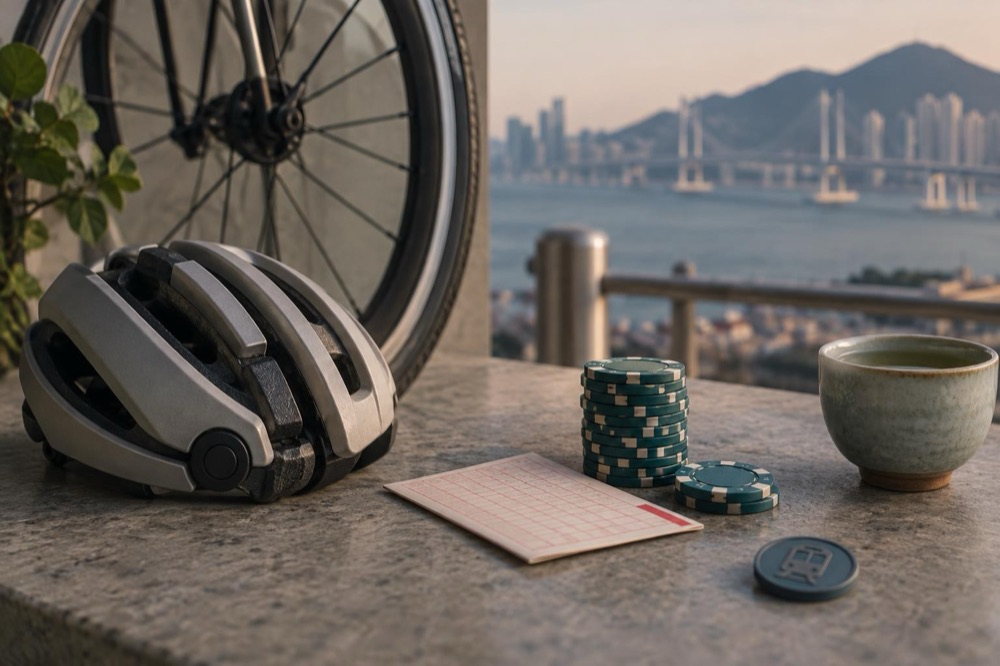
Busan is well connected by rail and road. The city has a subway system, and most major venues are reachable by a combination of subway and bus or taxi. If you are coming from Seoul, the KTX high-speed train takes you to Busan Station in a few hours, and from there you can take a taxi or local transit to the venue.
For comparison, Korean racecourses like Seoul Racecourse are located at 685, Juam-dong, Gwacheon-si, Gyeonggi-do, and Jeju Racecourse is at 1206, Yoosuam-ri, Aewol, Bukjeju-gun, Jeju-do5. These addresses give you a sense of how Korean racing venues are typically situated, often just outside the main city center with parking and transit access.
If you are planning a trip that includes other Korean racing, the Korea Racing Authority page covers the horse racing parks at Seoul, Busan-Gyeongnam and Jeju. For the cycle racing network as a whole, see Korea Sports Promotion Foundation: Gwangmyeong Speedom.
Opening hours and entry
Korean cycle racing venues typically open their doors at 10:00 on race days. At Gwangmyeong Dome Cycle Racing Venue, for example, the doors open at exactly 10:001. During the summer season, entry may be delayed to 12:00. In 2018, the summer season ran from June 1 to September 16, and entry during that period was at 12:001.
Race days are not every day. Cycle racing in Korea runs on a schedule that alternates between venues, so check the KSPO calendar before you go. The venue will be open only on days when races are being held.
Entry fees at Korean racing venues are modest. At Busan racecourse, general admission is KRW 106. Cycle racing venues typically charge a similar small fee, though the exact amount at Busan SPO1 is not confirmed in the available sources. Bring some cash for admission and for your bets.
For a sense of how Korean racing venues handle admission and seating, the Korea Racing Authority page covers the horse racing parks. The cycle racing network page at Korea Sports Promotion Foundation: Gwangmyeong Speedom has more on how the KSPO venues operate.
How cycle racing betting works
Cycle racing betting in Korea is pari-mutuel. That means all the money bet on a particular pool is pooled together, the operator takes its cut, and the rest is divided among the winning tickets. The odds are not fixed when you place your bet; they are determined by the final pool size and the amount wagered on each combination.
The basic idea is simple. A field of cyclists races over a set distance. You pick the rider or riders you think will finish in certain positions. If your pick is right, you collect a share of the pool.
Korean horse racing uses four principal bet types: Win, Place, Quinella and Exacta5. Cycle racing uses a similar set of bet types, with some variations specific to the sport. The KSPO cycle racing FAQ lists seven bet types (7가지 승식) in Korean1.
One important rule to understand is what happens when a race does not produce a valid result. If only one rider crosses the finish line, the refund rules kick in.
| Bet type | Korean name | What happens to the tickets |
|---|---|---|
| Single-winner | 단승식 | The bet pays out normally |
| Quinella and exacta | 쌍승식 and 복승식 | All tickets are refunded 100 percent |
| Place | 연승식 | Refunds go to the first-place winners for the first and second place positions |
| Trio and higher combinations | 삼복승식, 쌍복승식 and 삼쌍승식 | All tickets are refunded 100 percent1 |
This matters because cycle racing can have incidents where riders fall or are disqualified, and knowing the refund rule means you know what happens to your money.
Types of bets you can place
Korean cycle racing offers several bet types. The exact Korean names are worth knowing if you are reading the betting screens at the venue.

The standard bet types include:
- 단승식 (Win): Pick the rider who will finish first.
- 연승식 (Place): Pick a rider who will finish in the top two or three, depending on the field size.
- 복승식 (Quinella): Pick two riders to finish first and second, in either order.
- 쌍승식 (Exacta): Pick two riders to finish first and second, in the exact order.
- 삼복승식 (Trio): Pick three riders to finish in the top three, in any order.
- 쌍복승식 (Quinella Place): Pick two riders to finish in the top three, in any order.
- 삼쌍승식 (Trifecta): Pick three riders to finish first, second and third, in the exact order1.
There are also special multi-race bets. In Japanese keirin, there is a bet called Dokanto! 7 where you pick the number 1 finishing bike in each of the last 7 races of the day at the target velodrome, and all 7 must hit7. There is also Dokanto! 4 two, where you pick the 1st and 2nd place bike numbers (order irrelevant) in each of the last 4 races of the day, and all 4 pairs must hit7. Korean cycle racing has similar multi-race bets, though the exact names and rules may differ.
For a comparison with how Japanese cycle racing venues handle these bets, see Hakodate City: Hakodate Velodrome.
Reading the odds and payouts
Because cycle racing betting is pari-mutuel, the odds you see on the screen are estimates based on the money already in the pool. They will change as more money comes in. The final odds are set when betting closes.
To understand how payouts work, it helps to look at a simple example from horse racing, which uses the same pari-mutuel system. If the odds for horse No. 2 are 1.9, a bet of JPY 100 will pay out JPY 1908. That includes your original stake. So your profit is JPY 90.
For place bets, the payout is lower because the bet is easier to win. If horse No. 2 finishes in the first three places, a bet of $100 will pay out between $110 and $1308. The exact amount depends on how much money is in the place pool and which horses finish in the placings.
In Korean cycle racing, the same principle applies. A win bet on a strong favorite might pay out only slightly more than your stake, while a trifecta on long shots could pay out many times your stake. The payouts are displayed in Korean won.
One thing to note: the operator takes a cut from each pool. In Chinese sports betting, for example, the prize fund split is 72 percent for current prizes and 1 percent for the rollover fund9. Korean cycle racing has a similar takeout, though the exact percentage is not confirmed in the available sources.
Facilities and what to expect on site
Korean cycle racing venues are designed for a day out, not just for betting. You can expect the usual racing venue facilities: food stalls, restaurants, seating areas and betting windows.
Japanese racing venues give a good sense of what to expect. Boat Race venues in Japan have restaurants, food stalls, souvenir shops, sports facilities, VR experiences, karaoke boxes, arcades, gacha machines and photo spots10. Korean cycle racing venues are generally similar in feel, though the specific facilities at Busan SPO1 are not detailed in the available sources.
Parking is usually available. Boat Race venues in Japan offer spacious parking at every venue10, and Korean racing venues typically do the same. If you are driving to Busan SPO1, check the official site for parking capacity and any fees.
For a look at how a Korean horse racing venue is set up, the Korea Racing Authority page covers the LetsRun Park venues. The cycle racing network page at Korea Sports Promotion Foundation: Gwangmyeong Speedom has more on the KSPO facilities.
Rules for foreign visitors
Foreign visitors are welcome at Korean cycle racing venues. While most Korean casinos are foreigners-only facilities, Kangwon Land is the one Korean casino that also admits local patrons11, and cycle racing parks are open to everyone, including Korean citizens and foreign residents12. You will need to show valid photo ID, such as your passport, to enter and to collect large winnings.
There is no separate foreigners-only area or separate betting system. You bet the same way as everyone else, using the same windows and machines. The betting screens and tickets are in Korean, so it helps to have a translation app or a basic understanding of the bet type names.
If you are used to racing in Japan, the experience will be similar. Japanese racecourses have entry rules that exempt certain categories of visitors from admission fees, including persons under 15 years old14. Korean venues have their own admission rules, but foreign visitors are generally charged the standard admission fee.
For more on gambling rules in Korea, including what is and is not allowed, see Can I Gamble in South Korea?. If you want to compare cycle racing with horse racing, Betting on Horse Racing in South Korea covers the tracks and bet types. And for the full picture of cycle and motorboat racing, Betting on Cycle Racing and Motorboat Racing in South Korea is the place to start.
Common Questions
Where is Busan SPO1 Cycle Racing Park located?
It is a cycle racing venue in Busan, South Korea, operated under the Korea Sports Promotion Foundation cycle racing network. The exact street address is not published in the sources available here. Check the official KSPO cycle racing site for the current address and directions before you travel.
What are the opening hours?
Korean cycle racing venues typically open their doors at 10:00 on race days. During the summer season, entry may be delayed to 12:00. Hours vary by race day and season, so confirm the schedule for your specific visit on the official KSPO cycle racing site.
Is there an entry fee?
Korean cycle racing venues generally charge a small admission fee. At comparable Korean racecourses, general admission is around KRW 10. The exact fee at Busan SPO1 is not confirmed in the available sources. Check the official venue page before you go.
Can foreigners bet at the park?
Yes. Korean cycle racing venues are open to the general public, including foreign visitors. You will need to show valid photo ID such as your passport. There is no foreigners-only restriction at cycle racing parks, unlike most Korean casinos, which are restricted to foreign nationals, though Kangwon Land also admits Korean citizens [14].
What is the minimum bet?
Minimum bets vary by bet type. At comparable Korean and Philippine racing venues, minimums range from around PHP 2 to PHP 5 per bet. Korean cycle racing minimums are typically KRW 100 per bet. Confirm the current minimum at the venue or on the official site.
How do I collect my winnings?
Take your winning ticket to an automatic payout machine. Insert the ticket and the machine dispenses your winnings. For larger amounts you may need to go to a staffed payout counter. Keep your ticket safe, as lost tickets cannot be replaced.
Is there parking at the venue?
Yes. Korean cycle racing venues typically provide parking for visitors. Boat race venues in Japan, which operate similarly, offer spacious parking at every venue. Check the official Busan SPO1 site for parking capacity and any fees.
Sources14 sources
- KSPO Cycle Racing FAQ, Korea Sports Promotion Foundation, 2026
- Busan travel guide, Visit Korea, 2026
- Getting started with betting, Philracom, 2026
- How to write a betting ticket, Sonoda-Himeji, 2026
- Asian racing statistics, Asian Racing Federation, 2011
- Busan racecourse admission, Korea Racing Authority, 2026
- Dokanto! bet types, Keirin.jp, 2025
- JRA racing guide, Japan Racing Association, 2026
- Beijing single-match football betting rules, Sporttery.cn, 2026
- Boat Race step-by-step guide, Boatrace.jp, 2026
- Kangwon Land, Exa.ai, 2026
- Korea casino guide, Visit Korea, 2026
- Korea casino guide (Chinese), Visit Korea, 2026
- JRA Racing Implementation Regulations, Japan Racing Association, 2026