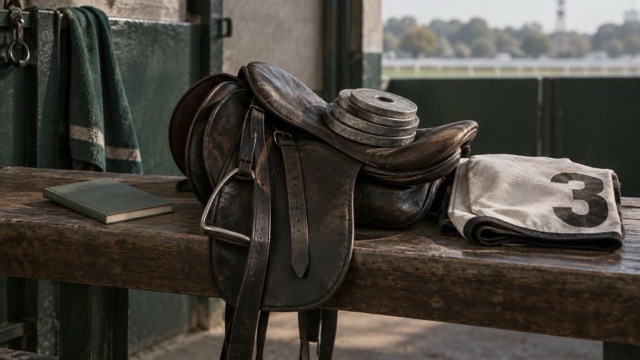
The Diolite Kinen, a JpnII dirt race run by the Chiba Prefectural Racing Association at Funabashi Racecourse, changed its weight conditions from fixed weights to grade-specific weights from 2024, as part of a wider restructuring of the dirt racing program1. The race is run over 2,400m on dirt and is open to Thoroughbreds aged four and older under the designated exchange system between local and central racing1.
Horses that won a GI or JpnI race between March 11 of the previous year and February 28 of the current year carry 2kg more; winners of a GII or JpnII race in the same window carry 1kg more; and winners of a GI or JpnI race on or before March 10 of the previous year carry 1kg more. Two-year-old races are excluded from these penalties1.
The race was a handicap until 1995, and the source notes that horses once won it carrying 50kg or less1. Weights were switched from handicap to fixed in 1996, the same year the race became a national designated exchange event open to Japan Racing Association and other regional runners1. The 2024 change to grade-specific weights was announced as part of organizing the rotation for older middle-distance dirt horses, and the race becomes a prep for the Kawasaki Kinen, which moves to about a month later1.
The field is capped at 14 starters1. Local racing horses finishing second or better earn a priority start in the Kawasaki Kinen1.
The race was first run in 1956 over 1,800m on dirt at Funabashi, and the distance was changed to 2,400m in 19761. It was graded G1 under the South Kanto grading system in 1995, then graded GII under the dirt grading system in 1998, and its grading notation was changed to JpnII in 2007 following a recommendation from the International Cataloguing Standards Committee1. The official name is the Minister of Agriculture, Forestry and Fisheries Prize Diolite Kinen1.
What it means for players
Weight conditions decide how much lead each horse carries, and a switch from fixed to grade-specific weights changes which runners are favored before the race is run. Under the new scale, a horse that has recently won at the top level carries extra weight, while horses without recent top-level wins carry the base weight. For bettors in Japan, this affects how form lines from other races translate into the Diolite Kinen, and it makes recent Grade 1 and Grade 2 results a direct input into the weights rather than a fixed assignment. The change applies from 2024, so past results under the old fixed-weight conditions are not a like-for-like guide to how the race is now framed.
What happens next
The race is scheduled as a prep for the Kawasaki Kinen, which moves to about a month after the Diolite Kinen1. No further changes to the conditions beyond the 2024 switch are reported in the source.
Sources1 sources
- ダイオライト記念 - Wikipedia, ja.wikipedia.org