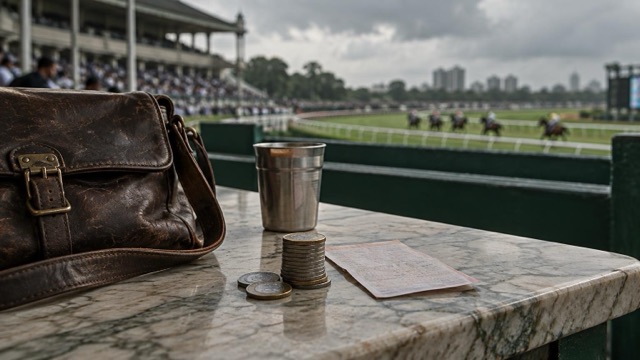
The GST Council has deferred its decision on imposing GST on the value of bets placed at 28%, according to The Turf Authorities of India (TAI), which conducts horse racing in India1. TAI said it welcomed the Council's decision to allow a group of ministers (GoM) to re-examine the issues related to levying GST on horse racing1. The development was reported on July 1, 20221.
Zavaray S. Poonawalla, chairman of the GST reform cell of TAI, said the deferral gives the body time to make its argument to the GoM1.
"This gives us a window of 15 days to present to the GoM"
TAI's case rests on how racing clubs are structured and how betting has been taxed. Poonawalla said that unlike gaming for commercial gain, all race clubs in India are set up as not-for-profit clubs, and that the licensed horse race clubs have been in existence for over 200 years in India1. In that time, he said, the tax imposed on betting has been on the commission made by the race courses and not on the value of bets1. He described the proposed GST as against this centuries-old norm, international norms and the state's betting and entertainment tax, which the GST regime subsumed1.
TAI also said all revenue made by the clubs is completely ploughed back into welfare measures such as supporting jockeys, horses, equestrian breeding and training, besides providing employment to thousands of people1. It said horse racing and equestrian breeding will suffer irreversible damage if the proposed GST on the value of bets is imposed, and that turf clubs provide much needed green spaces in crowded cities1. The sport generates lakhs of jobs in the agriculture sector, the pharmaceutical industry and the labor industry, TAI said1.
The 28% rate referred to the value of bets placed, not the commission earned by race courses1. The source does not state which other activities the Council considered at the same meeting, nor the date of the GoM's next meeting.
What it means for players
Under the existing arrangement described by TAI, tax on betting in India falls on the commission taken by the race course rather than on the amount a punter stakes1. If the proposed 28% GST on the value of bets were imposed, the tax base would shift to the stake itself, which is the figure a bettor puts down on a win or place bet or a multi-race bet such as a double, treble or six up. TAI's statement does not say whether such a change would be passed on to punters through deductions from pools or payouts, and no such detail has been reported1. The proposal has not been adopted; it has been sent back for examination1.
For anyone betting at Indian racecourses, the practical position is unchanged for now. The rate that applies to horse racing betting duty and GST remains as it was before the Council meeting, and the question of whether tax is charged on stakes or on commission is still open1. How operator-level taxes reach players more generally is set out in the guide to how gambling duties affect players, and the treatment of horse racing and pari-mutuel winnings across the region is covered separately. Background on betting on horse racing in India and on whether gambling is permitted in India sets out the wider legal position.
What happens next
TAI has 15 days from the deferral to present its case to the GoM1. The GoM will re-examine the issues related to levying GST on horse racing1. No date has been reported for the GoM's decision or for the Council's next consideration of the matter1.