
India: the nationwide ban on online money games
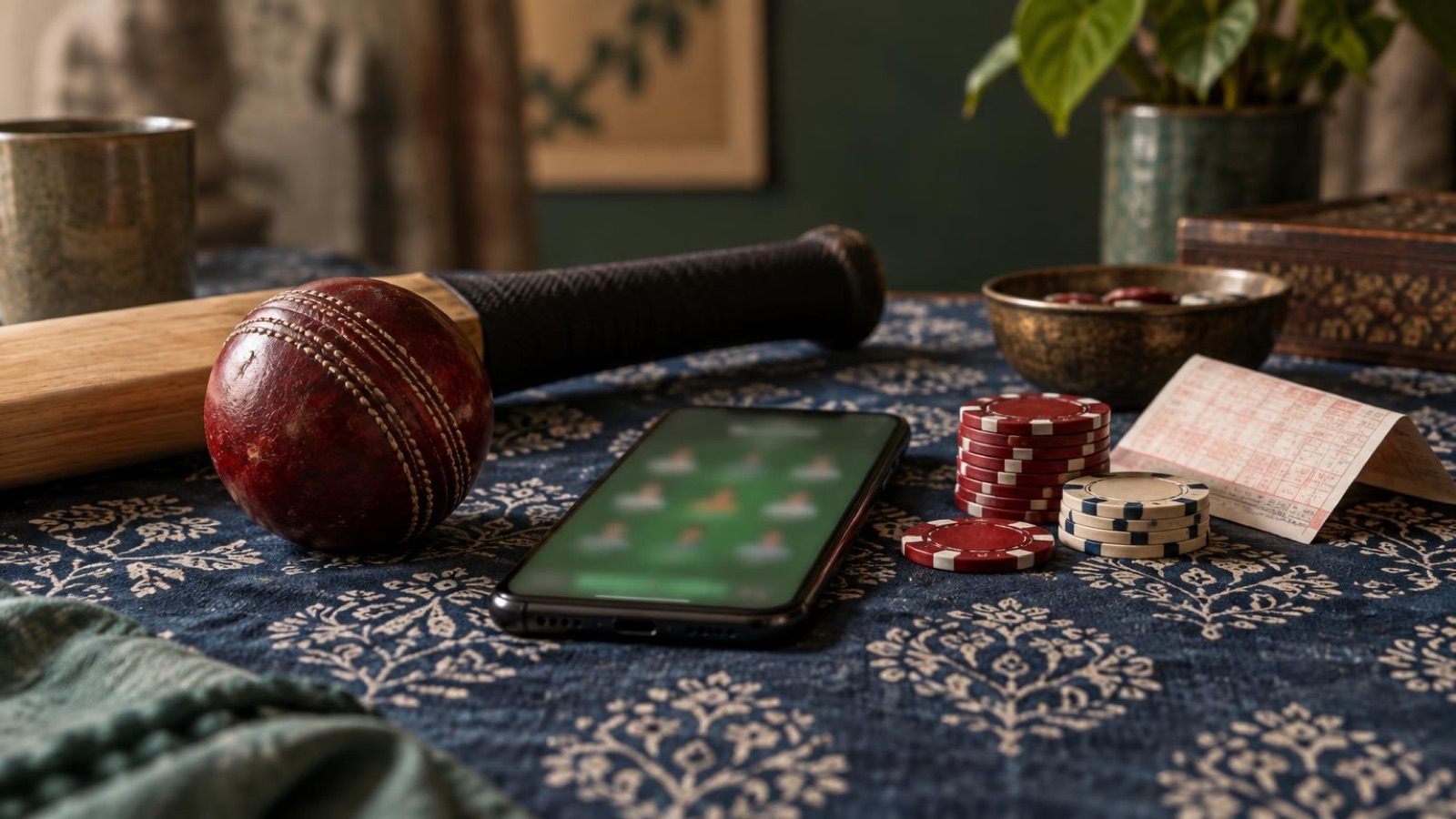
If you played paid fantasy cricket in India a few years ago, the ground has moved under you. The Promotion and Regulation of Online Gaming Act, 2025 imposes a complete ban on all forms of online money games, and that phrase is deliberately wide. It covers games of chance, games of skill, and any mix of the two1. Fantasy sports, which had been treated as a game of skill, now fall inside the ban to the extent they involve monetary stakes5.
The Act does not just target the contest. It also bans the advertising, promotion and facilitation of online money games1. That is why you may have noticed fantasy apps pulling their paid contests, changing their branding, or shutting down real-money formats entirely. The prohibition applies to all online money games regardless of whether the underlying game involves skill or chance4.
The practical effect for a player is simple. If there is any cash involved, it is illegal6. That includes online poker, rummy and fantasy sports with real money on the line. The old argument that fantasy cricket was a game of skill, and therefore outside gambling law, no longer helps you. The Act was written specifically to close that gap.
For context on how quickly this changed: the Supreme Court of India had ruled in the past that games like rummy and fantasy sports are games of skill and hence do not fall under traditional gambling laws7. Dream11's single full-match format had been recognized as a game of skill, not gambling, betting or wagering8. The 2025 Act overrides that position for real-money play.
If you want the wider picture of what is and is not allowed across the region, see gambling laws in Asia and is online gambling legal in Asia.
Penalties for players: what the law does not cover
Here is the part most people get wrong. The Act is aimed at the businesses that offer, advertise and facilitate online money games, not at the person tapping a screen at home. The enforcement you have seen has been directed at operators and platforms, not at individual players being prosecuted for entering a contest.
That does not mean there is no risk. The practical exposure for a player is to your money and your account. Platforms that keep offering paid contests after the ban are operating outside the law, and when they are shut down or blocked, balances can be frozen or lost. If you are playing on an app that is openly ignoring the ban, you are trusting your money to a business that has already decided the rules do not apply to it.
For a fuller picture of what players actually face across the region, including fines and other consequences in different jurisdictions, see penalties for gambling in Asia.
The cleanest way to think about it: the law does not cover you personally for playing, but it does not protect you either. There is no regulator standing behind a banned platform if it decides not to pay out.
Fantasy sports in Japan: who pays the prize decides legality
Japan takes a different approach, and it comes down to a single question: who is paying the prize, and under what authority?
Gambling in Japan is basically illegal, but not all gambling is illegal. Some forms are legal under separate laws, either to respect everyday entertainment or to return proceeds to social welfare9. The legal public gambling in Japan is organized by government agencies and is limited to:
- Boat races
- Horse racing
- Biking
- Bike racing2
Residents can wager on those, and they are run by authorities.
The mechanism matters. Betting on horse racing would normally constitute the crime of gambling, but it is authorized by the Horse Racing Act as a special law. If you bet by methods other than those prescribed in that special law, the gambling offense is established3. In other words, the special law carves out a narrow, defined channel. Anything outside that channel is back to being illegal.
That is why a private fantasy contest offering cash prizes is on shaky ground. It is not one of the authorized public racing products, and it is not being run by an authority under a special law. The Japan Open Poker Tour states plainly that it is not legally possible to offer cash prizes for the winner of a poker tournament in Japan, and that gambling-related activities are restricted by law10. Instead, prizes are offered in the form of USDT (Tether) or a player contract10.
Esports betting is in the same place. It stays unlawful in Japan, with only a select variety of gambling activities allowed, and there are no plans to legalize it in the near term2.
So when you are looking at a fantasy contest in Japan, ask who is paying. If the prize comes from an authorized public racing operator under its special law, it is fine. If a private company is putting up cash for a contest of skill, it is not one of the carved-out channels, and the gambling offense applies.
For the country-level picture, see can I gamble in Japan.
State-level rules before the ban: the seven states that already restricted fantasy sports
Before the national law, fantasy sports were permitted in certain states on the basis that they were games of skill. That is now overridden by the PROG Act to the extent those games include monetary stakes5. But the state map is still useful, because it tells you where the pressure was already building.
The states that had banned fantasy sports included Assam, Sikkim, Odisha and Andhra Pradesh8. Odisha in particular did not allow online fantasy sports platforms12. Telangana, Meghalaya and Nagaland also restricted fantasy sports before the national ban.
Karnataka is the interesting one. Its state law banning fantasy sports was quashed, which left online fantasy gaming out of the ambit of the new gambling restrictions13. Tamil Nadu took a different route: its 2021 amendment restricted online gaming platforms but continued the exemption for games of skill, so fantasy sports platforms continued to operate within the state12.
| State | Position before the national ban |
|---|---|
| Assam | Fantasy sports banned8 |
| Sikkim | Fantasy sports banned8 |
| Odisha | Fantasy sports banned; platforms not allowed12 |
| Andhra Pradesh | Fantasy sports banned8 |
| Telangana | Restricted fantasy sports |
| Meghalaya | Restricted fantasy sports |
| Nagaland | Restricted fantasy sports |
| Karnataka | Ban quashed; fantasy gaming left outside restrictions13 |
| Tamil Nadu | Skill exemption kept; platforms continued to operate12 |
The reason this history matters is that it explains why the national law was framed so broadly. State-by-state rulings had produced a patchwork, with some courts treating fantasy sports as skill and others banning them. The 2025 Act cut through all of it by banning online money games outright, regardless of skill or chance1.
If you are trying to work out whether a particular format counts as skill or chance under the older rules, see games of skill vs games of chance.
Self-exclusion and player protections under the Act
One practical question people ask is whether they can still block themselves from platforms. The answer is that self-exclusion tools exist, but they are built around licensed and regulated operators, and the Indian online money game sector is now largely outside that framework.

In Singapore, for example, self-exclusion applies to jackpot machine rooms at private clubs, and there is a step-by-step process to apply14. In the Philippines, the regulator runs a Player Exclusion Program that gives patrons the option of barring themselves or their relatives from all gaming venues or sites15. These are the kinds of protections that come with a licensed market.
The general concept of self-exclusion, where a player asks an operator or regulator to block them from gambling, is well established in regulated markets16. The problem in India is that once paid fantasy sports and other online money games are banned, there is no licensed operator left to run a self-exclusion scheme for them. The platforms still operating are doing so outside the law, and an unlicensed operator has no obligation to honor a self-exclusion request.
If you are looking for the tools that do exist across the region, see casino exclusion orders and legal self-exclusion in Asia.
For visitors and foreign residents, the position is the same as for citizens on this point. The ban applies to the games, not to your nationality. If you are in India and you play a paid fantasy contest, you are in the same position as anyone else. For how the rules differ for visitors more generally, see gambling law for visitors and expats in Asia.
What this means if you are planning to play
If you are in India, the paid fantasy sports era is over for now. Free contests with no cash entry and no cash prize are not online money games, so they are not caught by the ban4. Anything with real money on either side, whether an entry fee or a cash prize, falls under the Act.
If you are in Japan, the question is who is paying. Public racing run by authorities is legal2. A private contest with a cash prize is not one of the carved-out channels, and the gambling offense applies3. Operators work around this by paying in USDT or player contracts rather than cash10.
If you are elsewhere in Asia and wondering how your jurisdiction treats fantasy sports, the same two questions usually decide it: is there real money involved, and who is running the contest? Those two answers will tell you most of what you need to know.
Common Questions
Is fantasy sports legal in India now?
No, not for money. The Promotion and Regulation of Online Gaming Act, 2025 bans all online money games, including fantasy sports with cash stakes, whether the game is skill, chance or a mix. Free contests with no cash entry or cash prize sit outside the ban.
Do I get fined for playing paid fantasy sports in India?
The Act targets the operators who offer, advertise and facilitate online money games rather than the individual player. That said, playing on an unlicensed platform carries practical risk to your account and money, and enforcement has focused on the businesses running the games.
Are free fantasy contests with sponsor prizes allowed in India?
Free contests where you pay nothing to enter and no cash changes hands are not online money games, so they are not caught by the ban. Once real money is involved on either side, entry fee or prize, the contest falls under the Act.
How does Japan decide if a fantasy sports contest is legal?
Japan looks at who pays the prize and how. Betting is generally illegal, but public racing run by authorities is allowed under special laws. A private operator offering cash prizes for a contest can fall outside those special laws and into the gambling offense.
Which Indian states banned fantasy sports before the national law?
Assam, Odisha, Sikkim, Meghalaya, Nagaland and Telangana restricted fantasy sports before the national ban. Andhra Pradesh also moved against them. Karnataka's ban was quashed by its High Court in 2022, leaving fantasy gaming outside the state's gambling restrictions.
When did the ban on online money games take effect in India?
The Promotion and Regulation of Online Gaming Act, 2025 was passed in August 2025 and its prohibitions apply from then. Guidance published in 2026 confirms the complete ban on online money games, including fantasy sports with cash stakes.
Sources16 sources
- Promotion and Regulation of Online Gaming Act, 2025 guidance, Press Information Bureau, 2026
- Japan esports betting to remain prohibited, say lawmakers, FEH Online, 2025
- Research on gambling offences and special laws, National Tax Agency, 2025
- Playing by the rules: India's Online Gaming Act and rules explained, Bar and Bench, 2026
- India gambling analysis, Khaitan & Co, 2026
- Online Gaming Act 2025: game over for RMG, Mondaq, 2025
- IPL betting and young India's gambling addiction, India Today, 2025
- Dream11 turned fantasy gaming into reality-into-reality-now-its-eyeing-a-diversified-sports-tech-future/77065/1), Forbes India, 2022
- Gambling and lottery offences, Wikipedia, 2026
- Japan Open Poker Tour English guide, Japan Open Poker Tour, 2025
- JOPT 2025 Tokyo English guide, Japan Open Poker Tour, 2025
- India gambling law analysis, Lexology, 2022
- Karnataka High Court quashes law criminalising fantasy sports, CricketAddictor, 2022
- Step-by-step guide to self-exclusion, Ministry of Social and Family Development, 2026
- PAGCOR warns public against playing in illegal online gambling sites, PAGCOR, 2022
- Self-exclusion glossary, Rupa Casino, 2026















