

What an offshore gambling license actually means
A license is a permission slip issued by one country to a company. Curacao, Malta, Gibraltar and the Philippines all issue them. What the license says is that the operator met that regulator's entry requirements: it registered a company, paid fees, and agreed to keep records and follow certain conduct rules. What it does not say is that you are allowed to play there.
That distinction matters more in Asia than almost anywhere else, because several jurisdictions criminalize the player rather than only the operator. Japan is the clearest example. Gambling on online casinos from Japan is a crime even when the operator is legally run overseas, and the prohibition covers baccarat, slots and sports betting regardless of the name or content of the game1. So a site holding a perfectly valid European license is still something a player in Japan can be prosecuted for using.
The reverse is also true. Some jurisdictions write their rules around the operator and leave the player alone. Singapore's main prohibition is on conducting a betting operation from premises in Singapore that are not an approved gambling venue, where the person knows or ought reasonably to have known that6. That is aimed at the person running the operation, not the person placing a bet.
There is a third pattern, where the license itself is defined by who is allowed to play. Philippine offshore gaming licenses were written to cover the offering of online games of chance exclusively to offshore authorized players, excluding Filipinos abroad, who had registered and established an account with the licensee7. The license was never meant to cover domestic players at all.
So when you see a license badge in a site footer, read it as a statement about the operator's paperwork. Then ask the separate question: does my own jurisdiction allow me to be on this site? Those two answers can point in opposite directions, and the license badge only answers the first one.
| What the license tells you | What it does not tell you |
|---|---|
| The operator registered a company and paid fees | That you are allowed to play from where you live |
| The operator agreed to keep records and follow conduct rules | That your local regulator has any power over the site |
| The regulator can act against the operator | That you have a dispute route if the site refuses to pay |
| The license covers named activities and domains | That the domain you are using is one of them |
How to verify a PAGCOR-licensed platform
PAGCOR, the Philippine Amusement and Gaming Corporation, is the regulator most Asian players will actually encounter, because a large share of sites marketing into the region claim a Philippine license. It has built public tools specifically so you can check that claim.
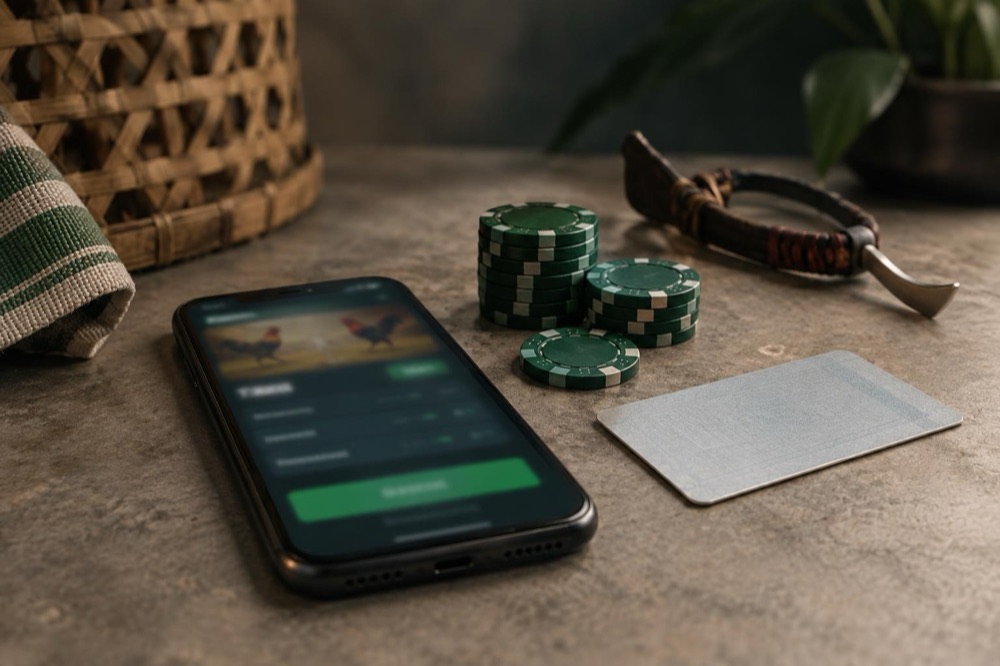
The PAGCOR Guarantee page is an online verification facility that lets the public check whether an online gaming provider is licensed or not8. A companion PAGCOR app is designed to help online gaming players use only licensed and regulated platforms8. The Guarantee website carries a regularly updated list of licensed internet gaming platforms under PAGCOR's oversight2.
The practical check is simple. Before you deposit, look up the operator on that list. PAGCOR has publicly urged people to check its list of licensees before accessing offshore gaming sites9. If the brand you are looking at is not on it, the license claim is unverified no matter how prominently it is displayed.
There is a second layer for sites that are on the list. PAGCOR says licensed or registered online gaming websites give players protection through a mechanism or process where they can air complaints and grievances against service providers and gaming operators10. Some of those sites also run identity checks at login, including a one-time PIN sent to the player's contact number that must be entered accurately, video calling, or biometrics verification10.
Two cautions. First, PAGCOR has warned the public against playing on illegal online gambling sites, and separately against fake sites imitating licensed ones10. A convincing logo is not a license. Second, the POGO era is over. All POGOs and Internet Gambling Licensees were expected to cease operations by January 202511. If a site still describes itself as a POGO, that is a description of a license category that no longer has live holders.
What the law does not cover: players vs operators
Most gambling statutes in the region are written to control who may offer gambling, not who may play it. That gap is where a lot of confusion lives, and it is worth being precise about it.
Singapore's framework is a good illustration. The general prohibition on conducting betting, gaming or lottery operations applies to premises that are not an approved gambling venue6. The Act also carves out specific conduct: certain provisions do not extend to engaging in conduct within a casino, or to a class licensee providing a gambling service under a class license12. Those carve-outs are about scope, not about giving players a defense.
Macau is the other useful example, because it shows how a licensing regime can simply not cover a product. No concession for interactive gaming, meaning online casino or online betting, has been granted in Macau, whether via the internet or any other remote means of communication13. Macau licenses casinos extensively. It has not licensed online play. So a site claiming a Macau license for online casino games is claiming something that does not exist.
Hong Kong draws the line at the premises. Where there is evidence that a bet is wagered or paid at amusement game center premises, or that prizes or cash refunds are given on game results, the persons in charge are in breach of the Gambling Ordinance and liable to prosecution by the police14. Again, the target is the operator of the premises.
What this means for you in practice: the fact that a law does not name players does not mean the site is safe to use. It means the enforcement risk sits with the operator, while the practical risk sits with you. If an unlicensed site decides not to pay, no local regulator has jurisdiction over it, and no local court is going to enforce a gambling debt it does not recognize.
| Jurisdiction | Who the rule targets | What that means for you |
|---|---|---|
| Japan | The player | Playing on an overseas-licensed online casino from Japan is a crime1 |
| Singapore | The operator | Conducting an unapproved betting operation is an offense; players are not the target6 |
| Macau | The operator | No online interactive gaming concession has been granted at all13 |
| Hong Kong | The premises operator | Bets wagered or paid at amusement game centers put those in charge at risk of prosecution14 |
Dispute resolution: what happens when something goes wrong
This is the part a license badge is supposed to buy you, and it is worth understanding exactly how thin the coverage is.
If you play on a PAGCOR-licensed site, there is a complaints mechanism. PAGCOR states that licensed or registered E-Games and E-Bingo sites give players a process to air complaints and grievances against service providers and gaming operators10. That is a real route, and it is the main practical reason to prefer a licensed site over an unlicensed one.
If you play on a Malta-licensed site, the regulator supervises the operator but does not adjudicate your individual bet. Malta's player guidance is built around self-exclusion and safer gambling tools rather than around resolving payout disputes15.
If you play on an unlicensed offshore site, there is no route at all. The regulator named in the footer has no relationship with you, your jurisdiction has no relationship with the operator, and the amount in dispute is usually too small for any cross-border claim to be worth bringing.
There is also a category of dispute that no regulator will help with, because the outcome is defined as void in advance. In Singapore, casino patron disputes include situations where a malfunction, fault or interruption in the operation of a gaming machine, gaming program or gaming equipment occurs, where a foreign or damaged playing card is discovered during the round of play, or where a patron refuses to make a required decision17. Those are treated as void gambling, meaning the outcome is undeterminable and the bet does not stand. Expect the same logic on any regulated platform: technical failures void the round.
The practical takeaway is to treat the license as a complaints address, not a guarantee. Before you deposit meaningful money, work through this:
- Find the regulator the site names in its footer.
- Search that regulator's public register for the operator's legal name.
- Check that the domain you are using is listed, not just the brand.
- Confirm the regulator accepts player complaints at all.
- If the answer to step 4 is no, you are playing on trust.
Taxes on winnings
A license does not change your tax position. Your tax position is set by where you live, and in several Asian jurisdictions gambling winnings are explicitly taxable income.

Vietnam is the clearest case. Under the Personal Income Tax Law 2007, lottery winnings are taxable income, and the category includes lottery, promotions, betting and prize contests5. So a win from a licensed or unlicensed source lands in the same taxable bucket.
China taxes computer lottery winnings, and the rule for what counts as a single win is specific: all prizes won by the same person in the same draw of the same game count as one single winning income18. That matters because the tax treatment depends on how the win is aggregated, not on how many tickets were involved.
Macau has a rule that runs the other way for a narrow group. Winnings or other lucky gaming gains of a person banned from gaming, after deducting losses, and revenue the concessionaire obtains from their gaming, after deducting losses, vest in the Macau SAR20. In other words, if you are excluded from gaming and you win anyway, the money is not yours.
The practical point is that an offshore license gives you no tax advantage. If your jurisdiction taxes gambling winnings, it taxes them whether the site is licensed in Curacao, Malta or Manila. If you are a visitor, your home country's rules may still follow you, and that is a separate question from whether the site is regulated.
Player protections: self-exclusion and helplines
Self-exclusion is the one player protection that works across borders, and it is worth setting up before you need it.
On Malta-licensed sites, a self-exclusion is a tool that prevents players from gambling by blocking access to the gaming website the player has excluded with, for a definite or indefinite timeframe, extendable by the player15. During a self-exclusion, players are prevented from gambling16. The important detail is scope: a player can self-exclude across all brands which a licensee offers on request, and where the request has been made due to problematic gambling, the player must be self-excluded from all brands which the licensee operates, irrespective of whether the player holds an account with that brand4.
The procedure is operator-led. Players wishing to self-exclude from gaming services must submit their request directly to the relevant licensed operator21. There is no central switch that covers every site at once, which is why the multi-brand rule matters: one request to one licensee can cover several brands.
Singapore runs a statutory version. Self-exclusion there means a ban of a person from all casino premises, all gaming machine rooms, and all manner of general remote gambling, on voluntary application22. The definition of an excluded person also covers family exclusion orders, provisional exclusion orders, and entry bans under the Casino Control Act 200622. Licensees must bar excluded persons from gambling22.
PAGCOR runs its own version for Philippine-facing players. PAGCOR provides patrons who feel that their relatives or they themselves are developing a problem with gaming with the option of barring them from the gaming venue or site23. Regardless of where the application was applied, the self-exclusion order is enforced in all PAGCOR operated and regulated gaming facilities23. PAGCOR licensees and operators are also required to keep dedicated personnel and information on Responsible Gaming available for queries about exclusion and banning, treatment and rehabilitation centers, and support groups24.
| Regulator | Who applies | Scope of the block |
|---|---|---|
| Malta Gaming Authority | You, directly to the operator21 | All brands that licensee operates, on request4 |
| Singapore | You, on voluntary application22 | All casino premises, gaming machine rooms and general remote gambling22 |
| PAGCOR | You or a relative23 | All PAGCOR operated and regulated gaming facilities23 |
On helplines: PAGCOR does not publish a single public player helpline number. The requirement on its licensees is to have responsible gaming staff and information available, so the practical move is to ask the operator directly, or to contact PAGCOR through its official channels24. If you are on a Malta-licensed site, the operator's responsible gaming page is the place to look15.
One more thing worth knowing if you are in Macau. Where there are signs that a person who breached the gaming law has a gambling disorder, the DICJ may, with that person's consent, transfer their personal data to the Social Welfare Bureau and request its intervention20. That is a support route rather than a penalty route, and it requires consent.
Common Questions
How do I check if an online casino is licensed?
Find the regulator named in the site footer, then look that operator up on the regulator's own public register. Check that the licensed activities and the website domain names match what you are using. If the site names no regulator, or the register does not list that domain, treat the license claim as unverified.
What is a POGO?
POGO stands for Philippine Offshore Gaming Operator, a license type PAGCOR once issued to operators serving players outside the Philippines. The remaining POGO and Internet Gambling Licensee operations were expected to cease by January 2025, so any site still advertising itself as a POGO is not operating under a current Philippine license.
Is it illegal for me as a player to use an offshore betting site in Singapore?
Singapore law targets the operator, not the punter. It is an offense to conduct a betting operation from premises in Singapore that are not an approved gambling venue. Individual players are not prosecuted under that provision, but the site itself is unlicensed, so you have no local dispute route if it fails to pay.
What is the PAGCOR responsible gaming helpline number?
PAGCOR does not publish a single public helpline number for players. Its licensed operators are required to keep dedicated responsible gaming staff and information on hand for queries about exclusion, treatment and rehabilitation centers, and support groups. Ask the operator directly, or contact PAGCOR through its official channels.
What is the minimum age for remote gambling in Singapore?
21. The minimum age for gambling in Singapore is 21, and that applies to general remote gambling. The exception is Singapore Pools' physical outlets, where the minimum age is 18. An underage person who opens or reopens an account with a licensee for remote gambling commits an offense.
Which regulator licenses Ganga Club?
Ganga Club states on its own site that it holds a Malta Gaming Authority license. That is the operator's own claim, not an independent confirmation. You can check it by searching the Malta Gaming Authority's public register for the operator's legal name and the domain you are using.
Sources24 sources
- オンラインカジノ対策, National Police Agency of Japan
- PAGCOR Guarantee subsite launched to fight illegal online games, PAGCOR, June 18, 2025
- First Reading of the Gambling Regulatory Authority of Singapore Bill and Gambling Control Bill, Ministry of Home Affairs, February 14, 2022
- Is a self-exclusion applied across all brands operated by a licensee?, Malta Gaming Authority
- Trúng Vietlott có phải nộp thuế TNCN không?, Thư Viện Pháp Luật, September 23, 2024
- Gambling Control Act 2022, Historical Version, Singapore Statutes Online, June 17, 2024
- G.R. No. 252965, Supreme Court of the Philippines, December 7, 2021
- PAGCOR to launch app to protect online gaming players, PAGCOR, August 25, 2026
- PAGCOR warns vs fake online gaming sites, PAGCOR, September 12, 2023
- PAGCOR warns public against playing in illegal online gambling sites, PAGCOR, December 28, 2022
- Revocation of remaining POGO licenses starts today, Philstar, December 15, 2024
- Gambling Control Act 2022, Singapore Statutes Online
- Research paper on interactive gaming, Macau SAR
- Amusement game centres, Hong Kong Government, February 27, 2008
- Safer Gambling, Malta Gaming Authority, October 7, 2025
- Self-Barring, Malta Gaming Authority, August 5, 2025
- Casino Patron Dispute, Gambling Regulatory Authority of Singapore
- Computer lottery tax announcement, State Council of China, August 2024
- Computer lottery tax rules, Guangdong Tax Service, October 18, 2024
- Lei n.º 17/2018, DICJ Macau, December 2018
- Responsible Gaming, Anjouan Gaming, April 6, 2026
- Casino Control (Amendment) Act 2024, Singapore Statutes Online, October 3, 2024
- Player Exclusion, PAGCOR
- Responsible Gaming Reminder, PAGCOR, September 11, 2025















