
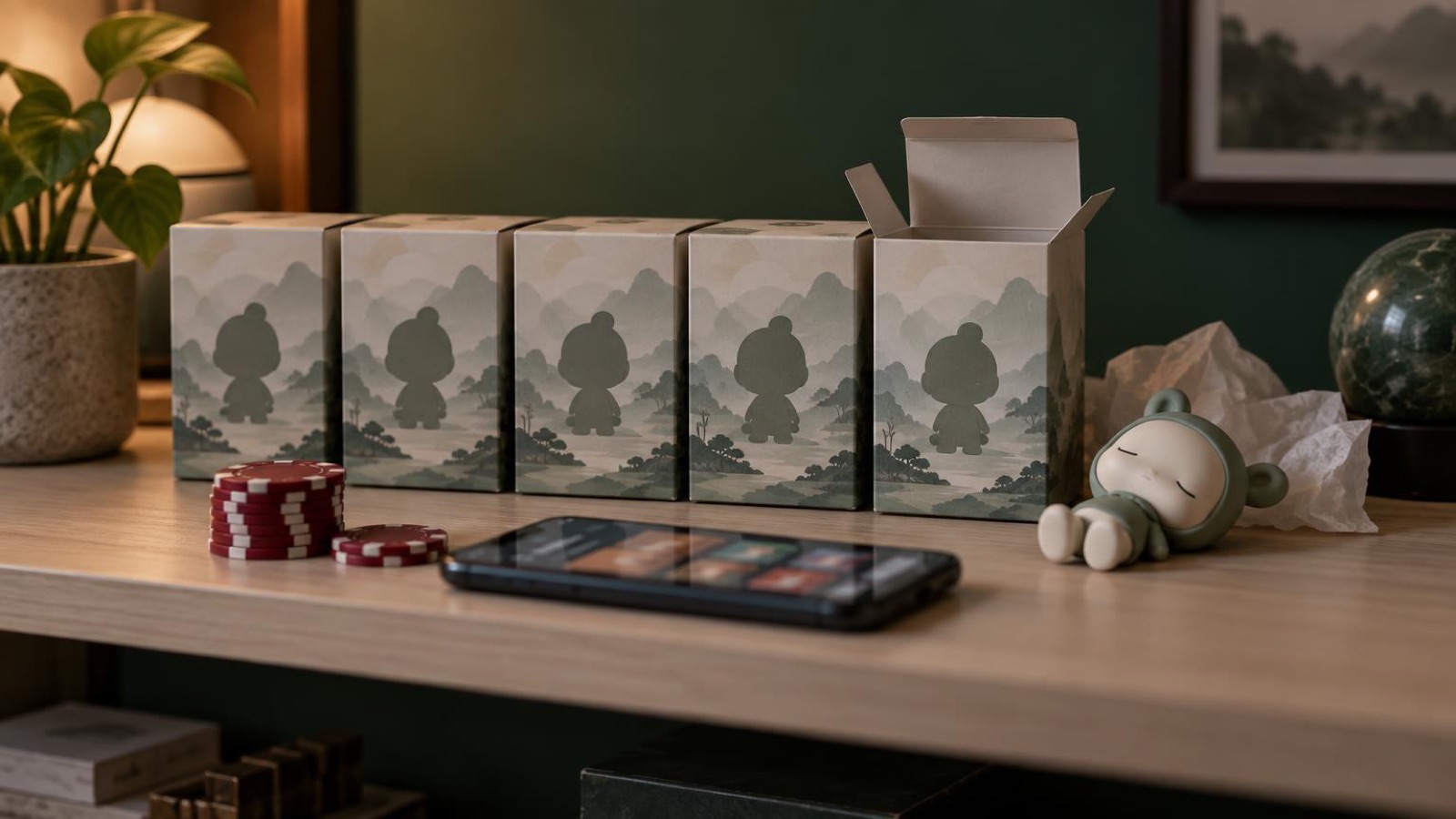
What makes a box "gambling" rather than shopping
The legal test across Asia is not really about the box. It is about three things: you pay something, the outcome is decided by chance, and you get something of value. A sealed blind box bought in a shop usually fails the third part, because what is inside is a toy with no cash market. A loot box in a game can pass it if the item inside can be sold, traded or cashed out.
That is why the same product can be legal in one country and restricted in another. Regulators look at what the player can actually do with the prize, not at how the box is marketed. If the only way to use the item is to keep playing, most authorities treat it as a purchase. If there is a real market for the item, the analysis shifts toward gambling.
China is the clearest example of a country that regulates blind boxes as a consumer product rather than a bet. The rules focus on who can buy them and how they are sold, not on whether the buyer is gambling1. Games of mahjong or cards among relatives without a profit motive are not treated as gambling there either, which shows how much weight the profit element carries1.
Singapore takes a similar structural approach. Its gambling law defines unlawful gambling as gambling that is not social gambling, and it carves out ordinary commercial activity7. A retail mystery box sold in a mall is not a gambling product unless it is run as a game of chance for money's worth.
China: blind box rules and age limits
The practical effect for a visitor or expat in China is simple. You can buy blind boxes as an adult. You cannot buy them for a young child, and a shop selling to an eight to sixteen year old needs a parent's agreement. Enforcement is aimed at sellers, not buyers.

China also draws a line between entertainment and gambling in private games. Mahjong or poker among relatives with money stakes and no profit motive is not punished, and small-stakes games among non-relatives are generally not treated as gambling1. That matters for how the authorities think about chance-based entertainment: the profit motive is what turns play into gambling.
If you are in China and wondering whether a particular app or box is legal, the question to ask is whether the operator is making money from the randomness itself, or from selling a product. The first is gambling. The second is retail.
Singapore: what the gambling law covers and what it does not
Singapore's Gambling Control Act 2022 sets out what counts as unlawful gambling and what does not7. Social gambling in a home among family or personal acquaintances is not unlawful, provided it is substantially spontaneous, not for anyone's private gain, not in the course of business, and the only profit comes from winning3. Online social gambling is not permitted, and gambling in a public place is illegal even among family and friends9.
For mystery boxes, the important point is that the Act does not reach ordinary retail sales. A blind box bought in a shop is a purchase, not a bet. The Act's minimum ages apply to gambling products: 18 for on-course and off-course betting and for place-based lottery or sports betting without a live broadcast, and 21 for place-based gambling with a live broadcast and for other gambling not covered by a class license3.
Singapore Pools is the only legal gaming operator for lottery, sports betting and horse wagering, and it does not accept bets or pay prizes to anyone underage11. At its branches, customers must be 18 to bet or claim prizes, and a betting account requires you to be at least 2112. Livewire betting centers, where live broadcasts are shown, require you to be at least 2113.
The practical takeaway for a resident or visitor: if a mystery box is sold as a normal product, Singapore's gambling ages do not apply to it. If it is run as a game of chance for money, it falls under the Act and the ages above apply.
Hong Kong and Macau: licensed betting, casino ages
Hong Kong's legal gambling age is 18, and legal gambling is limited to licensed operators4. That means the only lawful way to bet is through the licensed channels, and a paid random box sold outside those channels is not a licensed gambling product. If an operator tried to run a loot box as a betting product, it would need a license.
Macau draws a sharper line. People under 21 are prohibited from entering casinos, but the age for legal betting on horse racing, football, basketball and similar sports is 185. So a visitor to Macau can bet on sports at 18 but cannot walk into a casino until 21. A mystery box sold in a Macau shop is a retail product; a random draw run as a betting product would fall under the betting rules and the age would depend on the product.
For both places, the question for a loot box is whether the operator holds a license for that kind of betting. If not, the product is unlicensed, and the player's risk depends on the jurisdiction's enforcement posture rather than on the box itself.
Japan and the gacha question
Japan is where the gacha debate started. Gacha is legal, and random draws for in-game items are a normal part of Japanese mobile games. What was restricted was complete gacha, a format where players had to collect a full set of items to win a rare one. That format was treated as a problematic mechanic and was curtailed, but ordinary random draws remain legal and common.
The distinction matters because it shows how regulators think about loot boxes. The problem was not randomness by itself. It was a design that pushed players to keep paying to complete a set, which looks more like a betting loop than a purchase. If you are playing a Japanese game with a gacha mechanic, the mechanic itself is not illegal. If the game requires you to complete a set to get the top prize, that is the format that drew regulatory attention.
For visitors and residents in Japan, the practical position is that gacha is part of normal game design. There is no general ban on paying for a random in-game item.
Vietnam and the draft betting rules
Vietnam's draft betting rules list who may not bet, including:
- employees of the betting enterprise at their own business
- race officials, jockeys, players and referees betting on events they officiate
- people who ask to be excluded
- people under criminal prosecution or with unexpunged records14
That list is about who is barred from betting, not about mystery boxes specifically, but it shows the direction of travel: Vietnam regulates betting through operator and participant rules rather than through product categories.
For a mystery box, the question in Vietnam is the same as elsewhere. If the box is a retail product, it is not betting. If it is run as a betting product, the operator needs to be licensed and the participant rules apply.
Minimum ages at a glance
| Jurisdiction | Gambling minimum age | What it covers |
|---|---|---|
| Singapore | 18 | On-course and off-course betting, place-based lottery and sports betting without live broadcast3 |
| Singapore | 21 | Place-based gambling with live broadcast, casino entry, other gambling not under a class license3 |
| Hong Kong | 18 | Legal gambling through licensed operators4 |
| Macau | 18 | Betting on horse racing, football, basketball and similar5 |
| Macau | 21 | Casino entry5 |
| China | 8 and 16 | Blind box sales: no sales under 8, parental consent for 8 to 161 |
The table shows why a single answer to "are loot boxes gambling" does not work across Asia. The ages are set for gambling products, and a mystery box only falls under them if it is run as one.
What this means for players, parents and visitors
If you are an adult buying a blind box in a shop, you are making a purchase. The gambling rules in Singapore, Hong Kong and Macau do not apply to that transaction. In Singapore, the gambling law does not cover ordinary retail sales, and social gambling among family and friends at home, not in the course of any business, is legal1.
If you are paying for a random in-game item and the item can be sold for real money, you are closer to the gambling line. That is where regulators have focused, and it is where the legal risk sits for operators rather than for casual players.
If you are a parent, the gambling ages are what matter, and they only bite if the product is a gambling product. In Singapore, the minimum age is 18 for on-course and off-course betting and 21 for other types of gambling not covered by a class license, and an underaged individual who gambles faces a fine not exceeding $1,5001.
If you are an excluded person in Singapore, note that licensees must bar excluded persons from gambling and may refuse to pay winnings to an excluded person15. That applies to gambling products, not to retail purchases, but it is worth knowing if you have a self-exclusion or exclusion order in place16.
For the wider picture of what is legal where, see gambling laws in Asia and what counts as gambling under Asian law. If you are comparing online products, is online gambling legal in Asia covers the country by country position, and offshore gambling sites explains the risk of using unlicensed operators.
Common Questions
Are loot boxes legally gambling in Asia?
It depends on the country. Most Asian jurisdictions define gambling around chance plus a prize of value, so a paid random box can qualify. Some treat in-game items as having no cash value and leave loot boxes alone. Others, like China, require published odds and age limits.
Can children buy mystery boxes or loot boxes?
In several places, no. China bans the sale of blind boxes to children under eight and requires parental consent for ages eight to sixteen. Singapore's gambling minimum ages of 18 and 21 apply to gambling products, not ordinary retail toys.
Do I need to show ID to buy a blind box?
Usually not for a physical toy. But if the box is sold as a gambling product, or you are claiming a large prize, ID checks apply. Singapore Pools, for example, requires customers to be 18 to bet or claim prizes at a branch.
Is a free loot box still gambling?
Often not, because you did not stake anything. The legal test usually needs a payment or stake, a chance outcome, and a prize. A free daily box with no purchase sits outside most gambling definitions.
What happens if I sell a loot box item for real money?
That can change the analysis. Once an in-game item has a real-world market value, regulators are more likely to treat the box as a game of chance for money's worth. This is where enforcement has focused.
Are gacha games illegal in Japan?
No, gacha itself is legal. Japan's rules target complete gacha, where players must collect a full set to win a rare item. That format was restricted, but ordinary random draws remain common and legal.
Sources18 sources
- Notice on Applying the Law in Gambling Violation Cases, Shantou Wuchuan District Justice Bureau
- First Reading of Gambling Regulatory Authority of Singapore Bill and Gambling Control Bill, Ministry of Home Affairs Singapore
- Gambling Control Act 2022, Singapore Statutes Online
- Hong Kong Gambling Report, Home Affairs Bureau Hong Kong
- Macao Gambling Ages, Hong Kong Government Information Services
- Ministry of Public Security Notice, Anyang Municipal Government
- Gambling Control Act 2022, Singapore Statutes Online
- Gambling Control Act 2022, Historical Version, Singapore Statutes Online
- Social Gambling Rules, Ask.gov.sg
- Gambling Control Act 2022, Singapore Statutes Online
- Our Commitment to Safer Play, Singapore Pools
- Responsible Gambling Practices, Singapore Pools
- Singapore Pools House Rules, Singapore Pools
- Draft Decree on Betting, Vietnam Legal Library
- Gambling Control Bill 6/2022, Singapore Statutes Online
- Apply for Self-Exclusion, Ministry of Social and Family Development
- Overview of Exclusions and Visit Limits, Ministry of Social and Family Development
- Step-by-Step Guide to Self-Exclusion, Ministry of Social and Family Development















