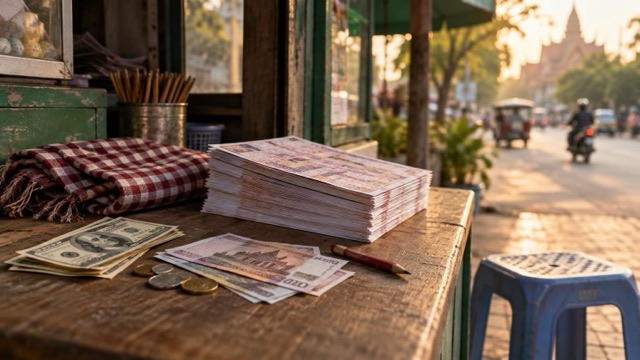
Tax on gambling winnings in Cambodia
If you win at a casino in Cambodia, the short answer on tax is simple: Cambodia does not tax individual players on their winnings. There is no personal income tax applied to what you take off the table, and no withholding tax deducted when the casino pays you out. The number you see on the chip rack or the tournament payout slip is the number you walk away with, as far as Cambodian tax is concerned.
That said, "no tax in Cambodia" is not the same as "no tax anywhere." Most people who gamble in Cambodia are foreigners, since Cambodian citizens are not allowed into the casinos, and many of those visitors come from countries that do tax gambling winnings or worldwide income. This page explains what Cambodia does and does not take, what "not taxed at the source" actually means in practice, and where the real tax question usually sits: with your home country.
What the current rules say
Cambodia's gambling industry is built around foreign players. Casinos are legal, but only foreigners may gamble in them; Cambodians themselves are barred3. The industry has grown around border towns like Poipet and Bavet and around the big Phnom Penh properties, serving Chinese, Vietnamese, Thai and other regional visitors2.

On the tax side, the current position for players is straightforward. Cambodia does not currently impose taxation on individual player winnings1. The taxes that exist in the gambling sector fall on the operators, not the players. The clearest illustration is NagaCorp, the company behind NagaWorld in Phnom Penh: it operates under an agreement with no gaming tax, and the company itself is exempt from Cambodia's 20 percent corporate-profits tax5. Whatever arrangements exist elsewhere in the sector, they are business-side matters. Nothing in the current framework takes a cut of an individual's win.
So if you hit a nice score at baccarat or walk out of a poker tournament with a prize, no Cambodian authority deducts anything from your payout. The practical tax question is not Cambodia's at all.
No personal income tax on individual player winnings
The core fact bears repeating plainly, because it is the one most visitors ask about: Cambodia does not currently impose taxation on individual player winnings1. This covers casino table games, slots and similar play at licensed venues.
It helps to see how other places treat the same money, because the contrast shows how unusual the player-friendly position is. In Singapore, casual gambling winnings are treated as windfall gains: not taxable, and losses not deductible, with no requirement to keep records of casual winnings6. In Canada, there is no tax on lottery winners, though there have been proposals to change that7. Cambodia sits in the same broad camp: the win is yours, untaxed by the country where you won it.
Licensed tournaments: winnings not taxed at the source
Poker is where the question comes up most often, because tournament prizes are large, public and paid in a lump. The position for Cambodia is that individual player winnings from licensed tournaments are generally not subject to personal income tax at the source2.
The key word is "licensed." Poker in Cambodia is only legal inside licensed commercial casinos; any poker game held outside a licensed commercial casino is considered illegal under the Gambling Suppression Law, and participants can face fines or imprisonment2. So the no-tax-at-the-source position applies to tournaments run inside the country's licensed casino properties, which is where the live poker scene is concentrated. Foreign visitors are permitted to participate in the country's live poker games at any of its casinos2.
If you are planning around a specific event, our pages on poker in Cambodia and poker tournaments in Cambodia cover where the games actually run.
What "not taxed at the source" means for you
"Not taxed at the source" is a phrase worth unpacking, because it describes a mechanism, not a promise that the money is tax-free everywhere.
Tax at the source means the operator deducts tax before paying you. Some countries require casinos to withhold a percentage from large payouts on the spot, so the winner never sees the full amount. Cambodia does not do this. When you cash out, the casino pays the full sum and withholds nothing for the Cambodian tax authorities1.
What Cambodia does not do is guarantee anything about your obligations elsewhere. Operators themselves say this plainly. Natural8, which runs online poker and casino products, tells players that whether poker winnings are taxable depends on your country of residence8, and the same point appears in its casino guidance: whether casino winnings are taxable depends on where you reside9. Offshore operators put it more bluntly: you will have to report your winnings and pay taxes where you live, as you would with any other gambling winnings4.
So the honest summary is: Cambodia takes nothing at the payout, and the reporting burden, if any, falls on you and your home country's rules.
Who this applies to: individual players
The no-tax position applies to individual players. It is not a general exemption covering everyone connected to gambling, and it is worth being clear about the boundaries.

First, who can actually gamble in Cambodia. Gambling is strictly illegal for Cambodian citizens2, and the law prohibits Cambodians, including public officials, from gambling in casinos10. Foreigners are the ones allowed to lay bets11, and a foreigner can walk into a casino and gamble simply by showing a passport to casino staff12. In practice, then, the "no tax on winnings" rule is a rule for visitors and foreign residents, because they are the only players in the licensed venues.
Second, the stakes for playing outside the licensed system. Punters caught at illegal gambling houses face a fine and up to a year in prison under Cambodia's anti-gambling law13. Games outside licensed commercial casinos are illegal territory, and the no-tax-at-the-source position does not extend to them.
Third, the operator side is a different world. The taxes and exemptions that exist in Cambodian gambling, such as NagaCorp's no-gaming-tax arrangement5, are matters between the government and the businesses. Individual players are not part of that conversation.
Your home country may still tax you
This is the section that matters most for most readers, and it deserves plain speaking.
Cambodia's silence on player winnings does not silence your own tax authority. As covered above, the answer sits with your home country, not with Cambodia8. Some countries treat casual gambling wins as windfalls and leave them alone. Others tax gambling income, tax worldwide income of residents, or require declaration above certain thresholds. The rules genuinely change country by country; it is an arguable point in many places whether gambling winnings are taxable, and where they are, losers will want to know whether losses can be deducted14.
Operators state this in their terms rather than leave it implied. Bovada's terms of service say the player is solely responsible for any and all local taxes or other amounts payable in their resident country relating to winnings or withdrawals15. Casino Khajana's terms say it is the player's sole responsibility to declare any funds withdrawn, including winnings, to the relevant tax authorities16. These are offshore operators writing for an international audience, but the principle is the same for a win at a Phnom Penh casino cage: the obligation to report, if one exists, is yours, in your country.
The practical advice is unglamorous. If you win an amount that would matter to you if it were taxed, find out your home country's rule before you assume the money is clean. A tax adviser in your country of residence can answer in one conversation what no Cambodian casino employee can.
How Cambodia compares with other Asian jurisdictions
Cambodia is not alone in leaving player winnings alone, and the regional picture is useful context.
In Singapore, casual gambling winnings are windfall gains: not taxable, and losses not deductible, with no record-keeping requirement for casual gamblers6. That is close to Cambodia's position, though Singapore's framework is far more codified.
Elsewhere the picture varies across several jurisdictions.
| Jurisdiction | Treatment of player winnings |
|---|---|
| Sweden | Gamblers do not pay tax on winnings from licensed sites, with tax applying only to play on unlicensed sites17 |
| Canada | Lottery winners are not taxed, though proposals to tax winners have been floated7 |
| Hong Kong | Gambling winnings have historically been exempt from taxation, though company profits from gambling operations were not14 |
The general pattern across many jurisdictions is that the casual winner is left alone, while the professional or the operator is taxed.
Cambodia fits that pattern, with a twist: because only foreigners can play, the player population is almost entirely visitors, and the state's revenue comes from the operator side of the business rather than from winners3.
What this page does not cover
A few things sit outside this page's scope, and it is better to say so than to blur them.

This page does not cover operator taxation: the corporate taxes, gaming taxes and special arrangements between the Cambodian government and casino companies are business matters, not player matters. It does not cover the legality of gambling in Cambodia in depth; that is covered on our gambling laws in Cambodia page. It does not cover online gambling in any detail, because Cambodia's licensed online sector does not exist: the government ordered all forms of online gambling stopped by the end of 201918, and the ending of online gambling is not a temporary measure13. The 2026 suspension applies to online gambling activities operated or broadcast from casino premises, while ordinary casinos stay open19. Winnings from offshore online sites are a home-country tax question, not a Cambodian one.
It also does not cover tax on lottery prizes in your home country, or the taxation of professional gamblers, which is a different and more complicated topic in most jurisdictions.
Practical points for visitors who win
A few down-to-earth points for the day you actually walk away with money.
- You receive the full amount. No Cambodian tax is withheld from casino payouts or licensed tournament prizes1. Nobody at the cage will ask you to fill in a Cambodian tax form.
- Keep your paperwork anyway. Even though Cambodia requires nothing, your home country might. A payout slip, a tournament result record or even a dated photo of a big win costs nothing to keep and can settle a question later.
- Know your own rule before you travel. The home-country question described earlier is the one that matters here8. If you are from a country that taxes gambling income, a large win in Phnom Penh is a taxable event at home, not in Cambodia.
- Cash out sensibly. Large sums of cash crossing borders can raise questions with customs or banks in any country, entirely apart from tax. Standard travel and banking rules apply to gambling winnings like any other money.
- Play only inside licensed venues. Poker and casino games are legal for foreigners only within licensed commercial casinos; games outside that system are illegal, and participants face fines or imprisonment2. The no-tax position applies to the licensed world.
- If the amount is large, get advice at home. One session with a tax adviser in your country of residence answers the only question Cambodia leaves open15.
For everything else about playing in the country, see our guides to gambling in Cambodia, casinos in Phnom Penh, and gambling in Cambodia as a visitor.
Common Questions
Do I have to declare Cambodian casino winnings in my home country?
That depends entirely on where you are a tax resident. Cambodia takes nothing at the payout, but many countries tax gambling winnings or worldwide income. Check the rules at home, and talk to a tax adviser there if the amount is large.
Are winnings from licensed poker tournaments taxed in Cambodia?
No. Winnings from tournaments held inside licensed commercial casinos are generally not subject to personal income tax at the source in Cambodia. The casino pays you the full amount and does not withhold tax for the Cambodian authorities.
Is there a withholding tax on casino payouts in Cambodia?
No. There is no gaming tax or personal income tax taken from individual player payouts. What you win at the table or cage is what you receive, with no Cambodian tax deducted on the spot.
Do tourists pay tax on gambling winnings in Cambodia?
No. Tourists and other foreigners are the only people allowed to gamble in Cambodia's licensed casinos, and their winnings are not taxed at the source. Any tax obligation would come from their home country, not Cambodia.
Does the rule cover online gambling winnings?
Online gambling operated or broadcast from Cambodia has been banned since the end of 2019, so there is no licensed Cambodian online sector to tax. Winnings from offshore sites are a home-country tax question.
Could the tax treatment of winnings change?
Possibly. Cambodia's gambling framework has been rewritten before and proposals surface from time to time. Nothing in the current rules taxes player winnings, but check before a big trip if the stakes matter to you.
What is the difference between taxed at the source and self-declared tax?
Taxed at the source means the operator deducts tax before paying you, as happens in some countries. Self-declared means you receive the full amount and report it yourself to your own tax authority, if your home country requires that.
Sources19 sources
- Poker in Cambodia, SoMuchPoker, 2026-03-01
- G3 September 2023: Cambodia, G3 Newswire, 2023-09
- Chinese punters flock to Poipet, Bangkok Post, 2019-04-27
- Offshore crypto casino, CoinPoker, 2026-07-06
- Malaysia's Richest 2018: How Accidental Casino Billionaire Chen Lip Keong's Cambodia Bet Paid Off, Forbes, 2018-03-07
- Singapore betting tax, Maxim88, 2026-09-25
- Đề xuất tăng thuế với người trúng thưởng, VnExpress, 2026-09-25
- Natural8 poker, Natural8, 2026-09-26
- Natural8 casino, Natural8, 2026-09-26
- Playing to win: challenges as online gambling increases in popularity, Phnom Penh Post, 2024-07-04
- Will gambling ban hit Cambodia real estate?, Khmer Times, 2019-09-11
- Gambling: a losing game, Phnom Penh Post, 2012-08-17
- Cambodia đã trục xuất hơn 72.000 người nước ngoài, cấm vĩnh viễn cá bạc trực tuyến, Vietnam.vn, 2026-09-17
- Mr Huge: Alan Woods and his amazing computer nags-riches story, The Monthly, 2005-12
- Bovada terms of service, Bovada, 2024-01-03
- Casino Khajana terms and conditions, Casino Khajana, 2024-07-15
- International gambling licenses: current scope and future outlook, ENV Media, 2021-10-24
- Cambodia orders end to online gambling, Fresh News Asia, 2019-08-30
- Cambodia online gambling suspension, Cambodia With Me, 2026-09-09