What a scam compound is and how people end up trapped
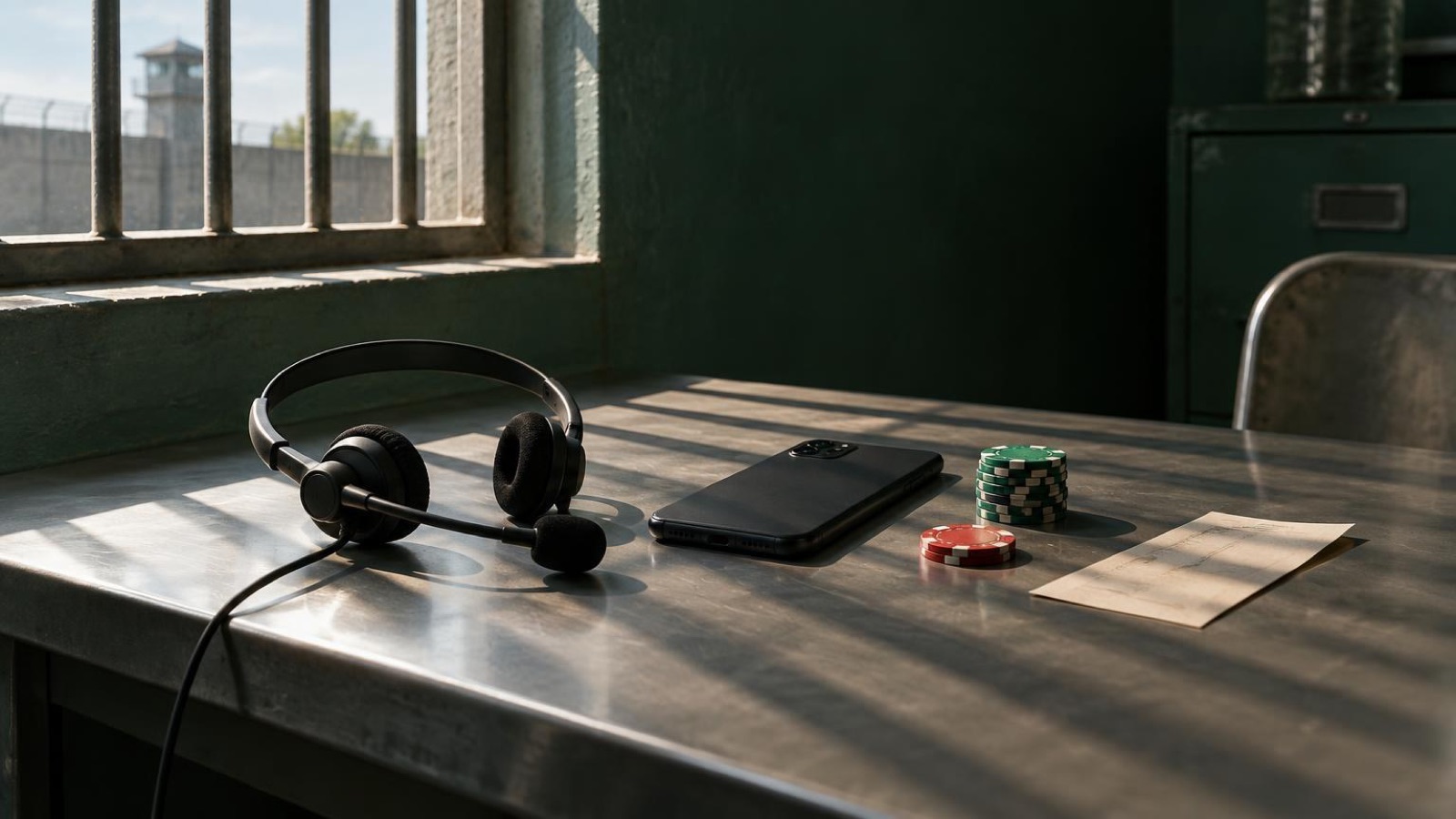
A scam compound is a guarded site, often a block of buildings, where people are made to run online fraud: fake investment chats, fake betting sites and romance scams. Many workers arrive after answering a job advert for customer service, translation or casino work, then have their passport taken and are told they owe a debt before they can leave.
You can read how recruitment works in fake casino and online gambling job offers, what daily life looks like in what happens to workers inside a scam compound, and where these sites tend to be in where scam compounds are.
The scale
A UNODC report released in late July 2026 estimated scam losses across East Asia, Southeast Asia, Australia and New Zealand at up to US$114 billion in 2025. At the Phnom Penh conference in September, UNODC said those losses are growing quickly.
The size of a single site can be large. Ahead of that conference, Cambodian authorities showed a shuttered 120ha compound near the Vietnamese border that employed about 20,000 people in 2025.
Hotlines and who to contact first
If the person is in immediate danger, contact the police in the country where they are held, and the embassy or consulate of their own country. Give as much as you can: the town, the name of the compound or company, photos, phone numbers and the names of anyone who recruited them.
Philippines. Suspected illegal offshore gaming operations and websites can be reported to the POGO Hotline on 092780986101.
Singapore. ScamShield on 1799 is the number to call when you are unsure whether a call or message is a scam2. It is a scam-checking line, not a rescue service.
Other countries. Report through your own police and foreign ministry. The page on where to report a gambling scam in Asia lists reporting routes by country.
| Who you are | First contact | What to have ready |
|---|---|---|
| The person held | Your embassy or consulate; local police if safe | Location, company name, your passport details |
| Family at home | Your own foreign ministry and police | Photos, chat screenshots, recruiter details |
| Someone in the Philippines | POGO Hotline 09278098610 | Address or website of the operation |
Embassies and consulates: what they can and cannot do
An embassy usually cannot send its own staff into a compound or order a release. What it can do:
- pass your location and details to local police
- issue emergency travel documents if your passport was taken
- stay in touch with your family
- help arrange your journey home once you are out
If you are a family member, contact your foreign ministry at home as well as the embassy abroad, so both hold the same information.
Victim status: trafficked worker or suspect?
People found in scam compounds are sometimes treated as trafficking victims and sometimes as suspects, depending on the country and the evidence. Anyone who was deceived, held or forced should say so plainly to officials, give a statement, and ask for their embassy to be informed.
In the Philippines, the anti-organized crime agency PAOCC signed new procedures in Manila on April 22, 2026, with UNODC support. They are described as a rights-based, victim-centered approach and cover victim repatriation, witness statements, evidence, custody of perpetrators and asset recovery.
Rescue operations in practice
Rescues are usually carried out by police working with social welfare staff. On August 11, 2026, Philippine NBI human trafficking agents, working with the Pasay social welfare department, intercepted two Vietnamese women at a hotel in Pasay City.
Regional cooperation
Cambodia hosted a global anti-scam conference in Phnom Penh on September 23 and 24, 2026, with around 20 countries represented. Prime Minister Hun Manet said Cambodia would never be a safe haven for online scams, and UNODC praised Cambodia's increased enforcement and its new anti-scam center.
Earlier, on May 5 and 6, 2026, Vietnam hosted an ASEAN-China workshop in Ho Chi Minh City on crypto crime in online gambling, with INTERPOL and UNODC taking part.
After rescue: charges and going home
What happens next depends on your role and the country. Those treated as victims give statements and are helped home. Those treated as offenders can face charges: in the Philippines, 13 people accused in a crypto scam case pleaded guilty to a lesser offense on May 26, 2026, and each was sentenced to three years in prison.
If money was lost to a scam run from a compound, see what to do after a gambling scam, and be wary of fund recovery scams that target families with promises of release or refunds for a fee.
Common Questions
Which hotline should I call if someone I know is trapped in a scam compound?
Start with your country's embassy or consulate in the country where the compound is, and the local police. In the Philippines, suspected illegal offshore gaming operations can be reported to the POGO Hotline. In Singapore, ScamShield handles scam calls and messages, not rescues.
Can my embassy get me out of a scam compound?
An embassy cannot usually enter a compound itself, but it can pass your location to local police, help replace a lost or confiscated passport, and help arrange your journey home once you are released.
Will I be prosecuted if I was forced to work in a scam center?
It depends on the country and on how authorities assess your case. Newer procedures in the Philippines are described as victim-centered. Tell officials clearly that you were deceived, held or forced, and ask for your embassy to be informed.
What is the PAOCC and what does it do?
PAOCC is the Philippine agency leading action against illegal offshore gaming and scam centers. On April 22, 2026 it signed procedures, with UNODC support, covering victim repatriation, witness statements, evidence and asset recovery.
What happened at the global anti-scam summit in Phnom Penh?
Cambodia hosted talks on September 23 and 24, 2026, with around 20 countries represented. Prime Minister Hun Manet said Cambodia would never be a safe haven for online scams, and UNODC praised Cambodia's increased enforcement.
Sources2 sources
- PAGCOR warns vs fake online gaming sites, PAGCOR, September 12, 2023
- Check exclusion and visit limit status, National Council on Problem Gambling, September 25, 2026