Thailand's Council of State, the government's legal agency, has published draft rules that would allow casinos in the country, opening them for public feedback until Aug 181. The draft sets an initial license term of 30 years, with an option to renew for another 10 years1.
Under the draft bill, the casinos would sit inside large entertainment complexes alongside hotels, convention centers and amusement parks, among other facilities1. The complexes would have to be in locations designated by the government and run by companies registered in Thailand with paid-up capital of not less than 10 billion baht1. The draft also proposes a comprehensive entertainment venue policy panel led by the prime minister, plus an agency to regulate the new industry1.
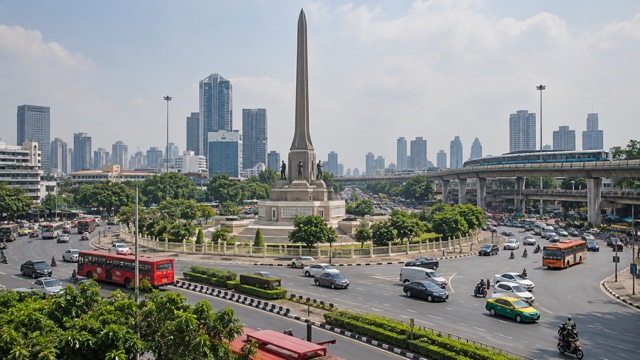
Thai officials have previously named Greater Bangkok, Phuket, Chiang Mai and Chonburi, home to the beach resort Pattaya, as possible locations for the complexes1. The country's 500-member House of Representatives has already backed a study by a panel of lawmakers that favored legalized casinos inside large entertainment venues to attract high-spending tourists1. That study found Thailand can lift tourism revenue by about 12 billion baht by legalizing casinos and housing them within large entertainment complexes1.
"Draft rules to allow casinos with an initial license for 30 years were published for public feedback until Aug 18 by the Council of State, the government's legal agency."
Prime Minister Srettha Thavisin, who took power less than a year ago, has backed the plan to legalize casinos for better oversight and proper tax collection1. Most types of betting are illegal in Thailand, which the report describes as a majority Buddhist and conservative society1. Tourism accounts for about 20% of total jobs and roughly 12% of the nation's $500 billion economy, and foreign arrivals through July jumped about 34% to more than 20 million from the same period in 20231. The global casino industry generated $263 billion in revenue last year, according to an IBIS World estimate cited in the report1. Galaxy Entertainment Group Ltd and MGM Resorts International have been studying potential casino resorts in Thailand as a hedge against uncertain prospects in Macau, and Las Vegas Sands Corp said last month it would be interested in expanding to Thailand if it "becomes available"1.
| Draft rule | Detail |
|---|---|
| Initial license term | 30 years1 |
| Renewal option | Another 10 years1 |
| Location | Large entertainment complexes, in government-designated sites1 |
| Operator requirement | Company registered in Thailand, paid-up capital of at least 10 billion baht1 |
| Oversight | Policy panel led by the prime minister, plus a regulator1 |
| Feedback window | Until Aug 181 |
What it means for players
Casinos are not legal in Thailand yet. The draft rules are a proposal out for comment, not a law in force, so nothing changes for players while the feedback period runs1. Most types of betting remain illegal in the country1. The draft does not set out who would be allowed inside the complexes, what games would be offered, or how locals and foreigners would be treated differently; those points have not been reported1. The proposed locations are also not final, with Greater Bangkok, Phuket, Chiang Mai and Chonburi only mentioned previously by officials as possibilities1. For now, the practical position for anyone gambling in Thailand is unchanged. See Can I Gamble in Thailand? and Gambling Laws in Asia: What Is Legal in 12 Jurisdictions for the current rules, and Can I Play at Online Casinos in Thailand? for the online side.
What happens next
Public feedback on the draft runs until Aug 181. After that, the draft's path through the legislative process, and any vote or effective date, has not been reported1.