What fantasy sports is, and what changed
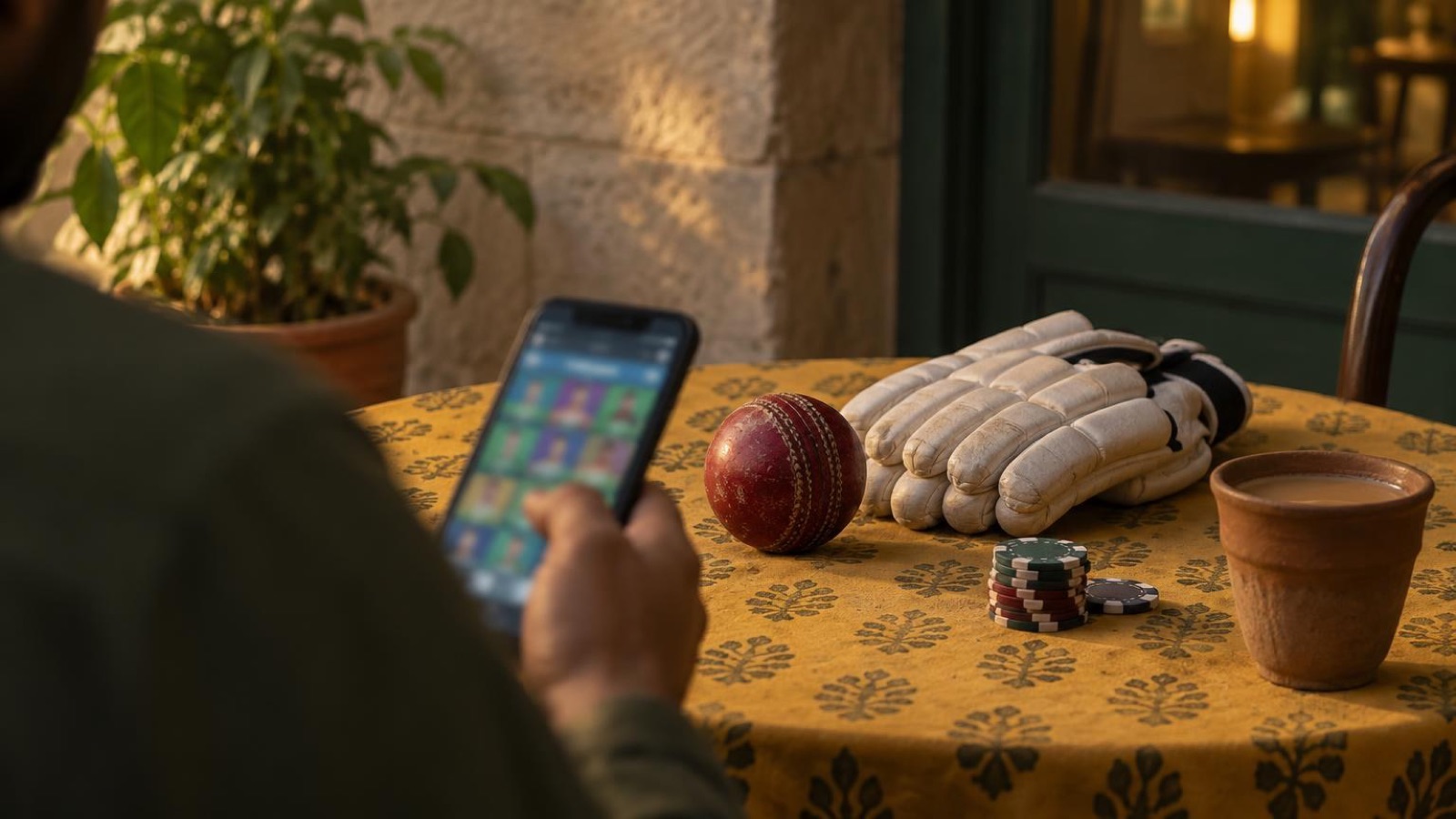
Fantasy sports is a game where you build a virtual team of real athletes and score points based on how those athletes perform in real matches. Pick a cricket XI before an IPL game, and every run, wicket and catch your chosen players produce adds to your total. In cricket you have to choose at least 11 players, in kabaddi 7, and in basketball 5, matching the size of a real-life side8.
| Sport | Players per fantasy team |
|---|---|
| Cricket | at least 11 |
| Kabaddi | 7 |
| Basketball | 5 |
Teams allowed per game: up to 5
India became the world's biggest fantasy sports market almost entirely on the back of cricket. Dream11, the category leader, started as a freemium cricket game in 2012: you could play for free, or put money on your team and compete in paid contests against other users8. At its peak, only around 15% of Dream11's users actually paid to enter contests, but that paying minority was the company's only revenue source after it stopped running advertisements on its platform9.
What changed is the Promotion and Regulation of Online Gaming Act, 2025. This national law imposes a complete ban on all forms of online money games, and it applies to games of chance, games of skill, and any mix of the two, along with their advertising, promotion and facilitation4. Fantasy sports, which had been permitted in certain states on the basis that they were games of skill, are now prohibited to the extent they involve monetary stakes10. Within days of the bill passing, Dream11 paused its paid contests.
Who this applies to
The ban applies to everyone in India, whether citizen, foreign resident or visitor. The Act's operative provision states that no person shall offer, aid, abet, induce or otherwise engage in the offering of an online money game or online money gaming service4. In plain terms, the law is aimed at the companies and people running and promoting paid games, not at the person joining a contest.
For players, the practical effect is simple: the paid contests that defined Indian fantasy sports are gone from the major platforms, so there is nothing to join even if you wanted to. The practical risk to an individual player is therefore low; the risk sits with operators, who face the ban and the loss of payment processing.
One group is explicitly outside the definition: e-sports. The Act excludes e-sports from its definition of an online money game, so competitive video gaming with monetary stakes is treated differently from fantasy contests10.
How the ban works in practice: Dream11 and MPL
The clearest sign of how the ban works is what Dream11 did next. On August 25, 2025, citing the newly passed Promotion and Regulation of Online Gaming Bill, 2025, the company announced it was pausing all pay-to-play fantasy sports contests, and told users their account balances were safe and available for withdrawal5. Its parent company, Dream Sports, shifted focus to its other businesses, FanCode and DreamSetGo5.
The law also cuts off the money pipeline. Section 5 of the Act prohibits every online money game, whether based on skill, chance or both, and banks and payment systems are barred from processing transactions for such games10. Even if a platform wanted to keep running paid contests, Indian users would struggle to deposit or withdraw through normal banking channels.
Mobile Premier League (MPL), the other big name in Indian real-money gaming, had already been diversifying before the ban. MPL offered more than 60 games in India, and in 2021 it launched operations in the United States with a first slate of casual titles including Baseball Star, Block Puzzle, Bowling and 21 Puzzle, where players could compete head-to-head or in tournaments with entry charges ranging from 60 cents to $612. That international footprint gave MPL options outside India when the domestic market closed.
State rules before the ban
Before the national ban, fantasy sports lived in a patchwork of state rules. The industry's legal footing rested on the argument that fantasy sports is a game of skill rather than gambling. Courts agreed: in 2017, when a user who lost money on Dream11 filed a case against it, the Punjab and Haryana High Court sided with the company's stance that success on the platform depends predominantly on skill9. The Supreme Court upheld Dream11's fantasy sports format as a "game of skill" by its order dated July 30, 202113.
But several states refused to allow paid fantasy even as a game of skill. Dream11 did not allow users from Telangana, Assam, Odisha, Nagaland and Sikkim to play for money9, and states including Assam, Sikkim, Odisha and Andhra Pradesh had banned fantasy sports outright13. In Assam, Odisha and Telangana, the underlying issue was that a game of skill could not legally be played for money there at all, which made premium fantasy sports illegal in those states8.
So if you were excluded from Dream11's paid contests before 2025, the reason was your state's law, not the platform's choice. The 2025 Act made the question moot by banning paid contests everywhere, replacing the old patchwork with one national rule. For the wider picture of how Indian gambling law treats games of chance, see gambling in India and gambling laws by state.
Dream11: India's largest fantasy platform
Dream11 was the face of Indian fantasy sports. Developed by a Mumbai-based company called Dream11 Inc., it launched as a freemium fantasy game for cricket fans in 2012 and grew into the industry's flagship2. Its app covers fantasy cricket, football and kabaddi, and the wider platform also offers fantasy hockey and basketball14.
The game itself works like this:
- You register on dream11.com or through the Android or iOS app, with an email address and password7.
- For each upcoming match, you pick a squad of real players within a budget, and you can create up to 5 teams per game7.
- You join a league by paying an entry fee, or play for free in the freemium model7.
- When the real match is played, your players accumulate points from their real statistics, and the top virtual teams in the contest take the prizes.
Cricket was always the engine. Dream11 clinched a 4-year deal to be the official fantasy gaming platform for the IPL, the summer tournament that dominates Indian sporting attention13. It also became the official fantasy partner of the NBA in India6. The app is listed on Google Play and the Apple App Store in India14, a change from earlier years when users had to download it from the website9.
Costs, payouts and the 15% service fee
Paid contests on Dream11 worked on a pool model. Everyone joining a league paid the same entry fee, the pool was totaled, and the platform took a cut before the remainder was distributed as prize money. Dream11 charged a 15% service fee on the amounts wagered in its pools8, also described as a 15% commission on the amount wagered9.
The stakes were mostly small. The average transaction on Dream11 was ₹371, which tells you that the typical contest entry was a casual, low-cost purchase rather than a serious wager. Only around 15% of users paid to enter contests at all9.
Winnings went into your Dream11 wallet, and from there you could withdraw to a bank account once your account was verified. The platform required users to self-certify they were above 18 every time they joined a contest, and players who took home prizes had to complete a KYC with government-issued IDs before money could be paid out1.
All of this describes how the paid product worked before August 2025. With paid contests paused, the entry fees and prize pools are on hold, and your wallet balance is limited to what you can withdraw.
Free-to-play options
Free fantasy play survives the ban, because the law targets money games, not the games themselves. Dream11's own roots are freemium: from 2012, users could play for free with the option to add money if they chose8. The free side of the platform is the part that can continue.
The clearest documented example of free fantasy in India is the official NBA daily fantasy game. Beginning with the 2017 season, the NBA and Dream11 introduced an official NBA daily fantasy game in which fans create virtual teams of NBA players and accumulate points based on their selected players' real-life statistics6. The game was free-to-play and lived on NBA.com, the NBA's official digital destination in India6.
Instead of cash, its prizes were NBAStore.in gift cards, NBA merchandise, Dream11 game bonuses, and the opportunity to win a trip to the U.S. to attend the 2018 NBA Finals6. That prize structure, merchandise and experiences rather than money, is the model free-to-play fantasy in India can still follow under the new law.
Signing up and the age rule
Setting up a Dream11 account was straightforward. You registered on dream11.com or in the Android or iOS app by entering your email address and selecting a password7. Notably, Dream11 did not send a confirmation email after registration, so you could start playing immediately15.
The age rule was 18 and up. Dream11 stated clearly on its website that users had to be at least 18 to participate in cash contests7, and every time someone joined a contest, they had to self-certify they were above 181. This self-certification, rather than upfront document checks, was how the age rule worked in practice; the document checks came later, at the withdrawal stage.
Verification and withdrawals: PAN, KYC and OTP
Dream11's withdrawal process had three layers of verification, and the order mattered.
| Step | What you provide | Why it matters |
|---|---|---|
| Mobile verification | Your mobile number, confirmed by an OTP | Required before any withdrawal to a bank account7 |
| PAN verification | A PAN card image, plus name, 10-digit PAN number, date of birth and state | Takes at least 7 days; needed to get money out7 |
| KYC for prize money | Government-issued IDs | Required for players who took home prizes1 |
You could play and start earning before your PAN was verified; the verification was required only to get the money out of your account7.
KYC is standard across Indian real-money platforms: verification is mandatory before withdrawal on all legitimate Indian gaming platforms16. Tamil Nadu's online gaming regulations, for example, made KYC mandatory at account creation itself, with initial login through Aadhaar authenticated by a second-layer OTP sent to the phone number linked with the Aadhaar number17.
After the pause in paid contests, the withdrawal path is the part of this system that still matters. Dream11 has said balances are safe and available for withdrawal5, so if you have money in your wallet, the OTP and PAN verification steps are what stand between you and your cash.
Staying in control
Dream11 built some responsible-play tools into its platform. It offered responsible play limits: every time you lost a set amount, the app would send notifications asking you to stop1. Self-exclusion, the option to block yourself from a platform entirely, is a recognized tool across Indian online gaming18.
The 2025 Act itself puts a stronger emphasis on consumer protection, responsible gaming and harm prevention alongside its ban16, which suggests that whatever legal gaming emerges in India in the coming years will come with more built-in player safeguards, not fewer.
If you are looking for what gambling remains available in India today, the legal options are narrower but real: see casinos in Goa, Sikkim casinos, horse racing and the India lottery.
Common Questions
Is fantasy sports legal in India?
Playing fantasy sports for money is no longer offered in India. The Promotion and Regulation of Online Gaming Act, 2025 bans all online money games, whether of skill or chance, and Dream11 paused its paid contests in August 2025. Free-to-play fantasy games remain available.
Can I still withdraw my Dream11 balance?
Yes. When Dream11 paused its paid contests in August 2025, it told users their account balances were safe and available for withdrawal. You need a verified account, with your mobile number confirmed by OTP and your PAN card verified, before money reaches your bank account.
How much did it cost to enter a Dream11 contest?
Contests were joined by paying an entry fee, and the average transaction on the platform was around ₹37, so most entries were casual, low-cost purchases. Dream11 also took a 15% service fee from prize pools. Paid contests are now paused under the 2025 law.
How long does PAN verification take on Dream11?
At least 7 days, according to Dream11's own guidance. You upload a PAN card image plus your name, 10-digit PAN number, date of birth and state. You can play and earn before verification, but you need it completed to withdraw money.
Which states were excluded from Dream11 paid contests?
Even before the national ban, Dream11 did not let users from Telangana, Assam, Odisha, Nagaland and Sikkim play for money. Andhra Pradesh had also banned fantasy sports. Since August 2025, paid contests are paused everywhere in India.
How many teams can I create per game on Dream11?
Up to 5 teams per game. In cricket you pick at least 11 players, in kabaddi 7, and in basketball 5, matching the number of players in a real-life match.
Sources18 sources
- Dream11 (Hindi Wikipedia), Wikipedia, 2026
- Dream11, Dream11, September 26, 2026
- Promotion and Regulation of Online Gaming Act guidance, Press Information Bureau, April 30, 2026
- Promotion and Regulation of Online Gaming Act, 2025 (text), A2Z Taxcorp, April 2026
- Dream11 pauses paid contests; Dream Sports shifts focus to FanCode, DreamSetGo, Storyboard18, August 25, 2025
- NBA and Dream11 to bring fantasy basketball to India, indiantelevision.com, November 2, 2017
- How to set up your Dream11 app and earn money during this IPL 2018, Indian Express, April 13, 2018
- Game of skill in a regulatory grey area: how Dream11 and premium fantasy sport is booming in India, Scroll.in, January 14, 2019
- IPL betting startup Dream11: cricket-crazy India's latest unicorn, Quartz India, April 10, 2019
- India Gambling PDF, Khaitan & Co., July 2026
- The Gazette of India: Promotion and Regulation of Online Gaming Act, 2025, eGazette, August 22, 2025
- Esports firm Mobile Premier League launches operations in US market, Livemint, July 1, 2021
- Dream11 turned fantasy (gaming) into reality-into-reality-now-its-eyeing-a-diversified-sports-tech-future/77065/1), Forbes India, June 8, 2022
- Dream11 terms, Dream11, September 26, 2026
- How to set up your Dream11 app and earn money during this IPL 2018 (archived), Indian Express, April 13, 2018
- Self-exclusion options in India, EN365 India, May 20, 2026
- Tamil Nadu Online Gaming Authority (Real Money Games) Regulations, 2025, Tamil Nadu Online Gaming Authority, February 12, 2025
- Self-exclusion glossary, Rupa Casino, March 18, 2026