Three Group 1 races on one afternoon
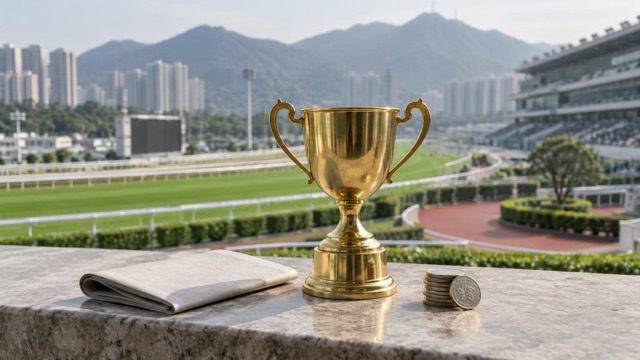
Champions Day is the Hong Kong Jockey Club's spring championship meeting, staged each April at Sha Tin Racecourse. Where December's Hong Kong International Races bring the world's horses to Hong Kong at the end of the calendar year, Champions Day is the local season's own summit: three Group 1 races on one card, each worth HK$24 million or more, contested by the best horses trained in Hong Kong along with invited overseas raiders.
The three races cover the three distances that define a champion in Hong Kong. The FWD QEII Cup tests stamina over 2000 meters on the turf, the FWD Champions Mile is a pure mile contest at 1600 meters, and the Chairman's Sprint Prize closes the card with a dash over 1200 meters. The QEII Cup alone is worth HK$30 million, with the other two races at HK$24 million each, which puts the afternoon among the richest race meetings anywhere in the world2.
The meeting sits late in the Hong Kong season, which runs from September to the following summer. By April the leading horses have established their form through the winter features, so Champions Day often settles the season's championships and produces the horses that will carry Hong Kong's hopes at the international meeting in December. If you want the full picture of racing in the city, see our guide to horse racing in Hong Kong.
Where it happens and when the day starts
All three Group 1 races are run at Sha Tin Racecourse in the New Territories, the club's main venue, on its turf track3. The racecourse is easy to reach on the MTR East Rail line, with a station right at the gates, and a Champions Day crowd fills the grandstands and the public enclosures through the afternoon.
The day's feature races are spread across the afternoon card: the Chairman's Sprint Prize runs as Race 5 at 2:35 pm, the FWD Champions Mile as Race 7 at 3:45 pm, and the FWD QEII Cup as Race 8 at 4:40 pm1. Arriving early gives you time to find a spot and study the form before the big races. Check the final race card in race week for exact post times, as the order and times can shift from year to year.
FWD QEII Cup: 2000m, HK$30 million
The FWD QEII Cup is the richest race of the afternoon at HK$30 million, run over 2000 meters on the Sha Tin turf2. It is a Group 1 contest open to horses from Hong Kong and abroad, and its position in the calendar makes it a natural target for horses that ran in the winter's staying features, such as the Citi Hong Kong Gold Cup over the same 2000m trip, which is itself worth HK$10 million6.
The race carries a name that goes back decades in Hong Kong racing, honouring Queen Elizabeth II, and it has long been the race in which the season's best middle-distance horse is crowned. Overseas runners are invited, and free entries for both overseas and Hong Kong horses close on March 15, 2027, about six weeks before the race4.
There is also a historical bonus angle worth knowing: in past runnings, the club offered a US$130,000 (about HK$1 million) bonus to the owner of any horse that won one of the four Hong Kong International Races in December and then came back to win the QEII Cup in the spring, a double that would confirm a horse as the best of its generation7.
FWD Champions Mile: 1600m, HK$24 million
The FWD Champions Mile is the mile championship of Hong Kong, worth HK$24 million over 1600 meters2. Hong Kong has a strong claim to being the best mile-racing jurisdiction in the world, and this race, together with December's Hong Kong Mile, is where that reputation is earned.
The prize money tells the story of the race's rise. In 2011 the Champions Mile was worth HK$12 million8; a later running carried HK$16 million6, and it now stands at HK$24 million2. The December Hong Kong Mile has climbed in step, from HK$16 million to HK$20 million, with the winner taking HK$11,400,000 and fourth place still worth HK$1,140,000 at that level9. Even a beaten horse in the big races goes home with serious money, which is one reason owners from around the world target these races.
The mile division in Hong Kong is deep, and the Champions Mile often brings together horses that have come through the season's mile features, such as the Stewards' Cup and the Queen's Silver Jubilee Cup, so the field is usually made up of horses that have already proven themselves at Group level.
Chairman's Sprint Prize: 1200m, HK$24 million
The Chairman's Sprint Prize is the sprint championship, worth HK$24 million over 1200 meters, and it is the final leg of the Hong Kong Speed Series2. The series begins with the Centenary Sprint Cup over 1000 meters in January, continues with the Queen's Silver Jubilee Cup, and ends here in April, so a horse that has swept the earlier legs arrives at Champions Day with a bonus on the line.
The bonus for winning all three legs of the Speed Series has been set at HK$2 million, and the club later raised the special Speed Series bonus to HK$5 million3. A horse that wins the first two legs and then takes the Chairman's Sprint Prize therefore collects the race prize plus the series bonus in one afternoon.
The race is open to horses aged three and upwards, and like the other two features it is run on the Sha Tin turf3. Its standing is such that it is designated for international simulcast by the Japan Racing Association, meaning Japanese racing fans can watch and bet it at home, which tells you the quality of the contest13.
Prize money at a glance
The purses on Champions Day are among the biggest in the sport, but the money is spread across the field, not just handed to the winner. The Hong Kong Jockey Club pays down to sixth place in its big races, and the split follows a consistent pattern: roughly half to the winner, with the remainder tapering through the placings.
The exact figures change as purses rise, so the clearest way to show the split is with a past running of one of the day's races:
| Placing | Prize |
|---|---|
| 1st | HK$2,565,000 |
| 2nd | HK$990,000 |
| 3rd | HK$517,500 |
| 4th | HK$270,000 |
| 5th | HK$157,500 |
That comes from the race conditions sheet for a past running, and the same proportions apply at today's purse levels3. For a sense of the bigger purses, at the FWD QEII Cup's current HK$30 million level the winner takes HK$16,800,000, second HK$6,300,000, third HK$3,450,000, fifth HK$1,050,000 and sixth HK$600,00014. At the Hong Kong Mile's HK$20 million running, the winner took HK$11,400,000 and fourth place was still worth HK$1,140,0009. Even a beaten horse in the big races goes home with serious money, which is one reason owners from around the world target these races.
Weights: what each horse carries
The three Group 1 races are run at set weights, not handicaps, so every runner carries a fixed weight based on age and sex rather than on its form. The Chairman's Sprint Prize conditions show the standard scale used across these features3:
| Horse | Weight |
|---|---|
| 4yo and up, colts, horses and geldings | 126 lb |
| 4yo and up, fillies and mares | 122 lb |
| 3yo, colts and geldings (Northern Hemisphere bred) | 116 lb |
| 3yo, colts and geldings (Southern Hemisphere bred) | 120 lb |
| 3yo, fillies (Northern Hemisphere bred) | 112 lb |
| 3yo, fillies (Southern Hemisphere bred) | 116 lb |
The Northern and Southern Hemisphere distinction matters because horses born in different halves of the world are at different stages of maturity for the same calendar date, so the younger Southern Hemisphere horses carry a few pounds more. Fillies and mares get an allowance against the colts and geldings. Since Champions Day falls in late April, most of the serious contenders are four and up, so the typical race is run at 126 lb for the males and 122 lb for the females.
Entries, supplementary entries and declarations
Getting a horse into a Champions Day race is a staged process, and the entry fees are part of what funds those huge purses. Free entries for the FWD QEII Cup close on March 15, 2027 for both overseas and Hong Kong horses4. Horses that miss the free stage can still get in at the supplementary stage, for a fee.
The fee levels are best seen in the club's other international races, which follow the same structure. For the Hong Kong Cup, a late supplementary entry costs HK$80,000, and the final declaration stage carries a further HK$200,000 fee5. Supplementary entry fees elsewhere on the international program have run from HK$140,000 for the Hong Kong Vase to HK$185,000 for the Sprint and HK$230,000 for the Mile15. The pattern is simple: the later you enter, the more you pay, and the biggest races charge the most.
The entry stages also differ for overseas and local horses on some race days. On the December international program, free entries for overseas horses close about two weeks before free entries for Hong Kong horses, giving the club time to assess the overseas challenge before finalizing fields18. After declarations, fields are capped: only 14 runners are accepted in these races, so a horse can be balloted out even after paying its fees5.
What the day is like at Sha Tin
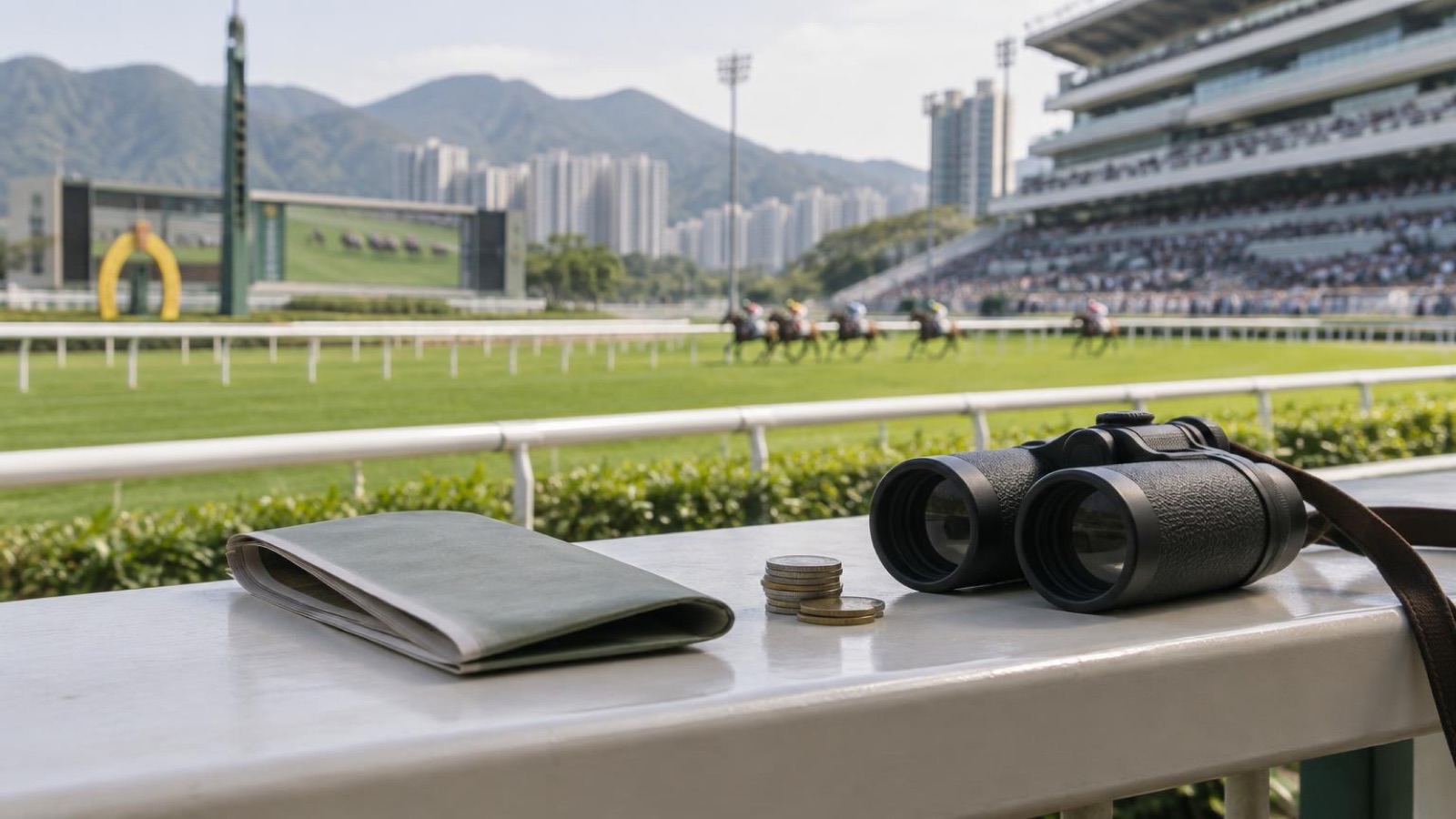
Champions Day is one of the marquee afternoons of the Hong Kong racing calendar, and the atmosphere reflects that. The gates open well before the first race, with events starting at 11:20 am, and the crowd builds through the card toward the three Group 1 races1. Expect a full house in the grandstand, formal dress in the members' areas, and a mix of suits and smart casual in the public enclosures.
The paddock parades before each Group 1 race are worth watching even if you never bet: the horses walk a full circuit in front of the stands, and the crowd noise builds as the runners appear. Between races, the concourses fill with food stalls and the betting halls fill with people studying the form. Race days at Sha Tin are family-friendly in the public areas, and children are admitted with an adult.
If it is your first race day, the practical basics are simple: buy a ticket or use an Octopus card at the turnstiles for the public enclosures, pick up a race card or use the club's app for form and post times, and set your budget before the first race. For the wider picture of what you can and cannot do as a visitor, see our page on gambling in Hong Kong as a visitor.
Betting on Champions Day
Betting on the day is run by the Hong Kong Jockey Club, which holds the exclusive license for racing wagers in the city. You can bet at the track itself, at off-course betting branches around Hong Kong, or through the club's telephone and online channels, and the full range of bet types is available on all three Group 1 races.
The bets on offer are the standard Hong Kong menu:
- Win and Place on a single horse
- The exotic pools such as Quinella, Tierce, Trio, First 4 and Double
- The larger multi-leg pools like Triple Trio that can pay life-changing amounts on a big card
If the terms are new to you, our guide to horse racing bet types in Hong Kong explains each one, and Hong Kong odds shows how the odds format works.
A three-Group-1 card is one of the best betting afternoons of the season, because the pools are at their deepest and the form is well established by late April. The same afternoon also draws heavy betting on the JRA simulcast in Japan for the Chairman's Sprint Prize, which adds to the international interest in the card13.
How Champions Day fits the season
Champions Day is the hinge of the Hong Kong racing year. It comes after the winter features that identify the season's champions: the Three-Year-Old Classic Series culminating in the Hong Kong Derby, the Hong Kong Triple Crown series of staying races, and the first two legs of the Speed Series. By late April, the winners of those series meet at Sha Tin to settle who is the best at each distance.
The day also looks forward. Horses that run well in the QEII Cup, the Champions Mile and the Chairman's Sprint Prize in April become the local hopes for the Hong Kong International Races the following December, where the same distances are run for even bigger purses: the Hong Kong Cup at 2000m is worth HK$40 million, the Hong Kong Mile HK$36 million, the Hong Kong Sprint HK$28 million and the Hong Kong Vase HK$26 million2. A horse that wins in April and again in December can also collect the cross-meeting bonus the club has offered in the past, worth about HK$1 million to the owner7.
For the season's other targets, the pattern of the calendar is worth knowing. The Speed Series bonus of HK$2 million, later raised to HK$5 million, is decided on Champions Day itself3. The Triple Crown bonus, for a horse winning all three legs of the staying series ending with the Champions & Chater Cup in May, is worth HK$5 million, with HK$2 million for any two legs22. And the prize money keeps climbing across the program: the club has raised purses repeatedly over the past decade, with the Champions Mile going from HK$12 million in 2011 to HK$24 million today23. That steady rise is why Hong Kong's championship afternoons now rank with the richest race days in the world.
Common Questions
Where is Champions Day held?
At Sha Tin Racecourse in the New Territories, the Hong Kong Jockey Club's main track. All three Group 1 races on the card are run on the turf there.
What time does each race start?
The day's events begin at 11:20 am, with the races spread across the afternoon card. Exact post times for each race are set when the final race card is published in race week.
How much does the QEII Cup winner get?
The FWD QEII Cup is worth HK$30 million in total. In past runnings of Hong Kong's big races, the winner's share has typically been a little over half of the purse, so the QEII Cup winner banks roughly HK$17 million.
What is the supplementary entry fee for the QEII Cup?
For the comparable Hong Kong international races, late supplementary entry fees have ranged from HK$80,000 to HK$230,000 depending on the race, with a further declaration fee payable at the final stage.
Which horses qualify for the Chairman's Sprint Prize?
It is open to horses aged three and upwards, and it is the final leg of the Hong Kong Speed Series, following the Centenary Sprint Cup and the Queen's Silver Jubilee Cup.
What is the bonus for winning all three legs of the Hong Kong Speed Series?
The owner of a horse that wins all three legs of the Hong Kong Speed Series collects a special bonus, which has been set at HK$2 million and more recently at HK$5 million.
When do free entries close for overseas horses?
For the FWD QEII Cup, free entries for overseas horses close on March 15, 2027, the same date as for Hong Kong horses. Other international race days have separate deadlines.
Sources23 sources
- FWD Champions Day event page, Hong Kong Jockey Club, 2026
- Hong Kong Jockey Club events calendar, Hong Kong Jockey Club, 2026
- Chairman's Sprint Prize pattern race conditions, Hong Kong Jockey Club, 2011
- Hong Kong Jockey Club events calendar (English), Hong Kong Jockey Club, 2026
- Hong Kong Cup race conditions, Hong Kong Jockey Club, 2026
- 2016/17 season prize money announcement, Hong Kong Jockey Club, July 2016
- Audemars Piguet QE II Cup conditions, Hong Kong Jockey Club, 2011
- 2014 prize money increases, Hong Kong Jockey Club, July 2014
- Longines Hong Kong Mile conditions 2012, Hong Kong Jockey Club, 2012
- Citi Hong Kong Gold Cup event page, Hong Kong Jockey Club, 2026
- Kent & Curwen Centenary Sprint Cup conditions, Hong Kong Jockey Club, 2011
- Queen's Silver Jubilee Cup conditions, Hong Kong Jockey Club, 2011
- JRA international simulcast races, Japan Racing Association, 2023
- Longines Hong Kong Cup conditions 2012, Hong Kong Jockey Club, 2012
- Hong Kong Mile race conditions, Hong Kong Jockey Club, 2009
- Hong Kong Vase race conditions, Hong Kong Jockey Club, 2026
- Longines Hong Kong Sprint conditions 2015, Hong Kong Jockey Club, 2015
- Longines Hong Kong Mile conditions 2015, Hong Kong Jockey Club, 2015
- Longines Hong Kong Vase conditions 2014, Hong Kong Jockey Club, 2014
- Longines Jockey Club Cup conditions 2014, Hong Kong Jockey Club, 2014
- Cathay Pacific Jockey Club Sprint conditions 2011, Hong Kong Jockey Club, 2011
- Citibank Hong Kong Gold Cup conditions 2012, Hong Kong Jockey Club, 2012
- Cathay Pacific Jockey Club Mile conditions 2011, Hong Kong Jockey Club, 2011